

2026 NO.39
Menu

 Strolling Japan

Journey to a Bustling Historical Castle Town
Karatsu
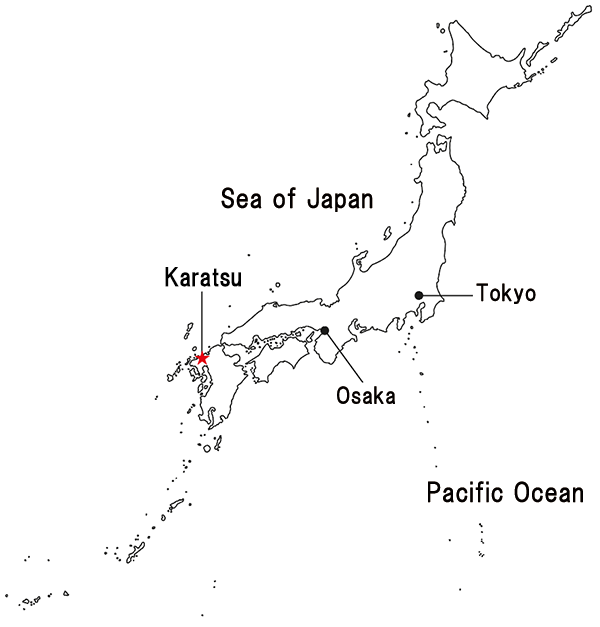


The city of Karatsu, blessed by the bounty of the sea and a long history serving as a hub for people and goods, developed lively festivals, still celebrated today. A walk through the city reveals a lingering feeling of excitement.
Photos: PIXTA, Aflo
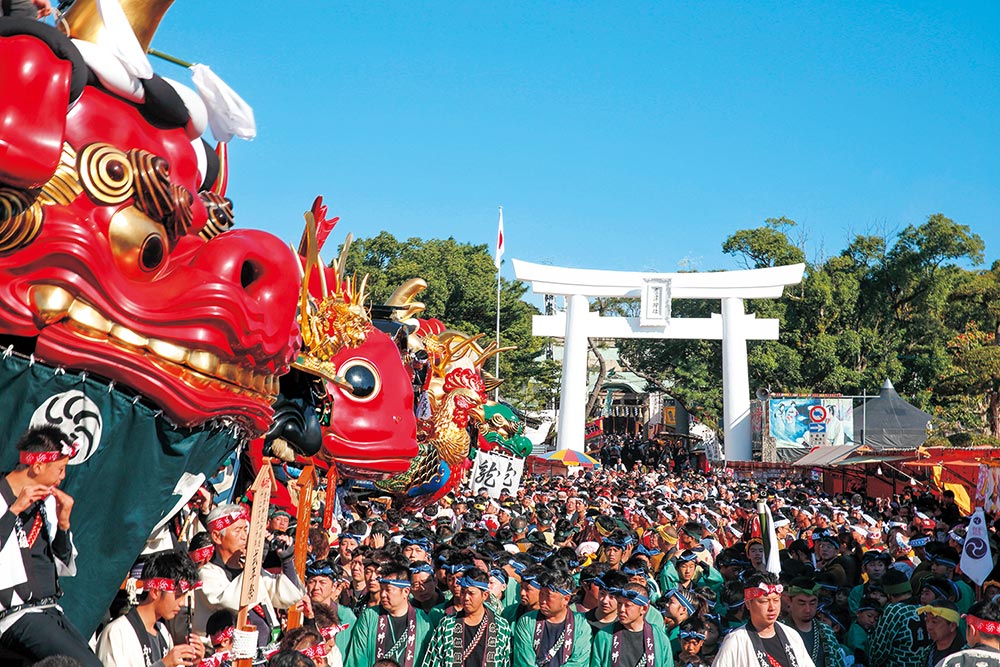
Karatsu Kunchi, the autumn festival held at Karatsu Shrine during November 2–4, features a procession of hikiyama floats and is listed as a UNESCO Intangible Cultural Heritage. (Photo: Karatsu Tourism Association)
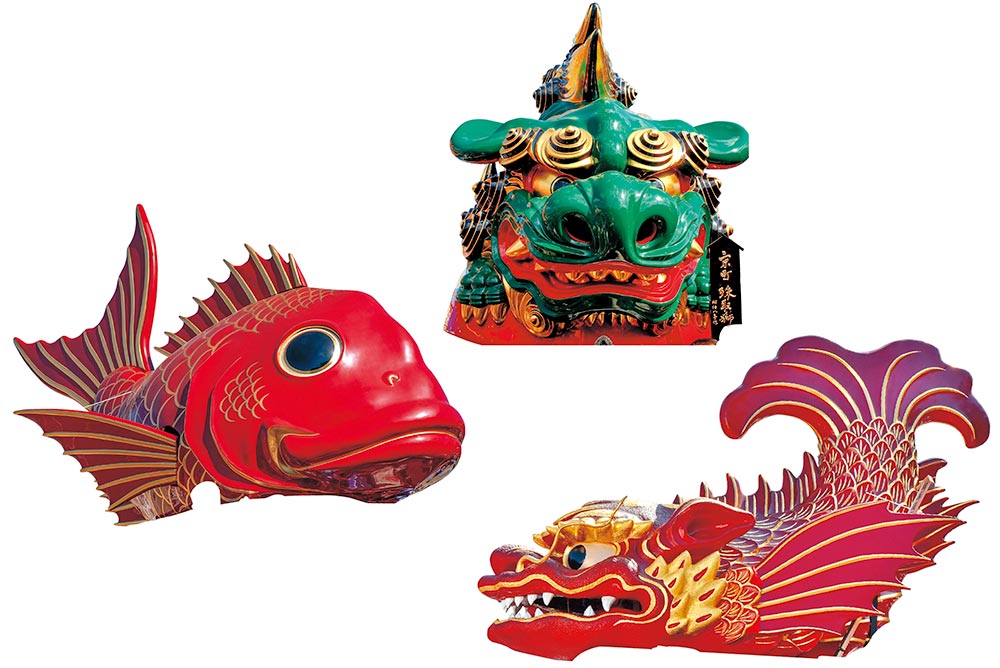
Crafting the hikiyama floats involves the traditional technique of applying more than 100 layers of washi paper to clay molds. From top: Lion, sea bream, flying dragon
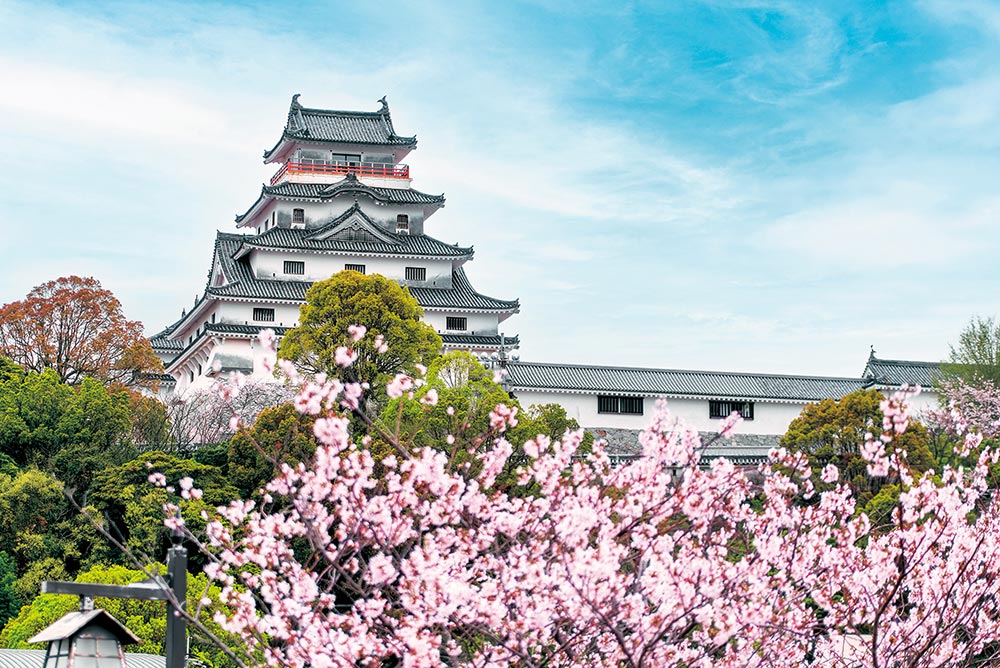
Karatsu Castle is nicknamed Maizuru Castle for its shape, which resembles a crane spreading its wings toward the sea.
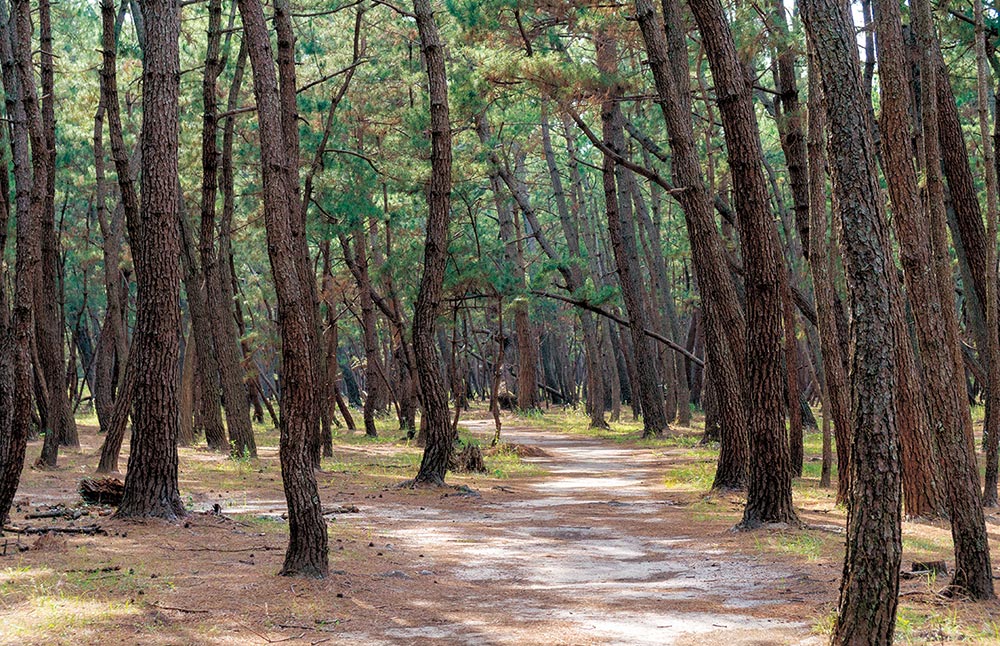
Niji no Matsubara pine forest, a designated Special Place of Scenic Beauty in Japan, is an area approximately 4.5km long and 500m wide filled with black pines. (Photo: Karatsu Tourism Association)
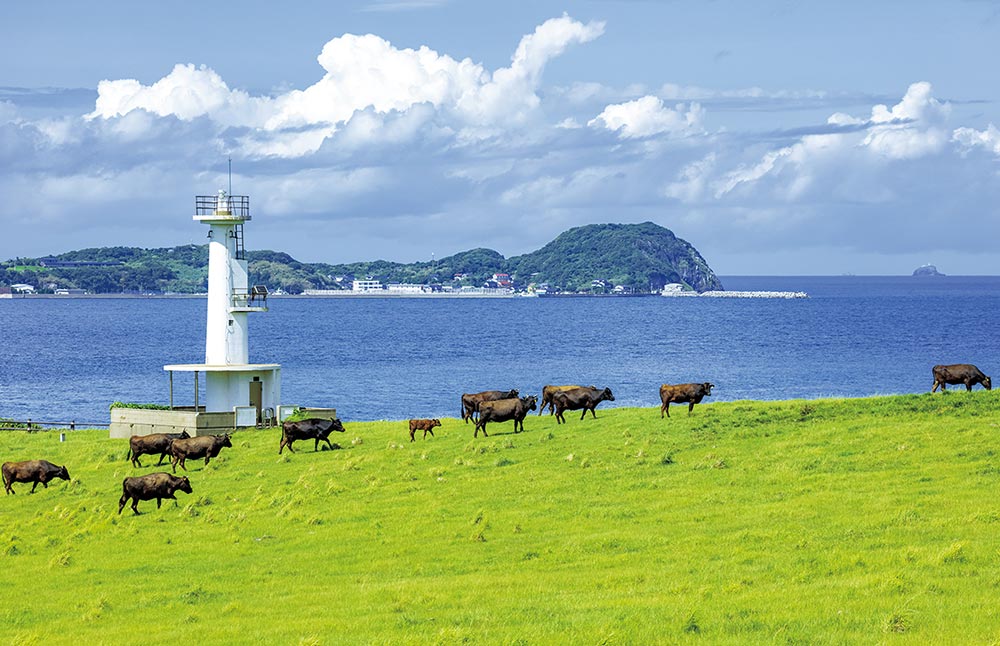
View of the Genkai Sea from Suginohara Hobokujo ranch
Located at the northern tip of Saga Prefecture in northwestern Kyushu, facing the Genkai Sea, the journey to Karatsu takes about an hour and a half from Fukuoka, whether by train from JR Hakata Station or a direct bus from Fukuoka Airport. For centuries, the town flourished as a gateway to the continent. Around the time when Karatsu Castle was built in the 17th century, the area began to develop as a bustling castle town, with crowds of merchants coming and going. The scenic pine forest known as Niji no Matsubara also came into being about the time that the castle was constructed. This beautifully cultivated pine forest, originally planted to prevent from tide, is now home to some one million pine trees.
Karatsu is especially lively during the Karatsu Kunchi festival, held in November when autumn deepens. The largest in Karatsu, the festival celebrates a bountiful harvest, with hikiyama floats shaped like lions, sea bream, boats, and more parading down the city streets. The enormous floats, lavishly adorned with gold and lacquer and pulled by large crowds of people, are nothing short of spectacular.
During the festival period, families serve home-cooked dishes known as Kunchi cuisine. Relatives, friends, and those who have finished pulling the hikiyama floats are welcomed into the home, where large platters of colorful seafood, vegetables, and other dishes are set out for everyone to gather around the table and enjoy. The star of this feast is kue no sugatani, grouper simmered in broth and served head-to-tail. A luxury fish native to the region, grouper can grow up to a meter long, making this a signature dish at celebratory feasts in Karatsu. Bringing the festival's exciting atmosphere into the home, Kunchi cuisine is a form of celebration that involves chatting with friends and family while appreciating, sharing, and savoring these delicious and beautiful dishes.
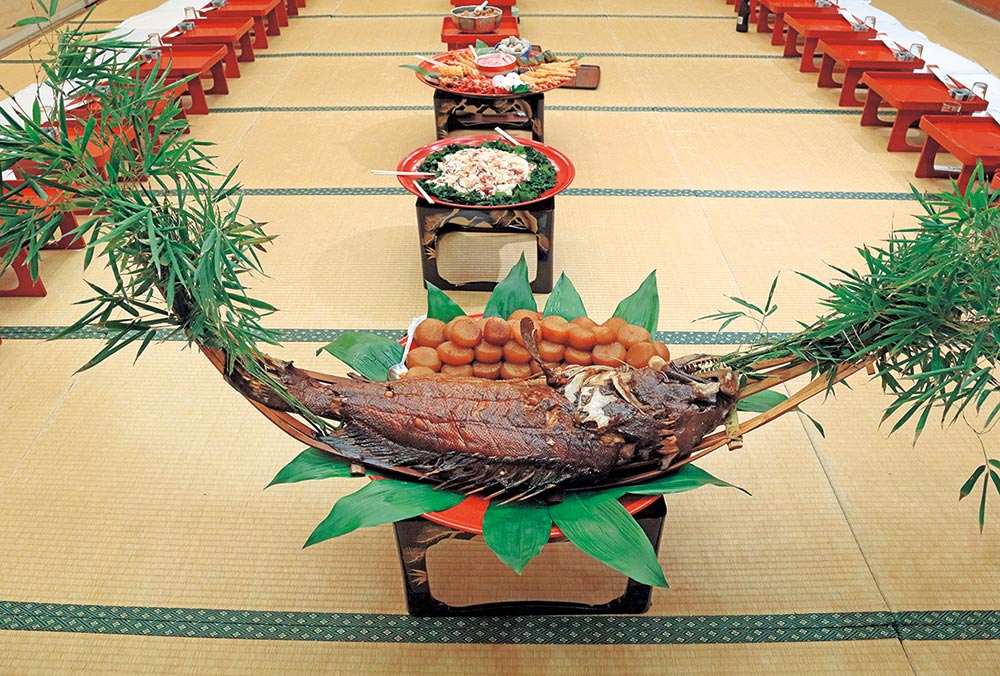
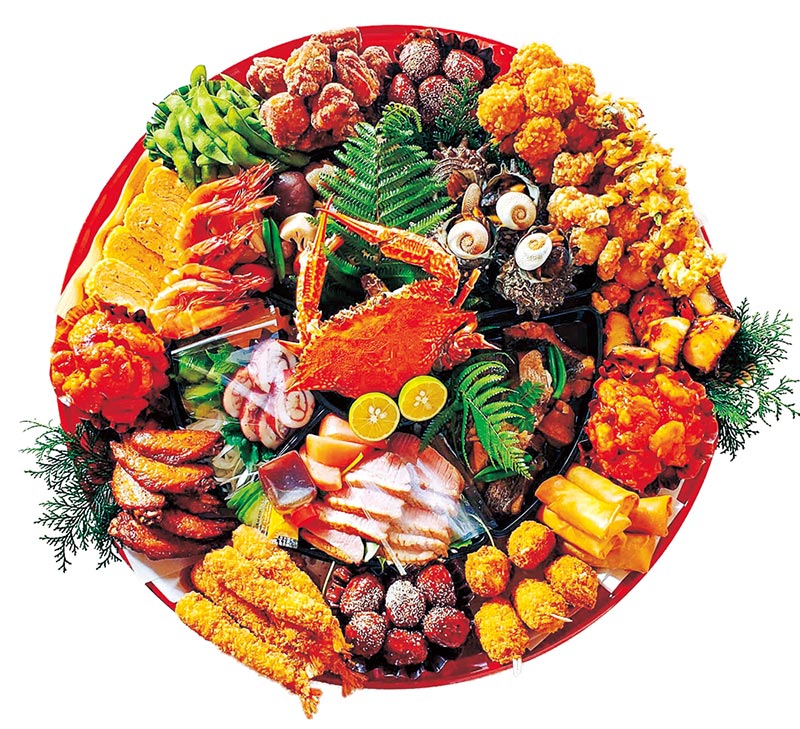
During the Karatsu Kunchi festival, traditional dishes, made like this for generations, are served on generously sized platters to large gatherings of guests. (Photo: Genyo)