

2026 NO.39
Menu

 A Virtual Journey through Japan

Japan’s Regional Specialty Foods for Celebrations
In Japan, local dishes unique to the region have been prepared for special occasions such as life milestones and annual events since ancient times. These foods use everyday ingredients and culinary ingenuity to express festive wishes that reflect the local culture through presentation and flavor. Here, we explore celebratory local dishes across Japan that take on a special meaning when people gather together to share them.
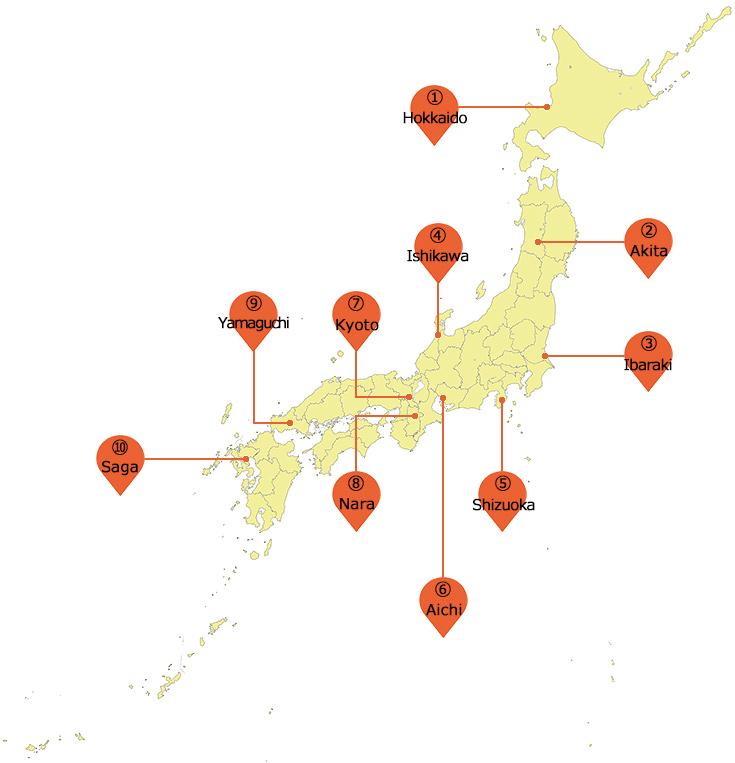
①Hokkaido
Sake Chanchan Yaki
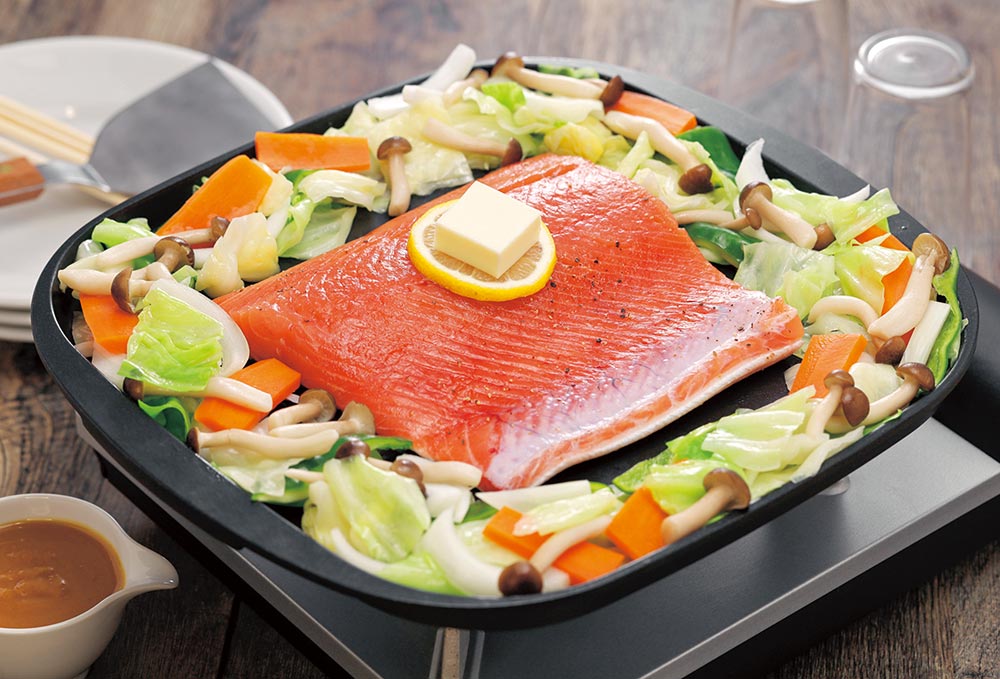
This hearty teppanyaki dish features local salmon, cabbage, onions, mushrooms and other vegetables, all grilled in butter and finished with miso. Originating in fishing towns, this has long been popular method of quickly preparing freshly caught salmon. At festivals and gatherings of neighbors and relatives, people come together around large teppanyaki griddles to share sake no chanchan yaki and mingle. (Photo: PIXTA)
②Akita
Nasu no Hana-zushi
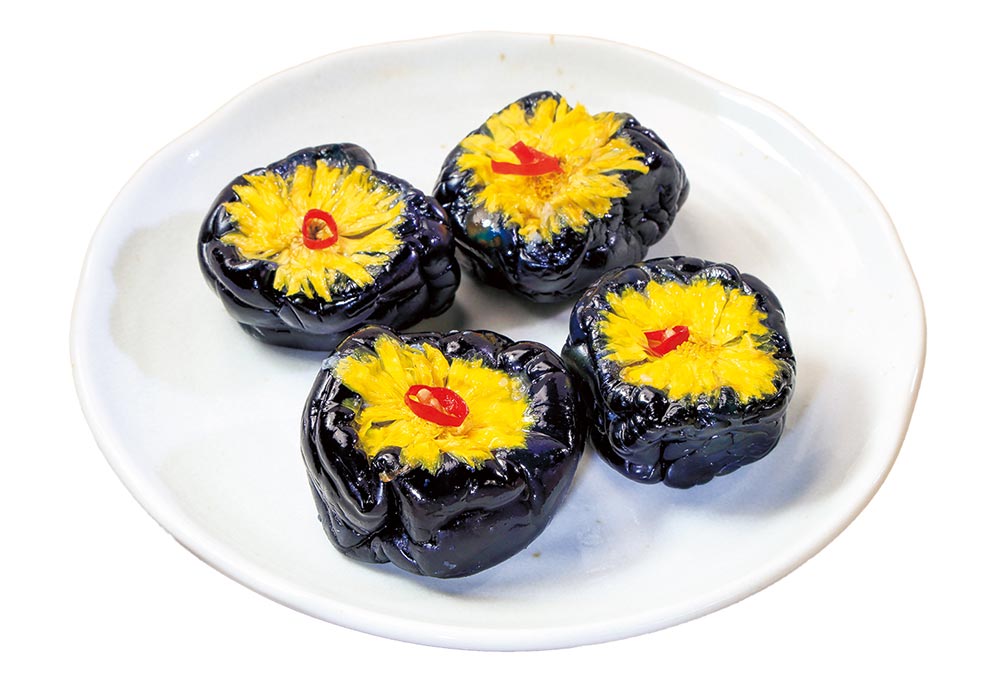
This traditional dish layers round slices of pickled eggplant, steamed mochigome glutinous rice, edible chrysanthemum flowers, and chili peppers. The vibrant yellow, red, and purple hues make it an essential part of New Year’s celebrations and festive occasions. Each bite fills your mouth with the tang of pickled eggplant, the sweetness of the mochigome, the heat of the chili peppers, and the fresh aromatics of the chrysanthemum flowers. (Photo: Aflo)
③Ibaraki
Mitsume no Botamochi
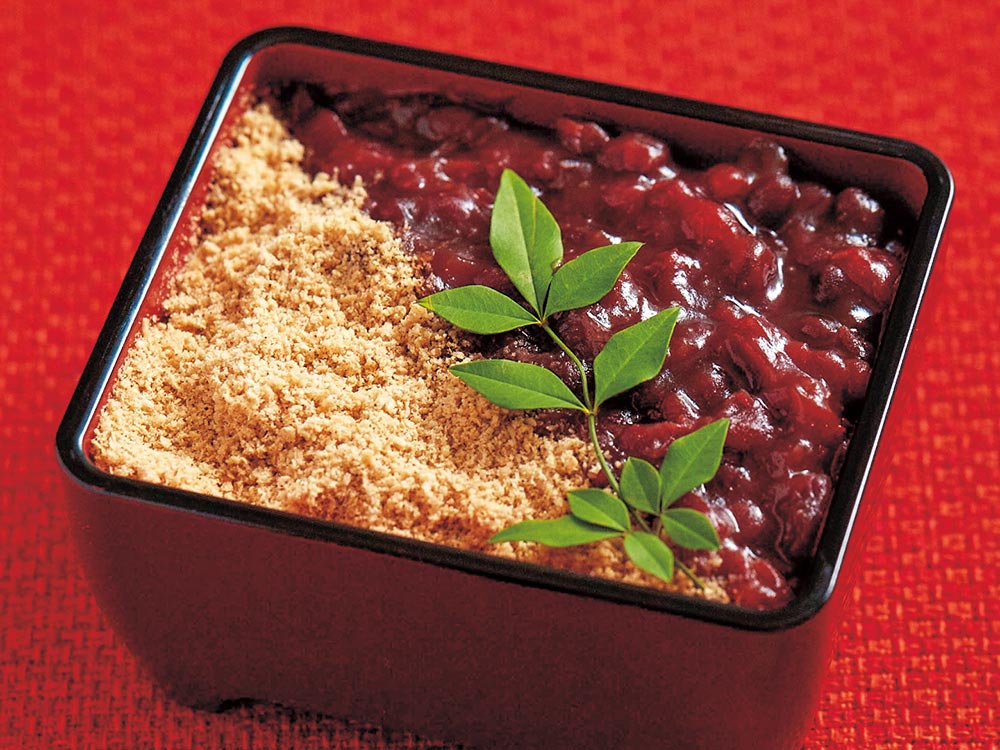
A local confection made with mochigome glutinous rice and uruchigome standard short-grain white rice, in a traditional lacquered box (jubako), then topped with sweet red bean paste and roasted soybean flour. It is said to have originated three days after a child’s birth, when it was served to new mothers to provide nourishment after childbirth, the dish may also be given out to neighbors as a celebration of childbirth. (Photo: Ministry of Agriculture, Forestry and Fisheries website)
④Ishikawa
Oshizushi
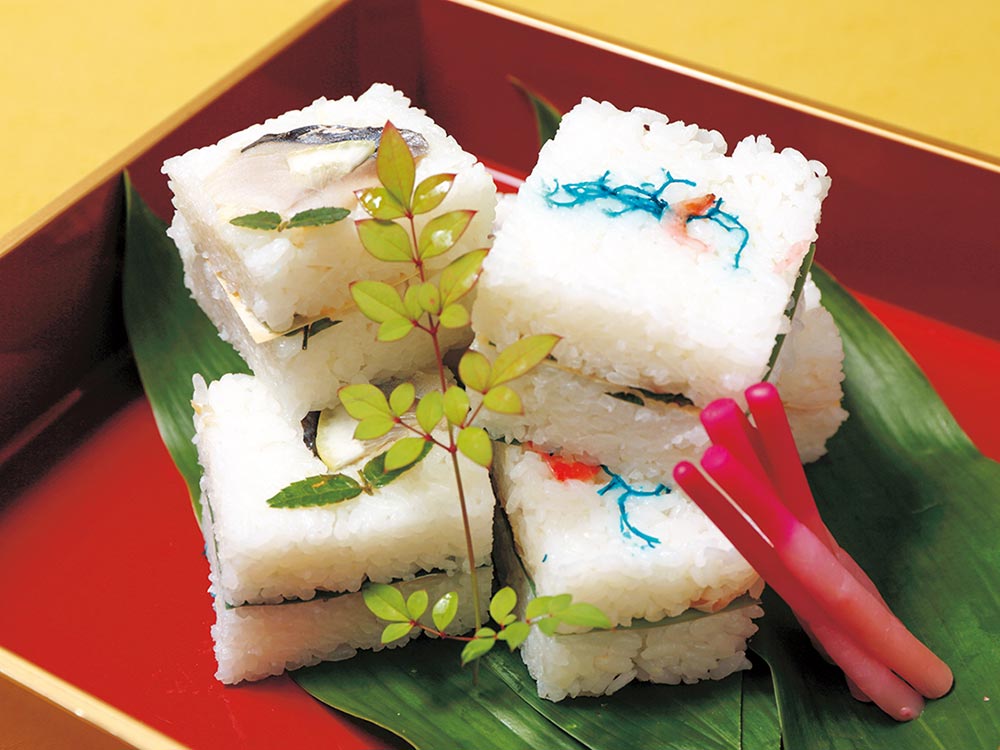
Oshizushi, or pressed sushi, made by layering vinegared rice and seafood in a wooden mold and pressing them together, is produced in various parts of Japan. The one made in Kanazawa City, Ishikawa Prefecture, is prepared by packing it into a wooden mold and letting it rest overnight. The beautiful dark blue nori seaweed, dyed with edible pigments, is served on New Year’s Day, celebrations, and festivals. (Photo: Ministry of Agriculture, Forestry and Fisheries website)
⑤Shizuoka
Saba no Hakozushi
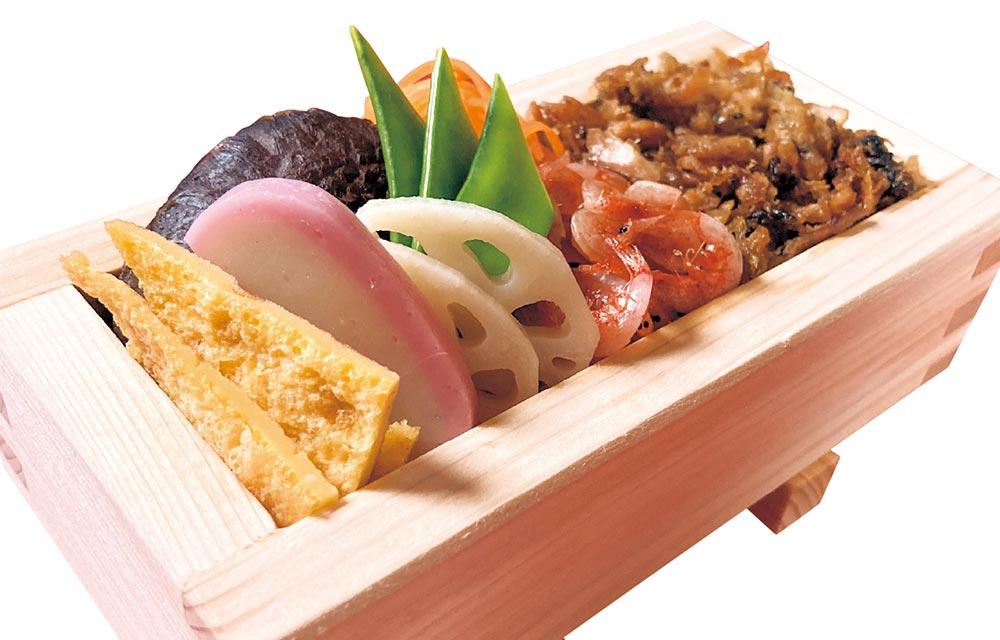
This box sushi is vinegared rice packed in a wooden box, features a variety of ingredients, including boiled and flaked saba (mackerel), simmered vegetables like carrots and shiitake mushrooms, sakura shrimp, and steamed fish paste kamaboko. With its vivid colors, saba no hakozushi has long been a favorite special treat enjoyed on festive occasions. (Photo: Ministry of Agriculture, Forestry and Fisheries website)
⑥Aichi
Oshimon
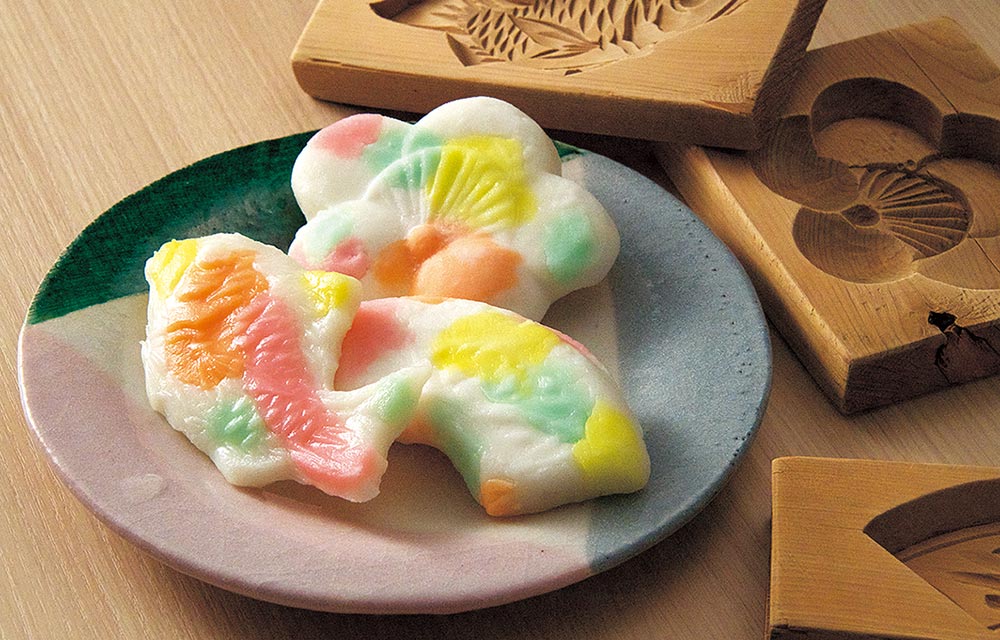
These traditional sweets come in auspicious shapes such as sea bream and plum blossoms. They are usually made by mixing rice flour with boiling water to make a dough that is kneaded and then shaped in wooden molds. The treats are then steamed and painted with color. For the Hinamatsuri girls’ festival in March, oshimon are grilled and dipped in soy sauce sweetened with sugar. (Photo: Aichi Prefecture)
⑦Kyoto
Shiromiso Zoni
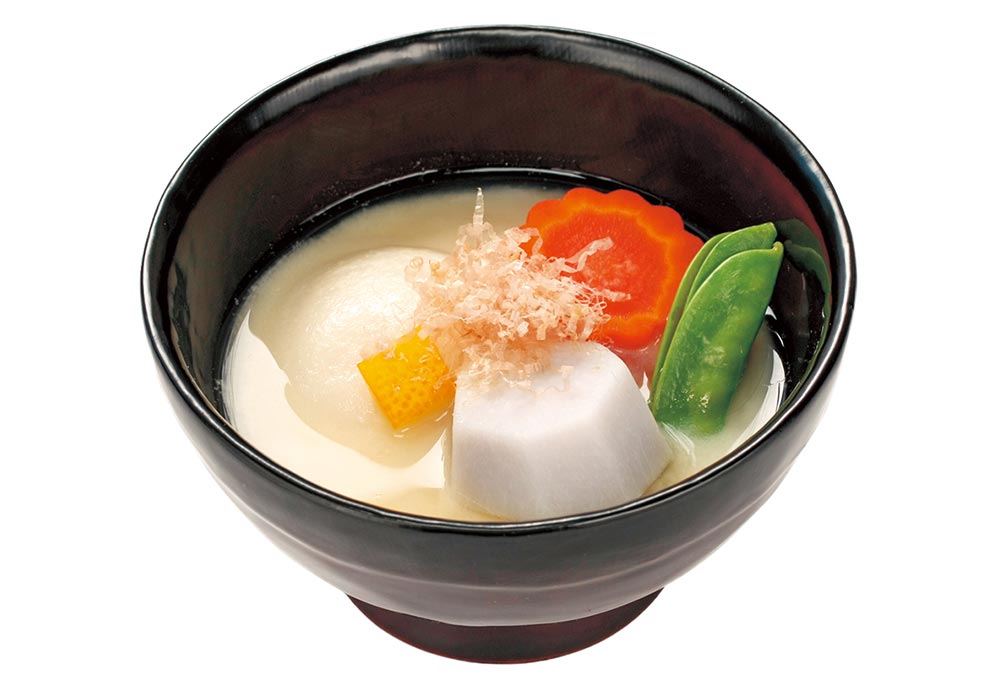
Each region of Japan has its own version of ozoni, a traditional soup for New Year’s festivities. In Kyoto, ozoni is most commonly made with a white miso broth. White miso, with its gentle sweet taste, was featured in dishes served on special days such as court festivals in the past. A bowl of shiromiso zoni, featuring round marumochi rice cakes, taro, and local kintoki ninjin carrots, is served at the beginning of the year. (Photo: PIXTA)
⑧Nara
Kaki-Namasu
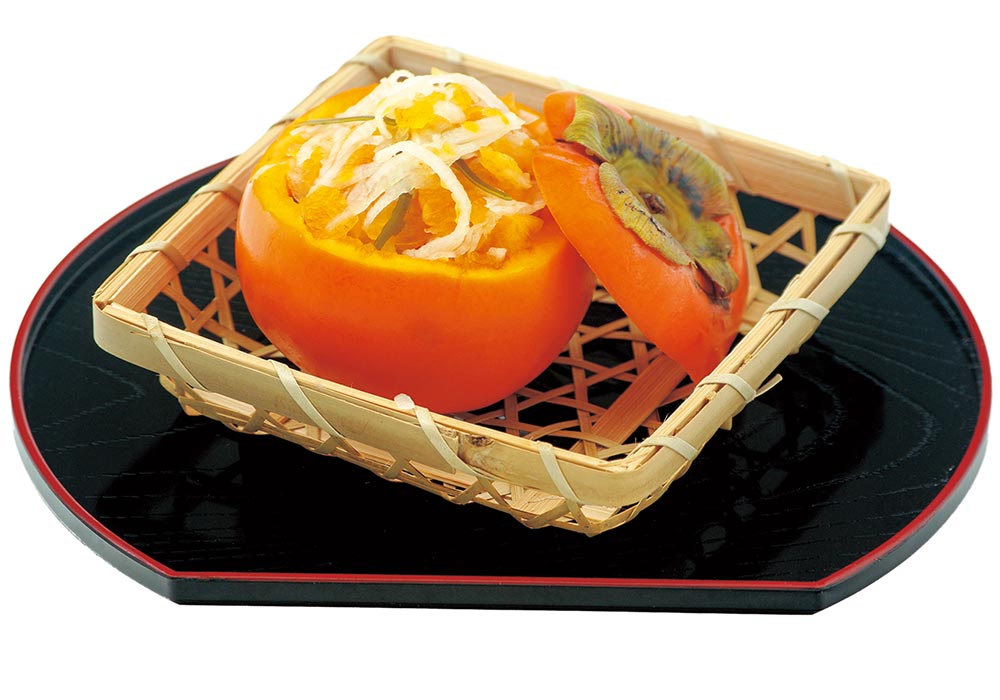
Namasu, thinly sliced daikon radish and carrots lightly pickled in vinegar, is commonly eaten during New Year’s celebrations. In Nara Prefecture, locally grown persimmons, or kaki, are added to the dish. Kaki-namasu may be served in persimmon bowls, made by scooping the center of the persimmon out and leaving the peel intact, for a New Year’s dish special enough to start the year. (Photo: PIXTA)
⑨Yamaguchi
Kashiwan
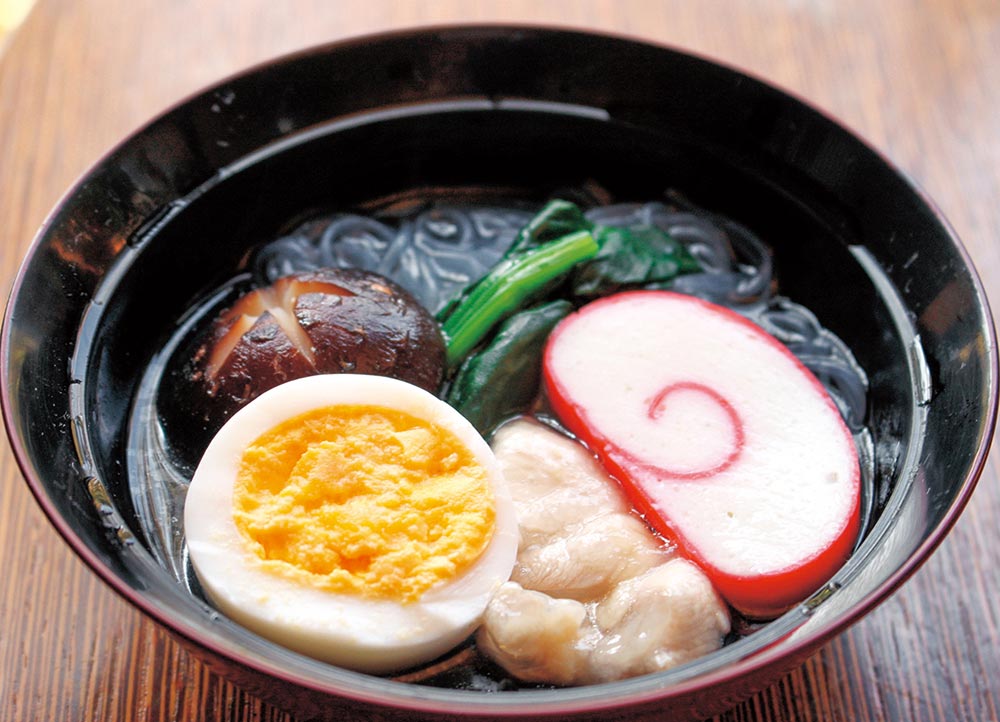
This soup dish takes its name from kashiwa, a Japanese word for chicken. Cooled dashi broth is poured over a bowl of boiled chicken, shiitake mushrooms, chrysanthemum greens, and other vegetables, as well as colored wheat gluten and boiled eggs. With its splendid appearance, Kashiwan has long been served to guests at weddings, funerals, and other ceremonial occasions in this part of Japan. (Photo: Hagi Genki no Kai)
⑩Saga
Sukozushi
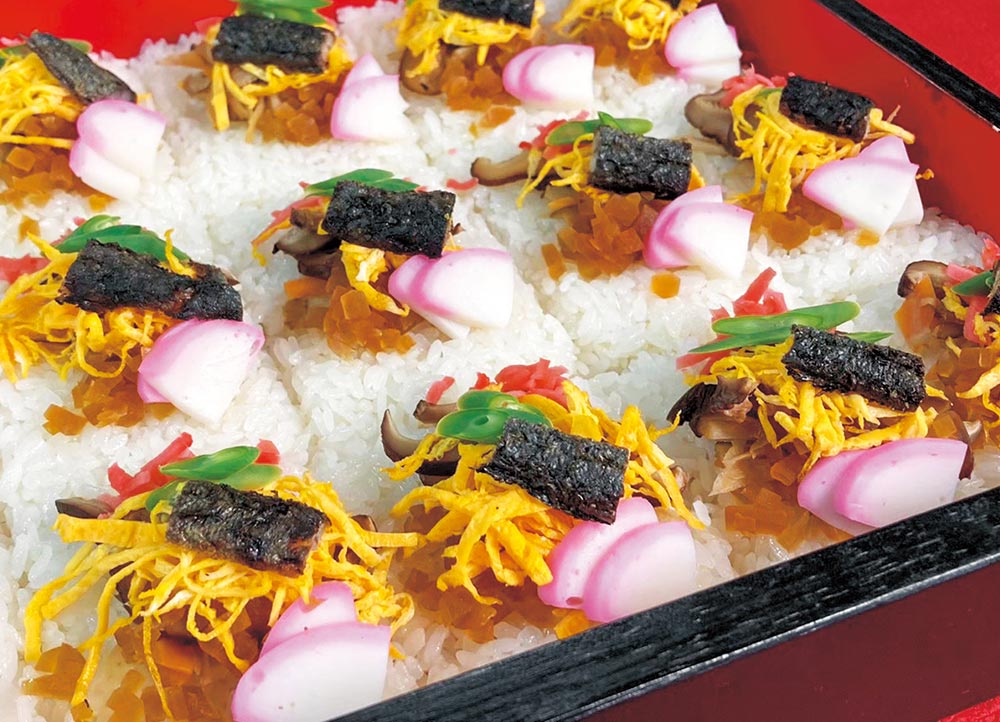
A style of pressed sushi made by pressed vinegared rice into a wooden box called a morofuta, sukozushi is topped with bamboo shoots, pickles, sweet-and-salty simmered vegetables, and glazed grilled mutsugoro, a mudskipper of the goby family of fish and a specialty from the Ariake Sea. A local dish has been carefully passed down and is still indispensable for festivals and celebrations. (Photo: Ministry of Agriculture, Forestry and Fisheries website)