

2026 NO.39
Menu

Celebrating with Food in Japan

The Joy of Sharing Delicious Dishes for Celebrating the Life's Special Moments
In this Japanese form of celebration, good wishes are conveyed by special foods and everyone shares the joy of celebrating the milestones of life.
Photos: Kurihara Osamu
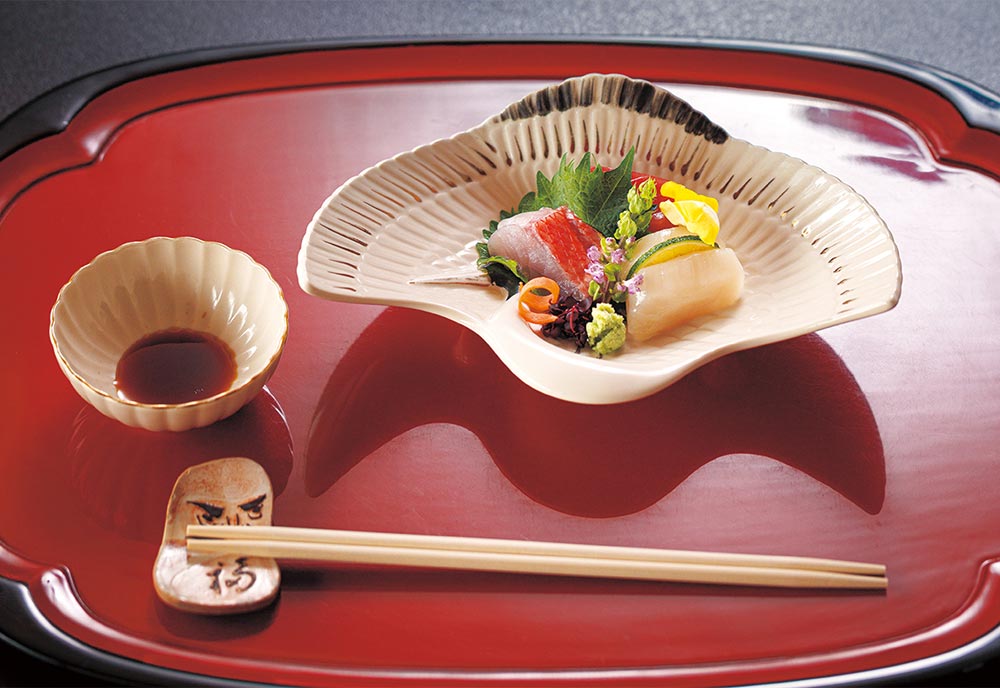
Tuna, scallop, and splendid alfonsino sashimi served on a crane-shaped plate
In Japan, people gather around the table with family and close friends to celebrate the milestones of life and the changing seasons. On particularly joyous occasions — Shichi-Go-San celebrations marking the third, fifth, and seventh years of a child’s life, graduations, weddings, celebrations of longevity — these celebratory meals are often shared at special venues.
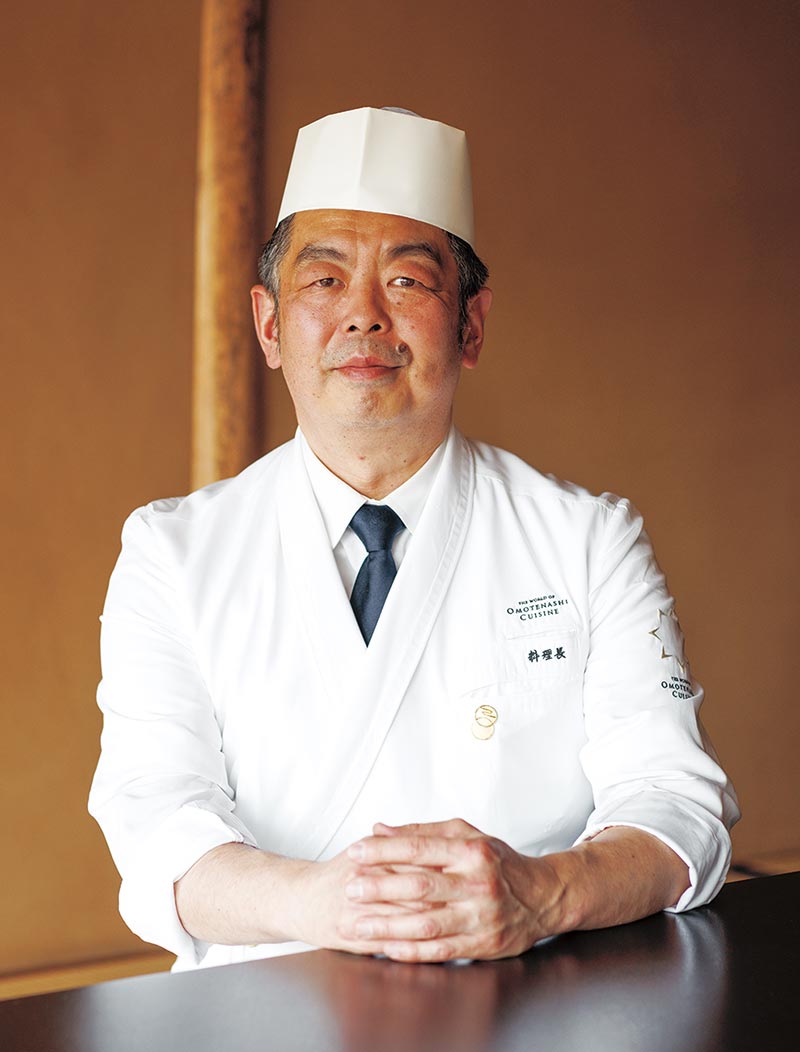
For a chef at one of these venues, the presentation of the celebratory meal is a very important job. Kano Tetsuro, head chef at a traditional restaurant set in a Japanese garden at a Tokyo ceremonial venue that hosts many weddings and other celebratory banquets, says, “What is essential to a celebratory meal is adhering to traditional customs.”
Ingredients considered auspicious are vital to these meals. Sea bream, called tai in Japanese, provide a pun on the word for congratulations, medetai (auspicious). In addition, these fish are red and white, considered lucky colors in Japan, and so they are highly valued at celebratory gatherings. The okashiratsuki style, in which the fish is served whole from head to tail, symbolizes “completing things from beginning to end.” Shrimp are considered symbols of longevity because their long whiskers and curved backs resemble an old person. Kombu seaweed, with its pun on yorokobu, meaning to rejoice, has long been used to celebrate joyous occasions and express wishes for family prosperity.
Meaning is also conveyed through presentation. Tableware features the shapes and patterns of animals and plants considered auspicious, and red and white colors are emphasized in the plating. Gold accents also add a touch of gorgeous elegance to some dishes.
“And, of course, we use seasonal ingredients. Because savoring the bounty of the season itself leads to sharing the joy of gathering together at precisely that moment,” Kano adds.
Festive touches infused into each dish are a heartfelt expression of the chef’s hospitality. These dishes embody the delicate Japanese aesthetic, infusing food with a message for the spirit.
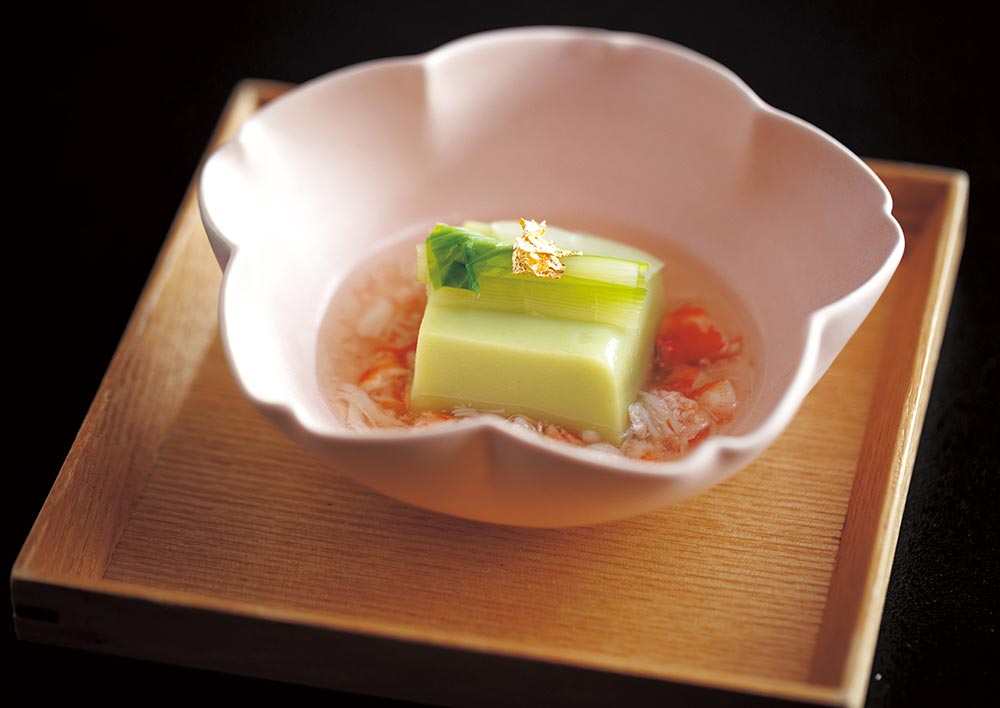
Left: A dish featuring tofu made from green soybeans, the spring mountain vegetable urui (Hosta montana), and gold leaf, served in a cherry blossom-shaped bowl.
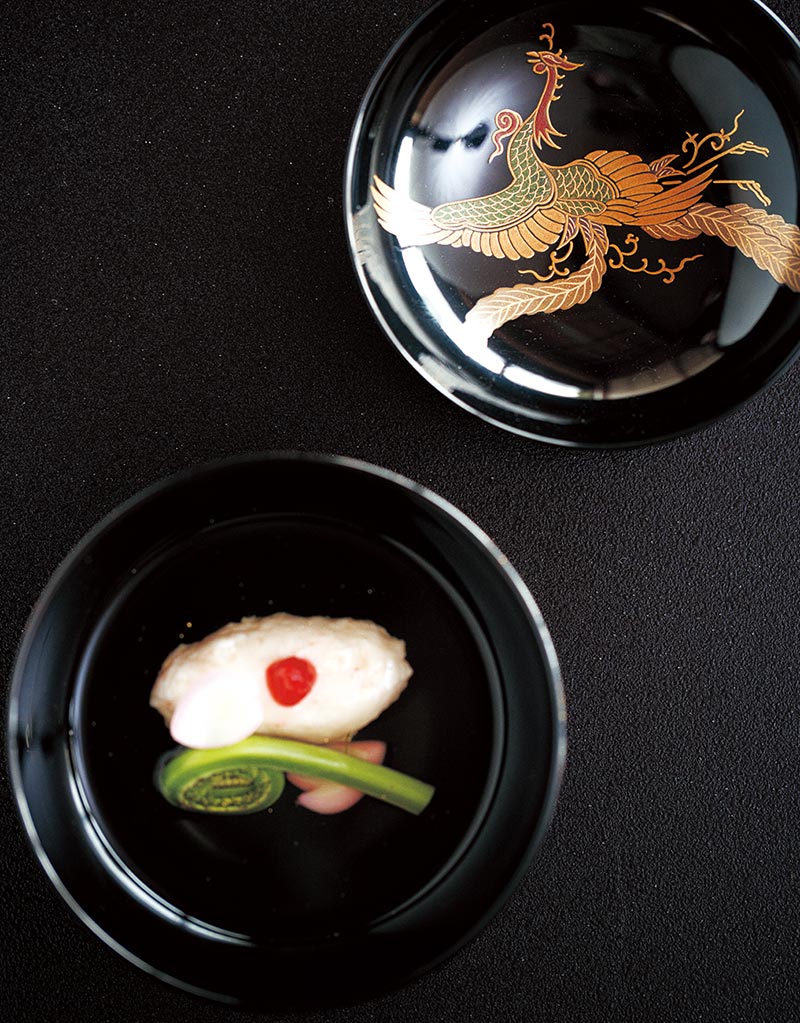
Right: Broth served in a lacquered bowl with a phoenix design on the underside of the lid. Shrimp paste mixed with egg white, paired with the spring mountain vegetable kogomi, in a dashi broth carefully drawn from kombu seaweed and bonito flakes.
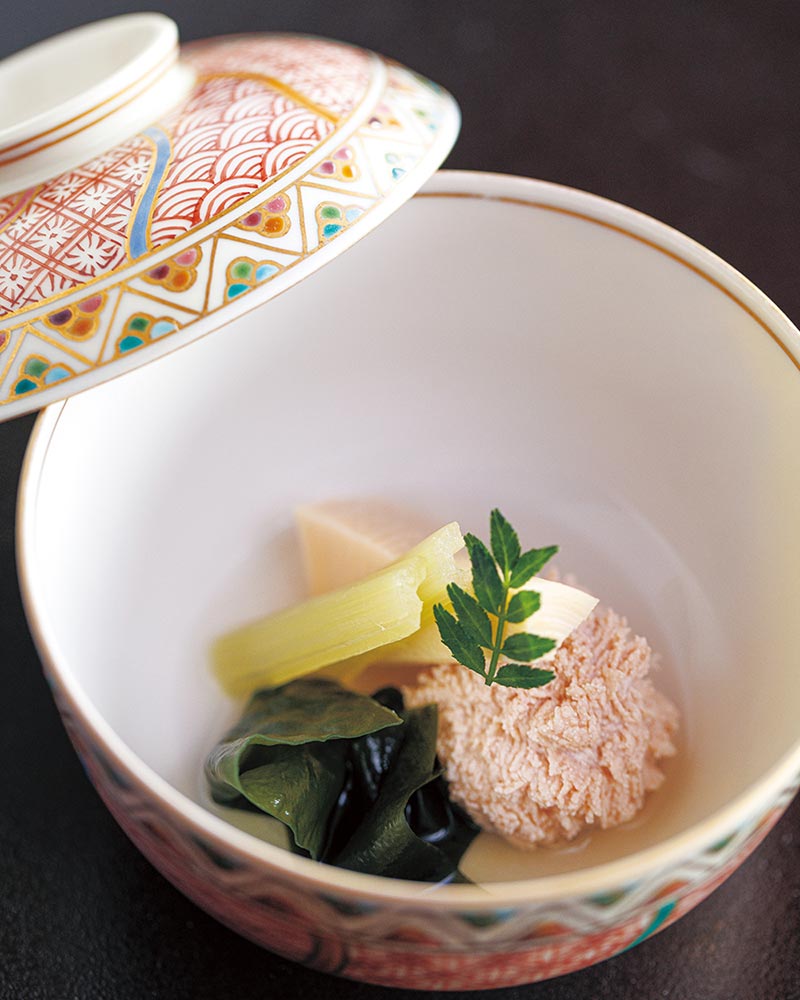
Left: A simmered dish made with minced sea bream, tai in Japanese, bamboo shoots, butterbur, and other spring vegetables
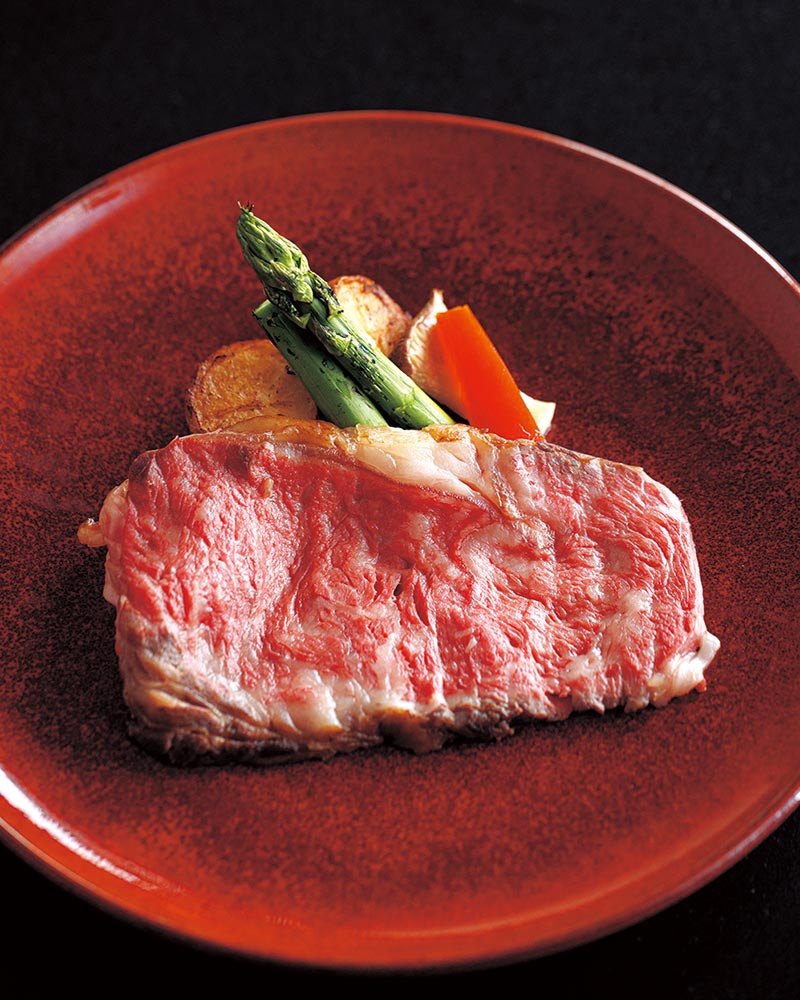
Center: Roast beef with a sauce of citrusy ponzu and grated daikon radish
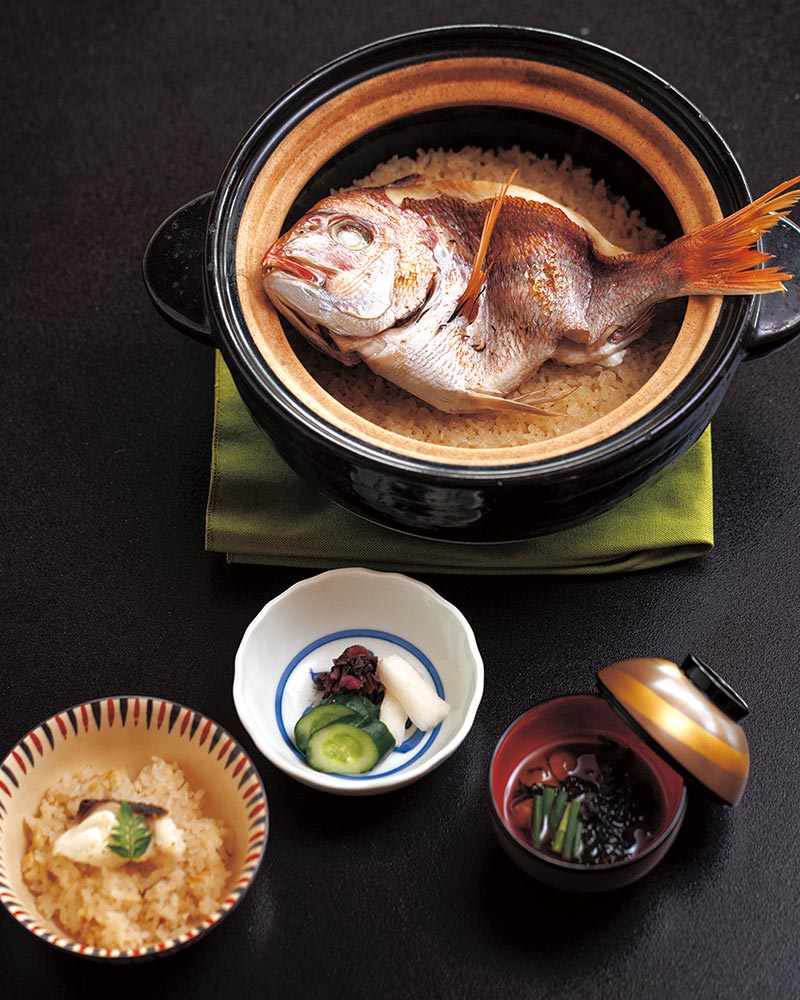
Right: Donabe taki gohan (rice and vegetables cooked in an earthenware pot) topped with tai sea bream. The chef carefully debones the fish at the table and mixes it into the rice.
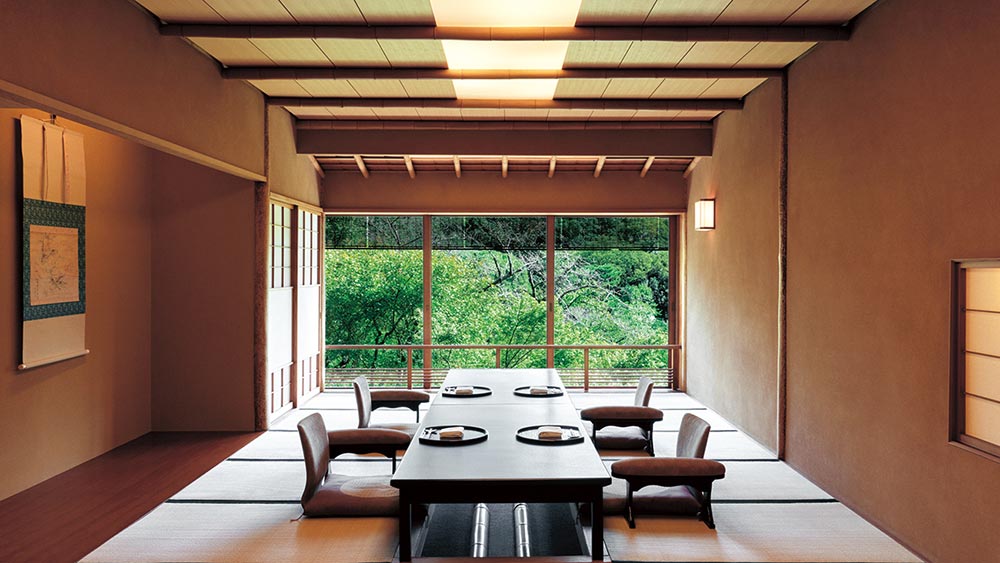
Left: A private room at Kochu-an, the restaurant at Happo-en Garden, a ceremonial venue that hosts an array of celebratory events. (Photo: Happoen)
Right: Chef Kano Tetsuro, head chef at Kochu-an