

2025 NO.38
Menu

The Japanese People and Space

People Creating Space
Reproducing the celestial night sky and generating human-made shooting stars. These are new modes of space created by Japanese engineers taking on new challenges.
Photos: Furusato Mai

Ohira holds the latest small-sized MEGASTAR-Neo II planetarium projector.
Planetarium Creator Crafts Star-Filled Skies
Planetariums reproduce the starry night sky by projecting star-like images onto a screen on a domed ceiling. The optical planetarium, capable of projecting high-resolution star-like images using a star plate and lenses, utilizes an innovative new projector from planetarium creator Ohira Takayuki.
In 1998, Ohira released the MEGASTAR, a planetarium projector that simulates 1.7 million stars, over 100 times more than conventional projectors. The sight of all of the Milky Way’s countless stars astonished the world. Subsequent improvements were made, and later versions projected even more stars, with the ultra-precision GIGAMASK star plate, which can project 1.2 billion stars, developed in 2015. The holes drilled in this baseplate are minute, the smallest measuring just 180 nanometers (18/100,000 mm) in diameter.
“The stars in the night sky that are visible to the human eye are only a fraction of what is there. In reality, countless stars shine down from outer space, and in a planetarium you catch a glimpse of what is there. I hope this experience lets people feel the infinite expanse of the universe.”
Ohira also developed HOMESTAR, an optical planetarium incorporating MEGASTAR technology for home use. Allowing people to enjoy the full stars from the comfort of their own homes, this planetarium projector is gaining popularity around the world. “I hope these home planetariums will inspire an interest in space for more children. I would love it if a child who had a home planetarium ventured out into space one day and discovered unknown forms of life.”
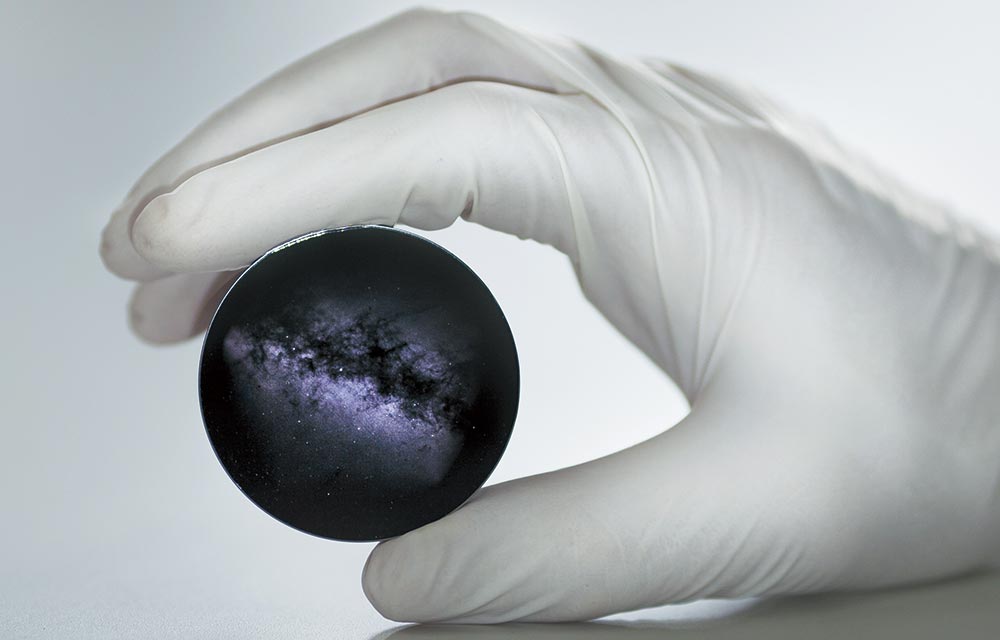
One of the GIGAMASK ultra-precision star plates. Reproducing approximately 200—300 million stars per plate in star-rich areas, the projector's 32 plates together project some 1.2 billion stars. (Photo: Ohira Tech Ltd.)
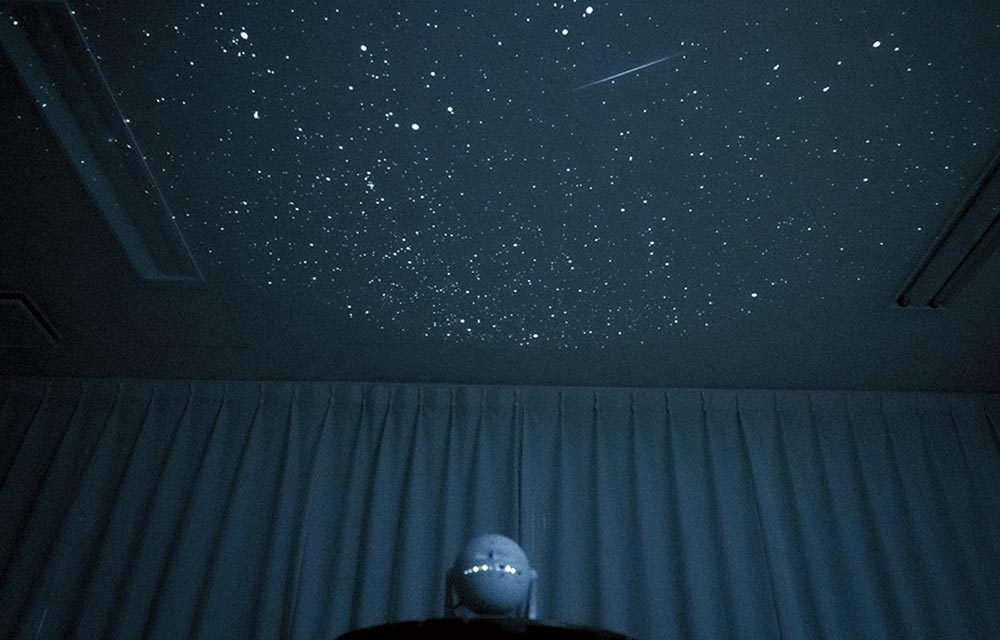
The HOMESTAR series of home optical planetarium projectors. The twinkling feature added in 2021 offers users an even more realistic starry night sky at home. (Photos: SEGA FAVE CORPORATION)
World’s First Attempt to Generate Human-Made Shooting Stars
“I want to make shooting stars that will fall where and when I want them to.” Okajima Rena was inspired by this idea while watching the Leonid meteor shower as an undergraduate student. Going on to found ALE Co., Ltd., she is now the first in the world to take on this unprecedented challenge.
Human-made shooting stars are made up of “meteor particles,” metal particles about 1 cm in diameter. When released from a satellite, the meteor particles fall toward the Earth, burning up at high temperatures due to adiabatic compression when they enter the Earth’s atmosphere. From the ground, these falling particles look like shooting stars. “It is the same principle as actual shooting stars, when we observe cosmic dust burning in the atmosphere. But the shooting stars we create are brighter so they stand out more clearly against the urban sky, and we can watch them fall for longer,” she says. Many future applications are anticipated, including as a new mode of entertainment decorating the sky with color.
At the same time, the atmospheric data that these shooting star satellites will record when released will be collected and is expected to be useful in climate change analysis. Okajima, who says, “I’d like to bring space into the cultural sphere,” has a bright and expansive vision for the future.
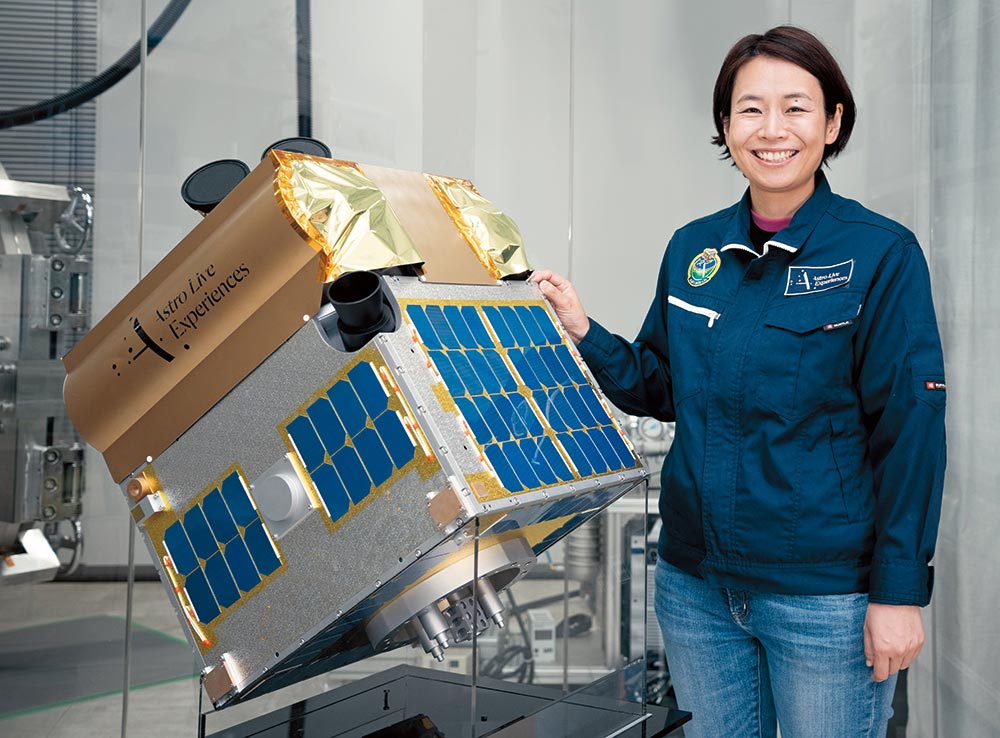
Okajima poses with a model of a satellite launched by ALE.

Okajima experiments with satellite functionality. Satellite operations and power supply are controlled by instructions from the ground crew.
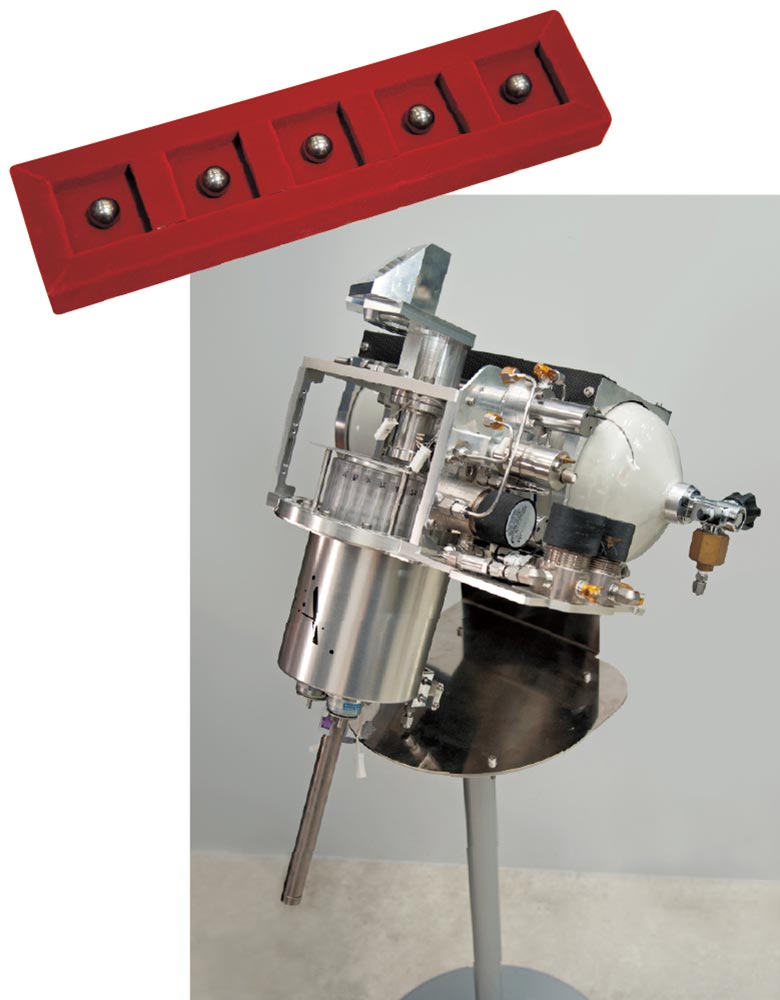
The satellite is equipped with mission system components and the section that releases the meteor particles (pictured above).

Artistic rendering of falling humanmade shooting stars (Photo: ALE Co., Ltd.)