

Tempura: Born in Portugal, Raised in Japan, Enjoyed All Over the World

There are lots of different fried foods in Japan. Japanese-style "kara-agé" fried chicken is a best-seller at lunch stands and convenience stores, while foods that have been deep-fried in panko breadcrumbs, such as "tonkatsu" and Japanese croquettes, even have their own specialty restaurants. Fried foods are often made at home, as well. So much so that you can buy gas stoves that will heat frying oil up to a pre-set temperature, and cooking utensils that are made just for frying.
Tempura Is Also Served with Noodles, Soups and Rice
Tempura is known as one of Japan's oldest fried foods and stands alongside sushi as one of the best-known traditional Japanese foods. From summer greens to mushrooms in the fall, it doesn't matter what time of year it is. As long as you can whip up a batter of flour, water and eggs, you can make tempura out of whatever you can get your hands on, like seasonal vegetables, shrimp, squid and white fish.
Tempura can be seasoned with salt to taste, or dipped in a "tentsuyu" sauce, which is made by mixing "dashi" stock, soy sauce and "mirin" (sweet rice wine). Some people even eat tempura with soy sauce or Worcestershire sauce when they're at home.
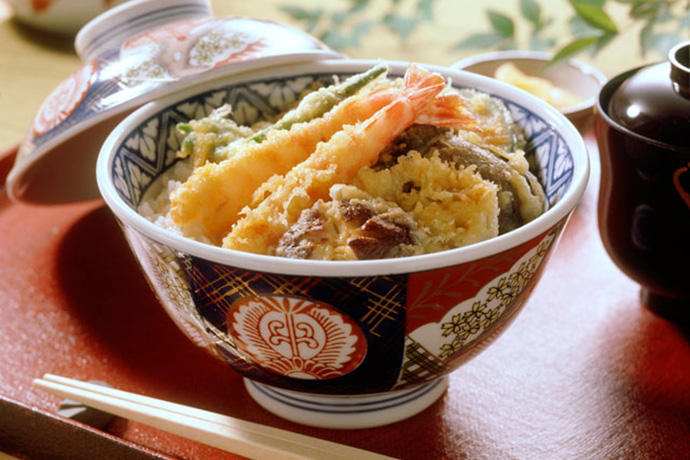
Tempura is also a great accompaniment to noodle soups. In noodle restaurants, you can usually order tempura soba or tempura udon from the regular menu, and dishes called "tendon" (tempura on rice with sauce) are also very popular.
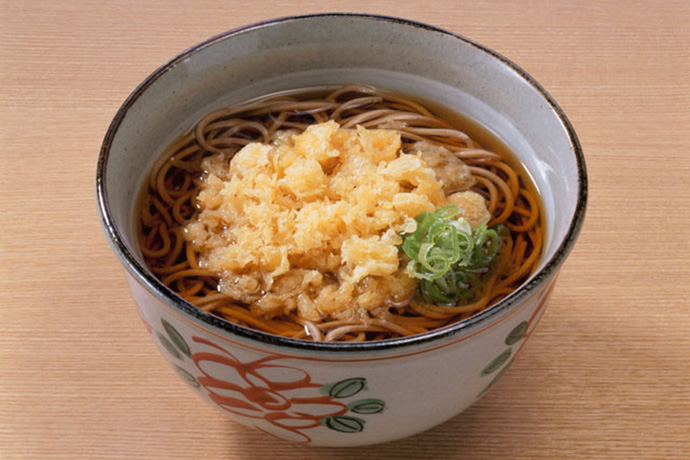
Even the little drops of cooked batter that you get from making tempura are put to good use. They're sold in supermarkets under the name of "tenkasu" or "agédama," and noodle dishes topped with tenkasu and agédama, known as "tanuki soba" or "tanuki udon," are popular in Japan. They're often used to add a rich flavor and a crispy texture to other foods.
A Dish That Looks Simple but Takes a Pro to Make
Not only does tempura not use any special ingredients, it's also simple to cook. Sounds pretty straightforward, right? As long as they take care not to get spattered with oil, anyone can make this dish. This is especially true when using ready-made tempura mix. Tempura made with fried vegetables, mushrooms and other plant-based ingredients is called "shojin-agé," and is often served at Japanese festivals where relatives gather to offer prayers to their ancestors, such as "Obon" and "Ohigan".
Depending on the quality of the ingredients and frying method, tempura can be made even better. While tempura may be a standard side dish, given enough attention to detail, it can also rise to the level of high-quality cuisine, which is somewhat unique in Japanese food culture.
A light, crunchy batter is an essential component of both home-made tempura and store-bought tempura, and while both the batter and the inner ingredient are supposed to complement each other and be enjoyed together, high-quality tempura knows how to get the best out of its ingredients.
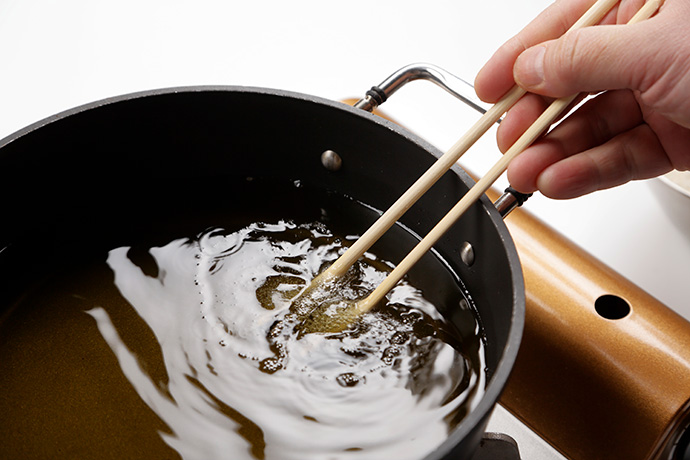
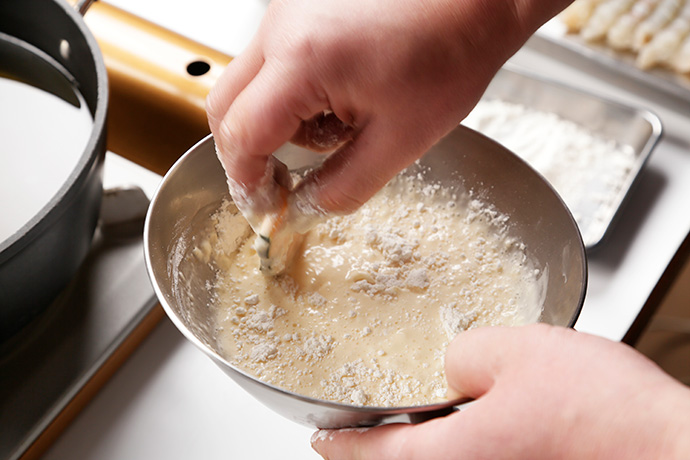
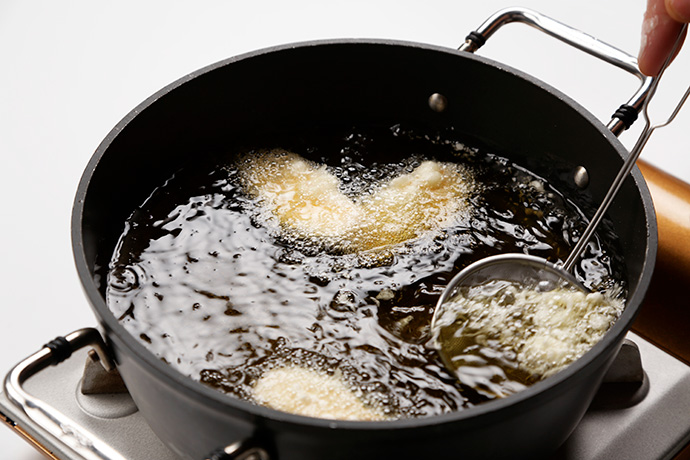
When trying to bring out the flavors of tempura ingredients, the most important things to focus on is the thickness of the batter and the temperature of the oil. If the layer of batter is thin, the ingredient inside will cook as if being steamed by its own moisture. It's important to remove the tempura from the oil when the tempura feels like it is at its most tasty. Some expert cooks can even determine the frying time to within a couple of seconds just by listening to the sound as it fries, or by observing changes in the size of the bubbles in the oil. When you think about how simple it is to make, you might get a bit of a shock when you first take a bite and taste how delicious it is.
From Fast Food to Fine Dining
Tempura was first eaten in Japan 400–500 years ago. It's not actually a native dish to Japan, as it originally comes from Portugal. It became popular among ordinary households as more and more people began to use oil, and during Japan's Edo period (1603–1867), food stands that served fresh fried fish began to spring up around the port of Edo (present-day Tokyo), and tempura gained popularity as a fast food. After a while, the quality of the ingredients got better and restaurants with better frying techniques appeared, helping to establish tempura as high-quality cuisine. As time passed and people became more wealthy, it eventually started to be served at home on dinner tables throughout Japan.
Both tempura and "nigiri-zushi" (hand-formed sushi) grew out of Edo food stands. This Edo-style fresh fish, along with cooks who worked to perfect these dishes, propelled tempura from a casual street food to one of Japan's most famous and representative dishes.
The possibilities for tempura are endless, and it makes just about any food taste amazing. Try some of your favorite vegetables and seafood tempura-style!
Tempura Recipe
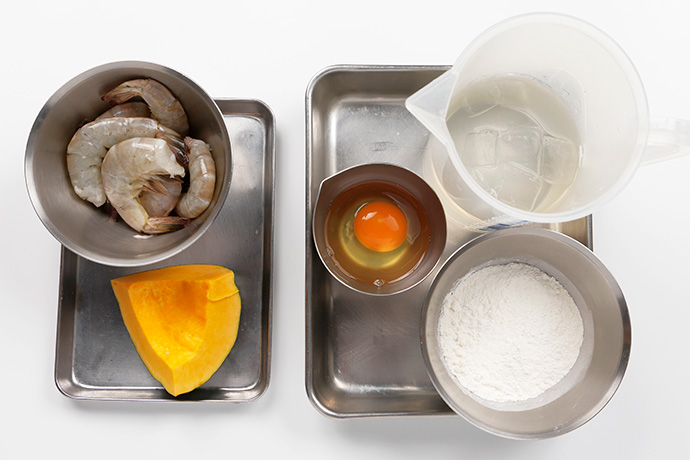
• Ingredients
- 3 shrimp
- Some pumpkin*1
*1 Sliced into 13 mm slices. Other vegetables with a low moisture content such as potatoes and carrots will also work.
Batter
- 100 g flour
- 1 egg
- 50 ml cold water
- Some flour (sifted and chilled)
- Some frying oil (e.g. canola oil)
Tentsuyu *2
- 50 ml bonito dashi stock
- 10 ml mirin
- 10 ml soy sauce
- Some grated daikon radish and grated ginger
*2 You can garnish with salt instead of tentsuyu if you prefer
• Method
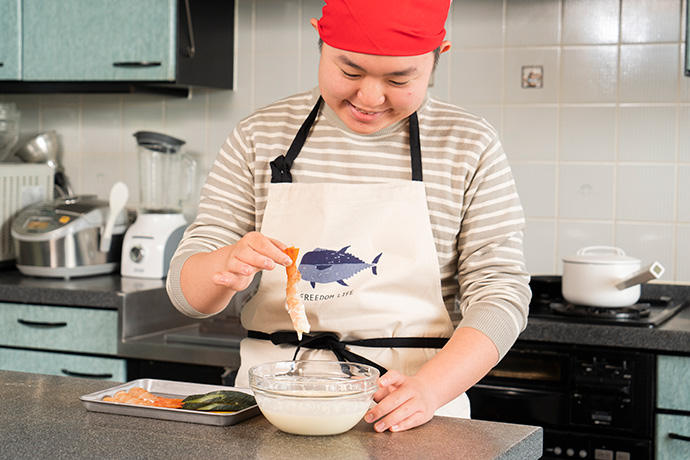
1. Prepare the Shrimp
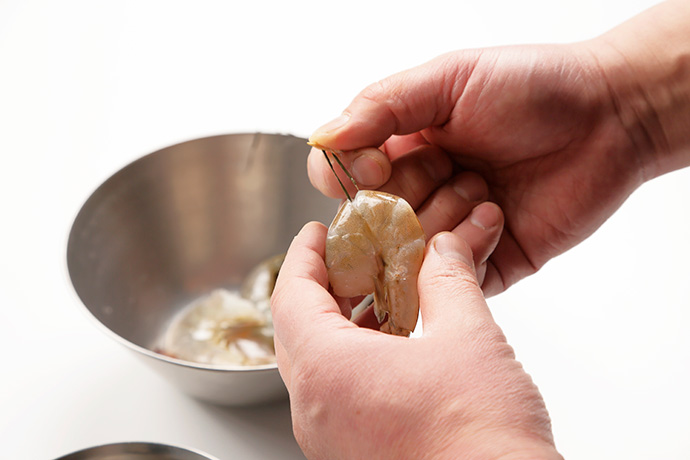
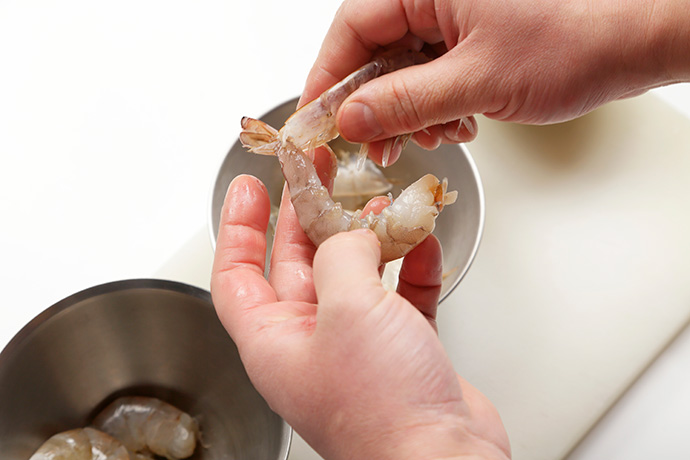
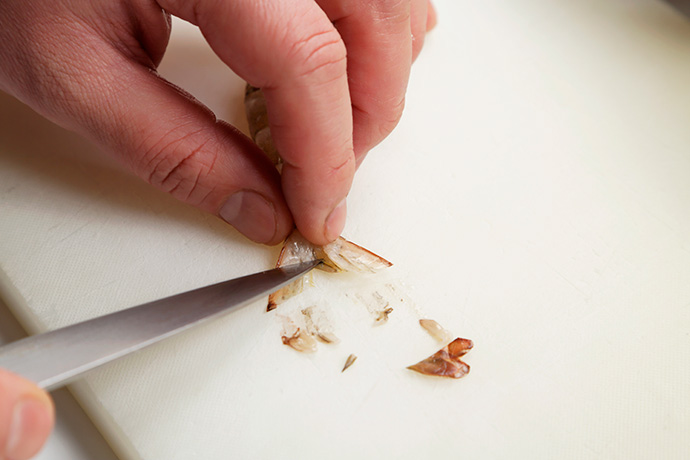
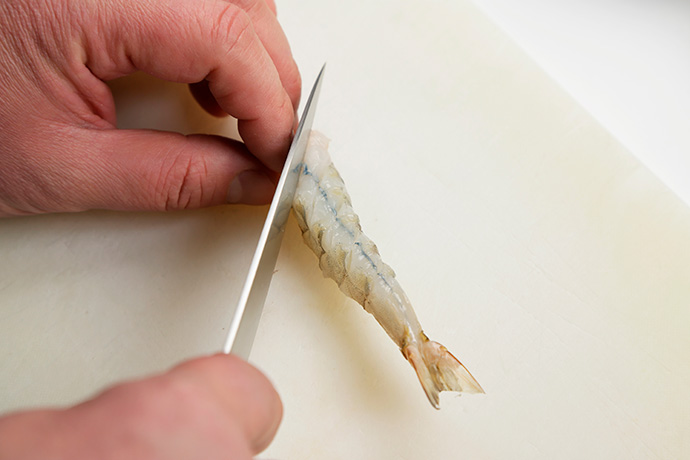
2. Make the Batter
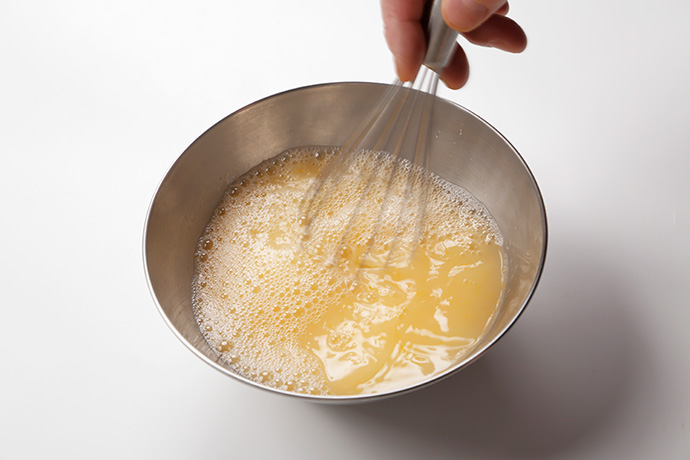
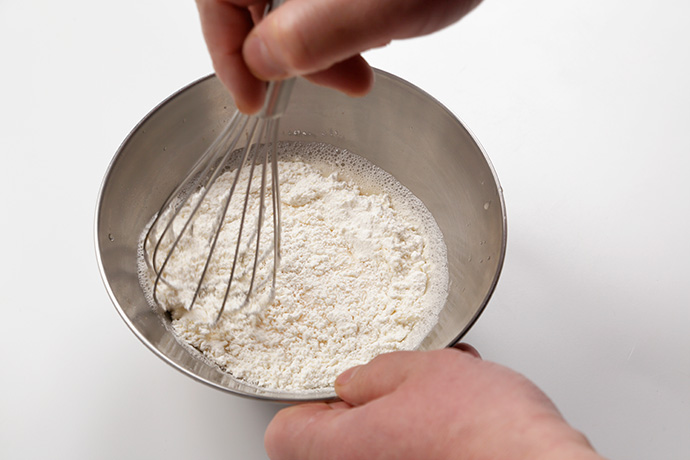
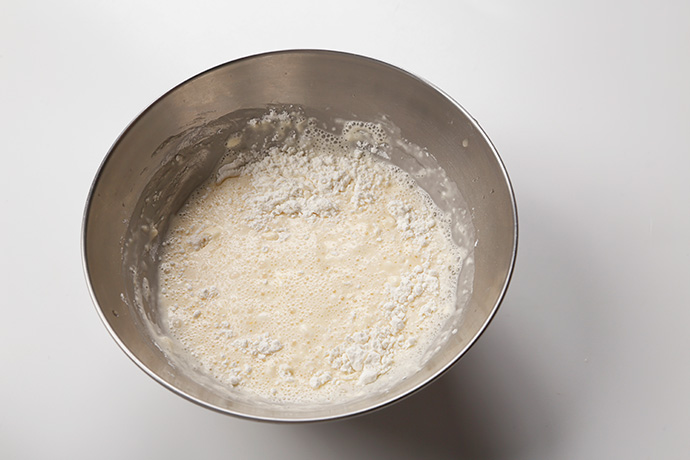
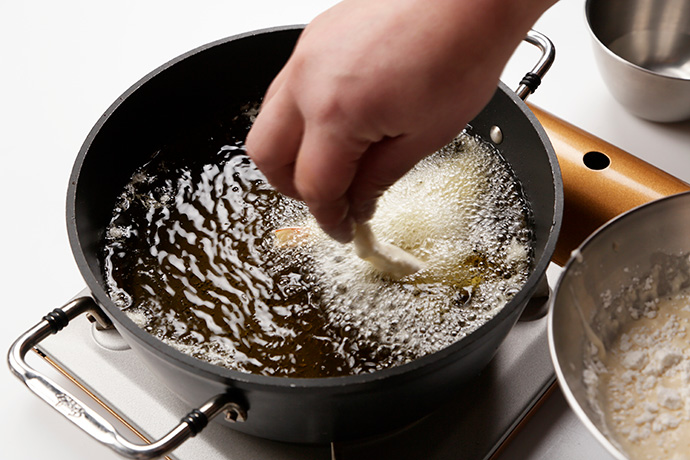
3. Fry
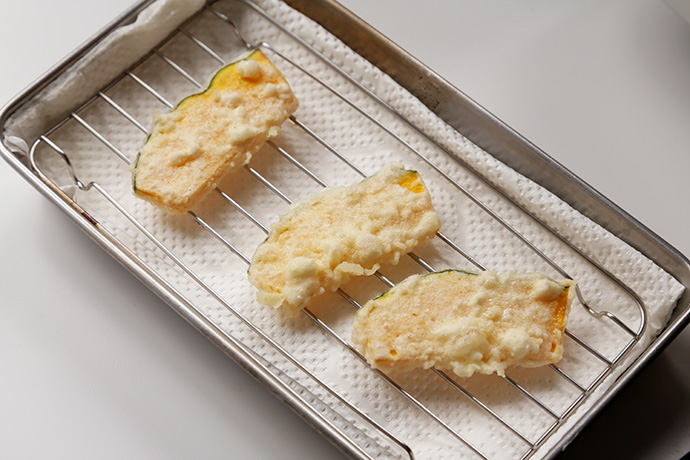

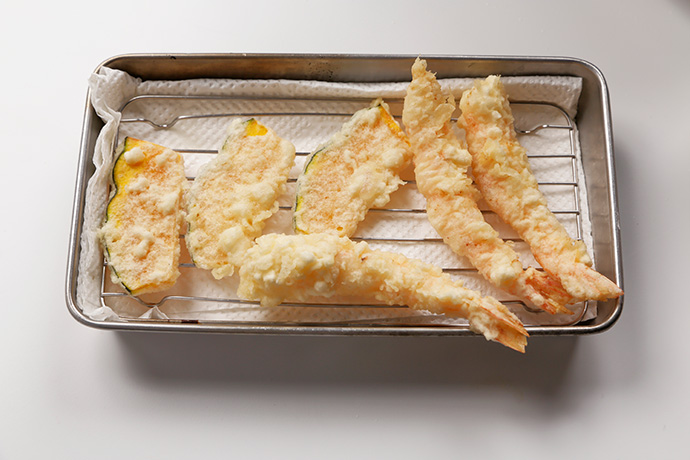
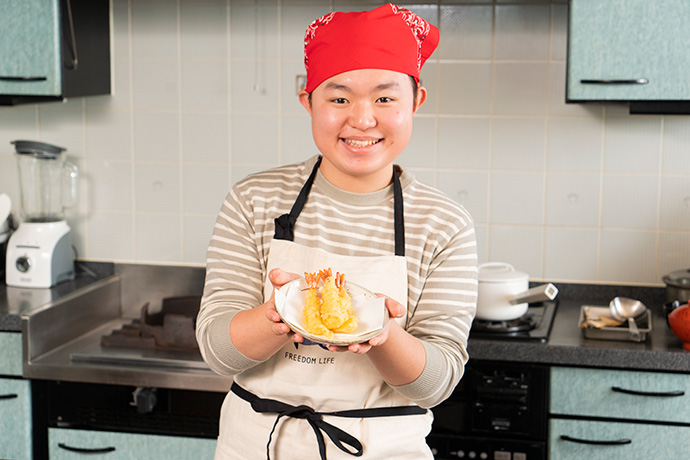
4. Serve

* Garnish with tentsuyu, grated daikon radish and grated ginger. Or just serve with salt.
Recipe by Hayashi Ryohei from Tenoshima