

Japanese Comfort Food — Miso Soup with Tofu
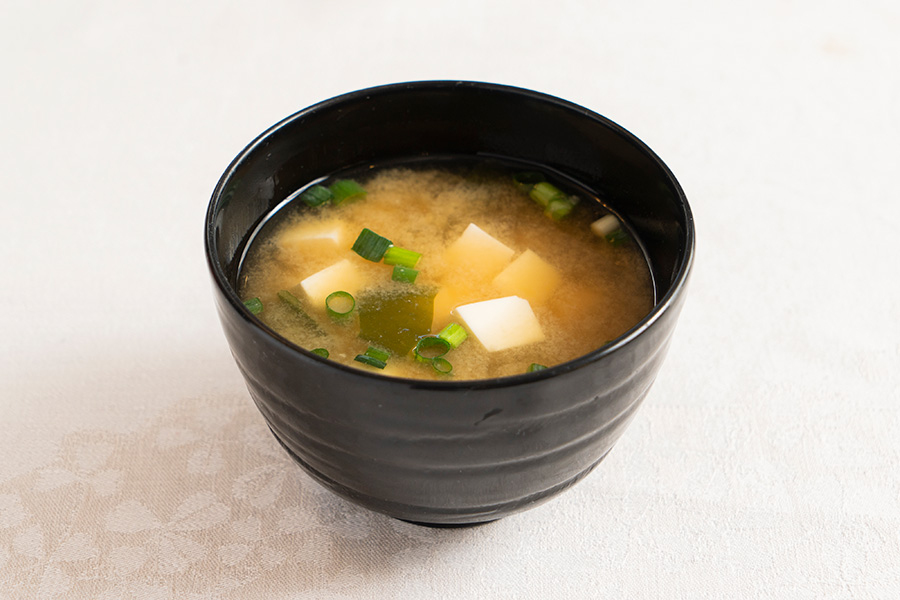
If you're familiar with Japanese food, chances are you've heard of miso soup. Miso soup is a true Japanese comfort food. Each family flavors it their own way and uses different ingredients, so for many people it represents a taste of home. One of the most popular variations is miso soup with tofu.
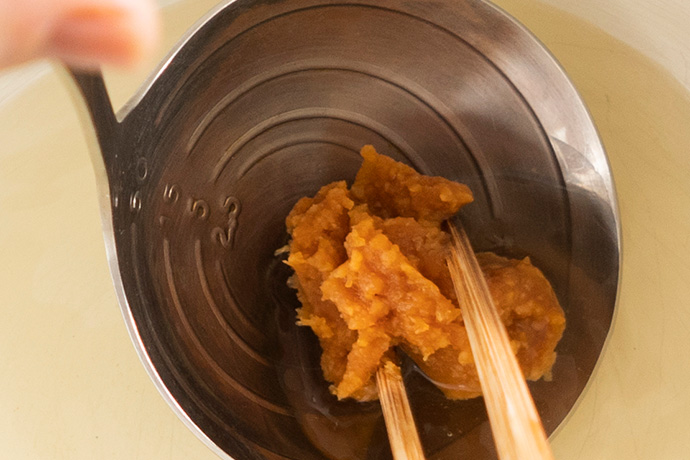
Miso: An Essential Flavor at the Japanese Table
Miso is an ingredient made by mixing steamed soy beans with rice or barley, salt and "koji" (a substance made by growing a harmless mold called "koji-kin" on soy or other grains). This mixture is then fermented. Miso is said to be good for your health, as it's full of vitamins and minerals, as well as aiding digestion. In fact, people used to say that eating miso keeps the doctor away! Soup made from miso is called "miso shiru," or miso soup — a dish that has been enjoyed in Japan since around the 14th century.
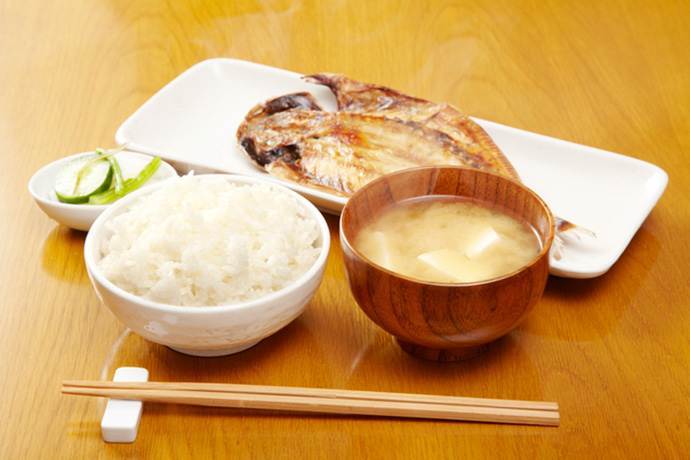
The most basic type of Japanese meal is called "ichiju issai" (literally "one soup, one side"). This includes rice as the staple food, plus one soup dish and one side dish (and sometimes pickles, too). The miso soup is an intrinsic part of the meal, and the koji-kin mold used to make miso has even been designated as Japan's "national mold."
Miso has a long shelf-life, and it's said that in around the 16th century, military commanders would even bring it with them to the battlefield because they valued it so highly as a source of protein. Even today, there are people who like to make their own miso at home. Miso is a national ingredient that has long been enjoyed by Japanese people, and has come to be used in a wide variety of dishes.
Miso Soup Gets Top Marks for Nutrition
Miso soup is nutritious thanks to the miso itself, and you can also add lots of other ingredients to make it a substantial side dish. Japanese people have traditionally paid attention to their health in their daily diet and tend to use seasonal ingredients. For example, adding gourd-type vegetables (such as cucumber, bitter melon or wax gourd) in the summer can help cool the body, while root vegetables in winter help to keep you warm. One ingredient that's a favorite addition to miso soup all year round is tofu, which is made of soy beans and is rich in protein. With its smoothness, silky feel and soy-milk flavor, tofu embodies the delicate tastes of Japanese people, who prize its texture and taste.
As well as tofu, there are many other ingredients that go well in miso soup, like "wakame" and other types of seaweed, green onions, spinach, cabbage, eggplant, cauliflower, broccoli, green beans, and more. Another ingredient added to miso soup is "fu," a traditional Japanese processed food made from baked wheat gluten. An alternative to this is chunks of French bread — and you could even try adding tomatoes for a delicious, slightly tangy flavor.

Healthy Tofu is a Great All-Rounder
Tofu is a healthy, low-calorie, high-protein food that now has fans all over the world. Tofu is said to have originated in China and spread to Japan in around the 8th century, where it was well-suited to the land and climate — not to mention the delicate tastes of the Japanese people. It then evolved into the tofu Japanese people know and love today.
The main ingredient in tofu is soy beans, which are so rich in nutrition that Japanese people call them the "meat of the field." They're widely eaten alongside rice, the Japanese staple food, and have become a key part of Japanese food culture. To make tofu, the soy beans are soaked in water to soften them and then mashed up with the water. The liquid resulting from straining it is soy milk. While the soy milk is warmed up, a coagulant like "nigari," the liquid you get when salt is extracted from seawater, is then added to set the tofu. If you let the tofu set as it is, you get smooth and slippery "silken tofu." But if you put the tofu into a box lined with cloth and squeeze it to remove the water, you get a texture with a bit more bite — this is "firm tofu."


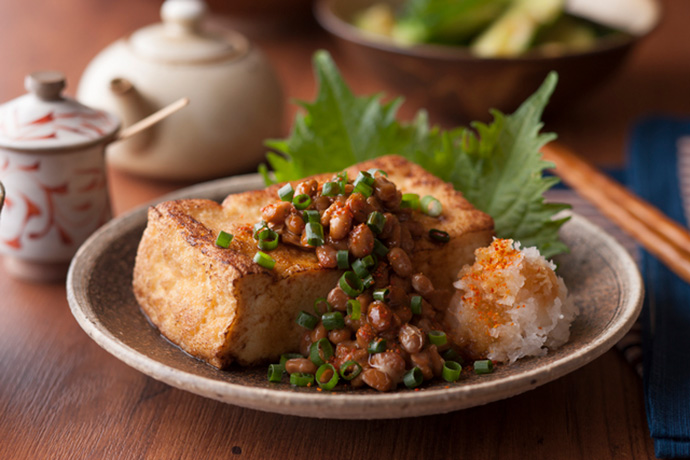
Tofu can be eaten cold as "hiyayakko," where it's topped with green onions, ginger and soy sauce; it can be eaten hot, often boiled in hot water (a dish called "yudofu") or added to hotpots and stews. Tofu can also be fried in oil to make thin-sliced "abura-agé" or thick-sliced "atsu-agé," which are very popular ingredients used in lots of different dishes. There's a huge variety of things you can do with tofu: stew it with meat and vegetables in a sweet-and-salty sauce, grill it, or make "shira-aé," where the tofu is mashed into a paste and flavored with soy sauce and sesame to mix with vegetables or mellow, sweet fruits like persimmon.
Miso soup made with a winning combination of nutritious miso and tofu gives Japanese people the energy they need to start their day. Why not give it a try?

Miso Soup Recipe
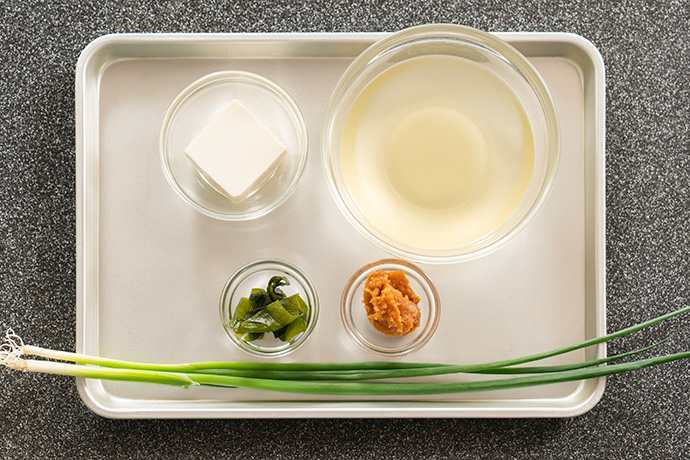
• Ingredients (2 portions)
- 2 cups (470 ml) awasedashi stock (see the recipe below)
- 2 tbsp. miso paste
- 10 g wakame* seaweed
- 100 g silken tofu
- A small amount of green onion
- *If you are using wakame that has been pickled in salt, soak it in plenty of cold water for at least 20 minutes, then rinse it with water and squeeze it out before using.
• Method
1. Slice the ingredients
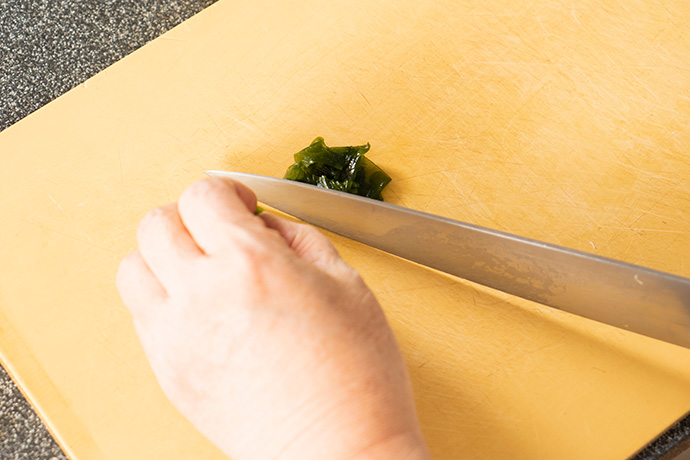


2. Boil the stock and add the miso
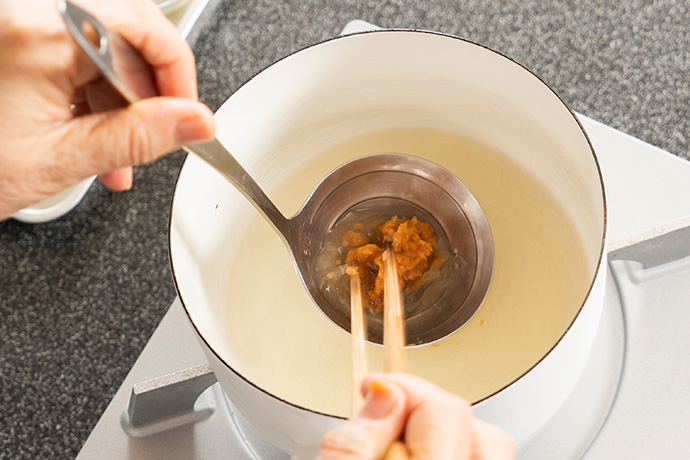
3. Add the tofu and wakame
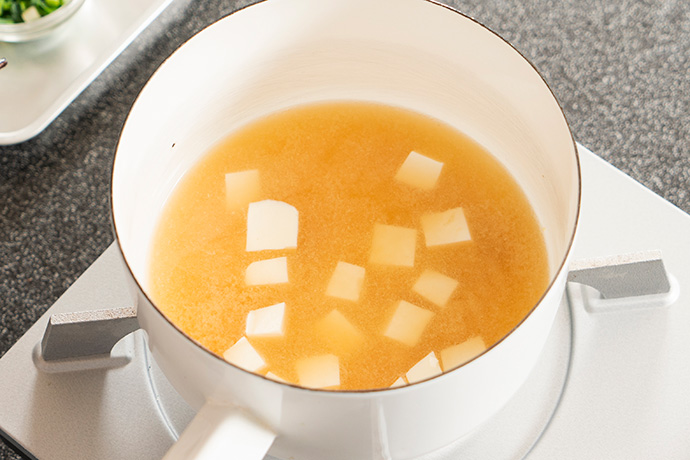
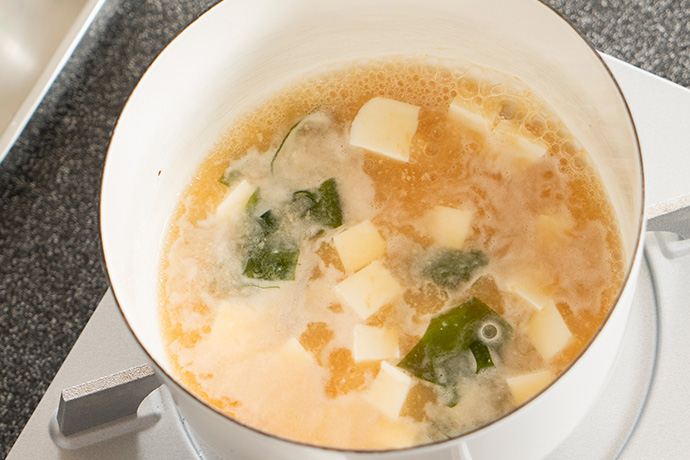
4. Dish up
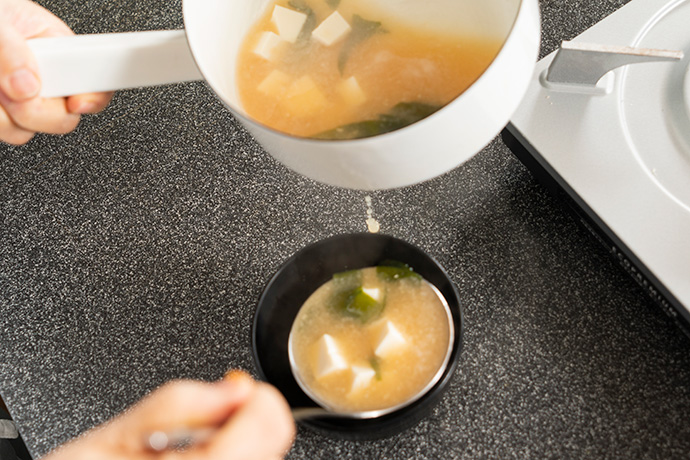

(You can also use chives instead of green onions.)
Awasedashi (Bonito and Kelp Stock) Recipe
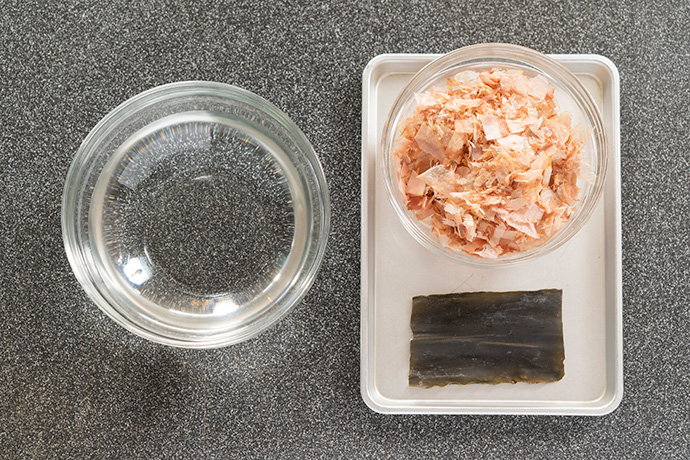
• Ingredients (3–4 portions)
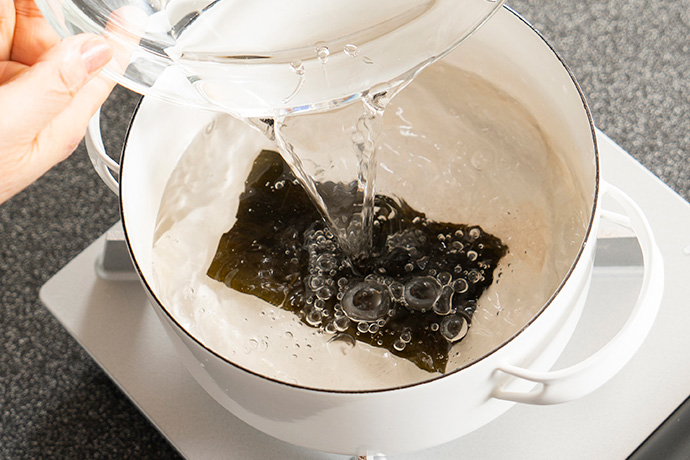
- 10 cm dried kelp (Hidaka kombu)
- 4 cups (950 ml) water
- 30 g bonito flakes (katsuobushi)
1. Soak the kelp in water
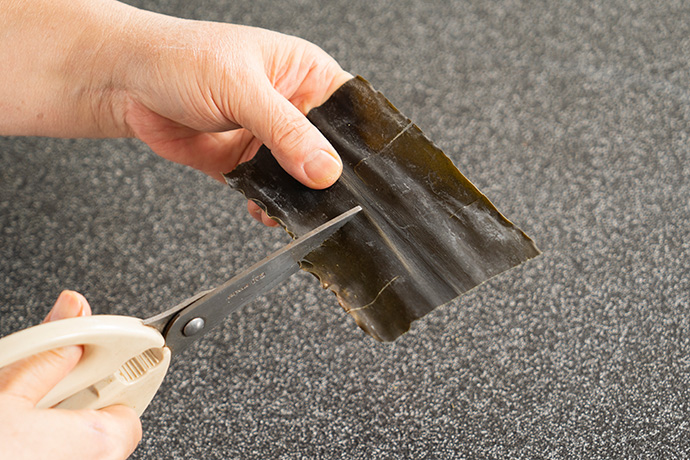
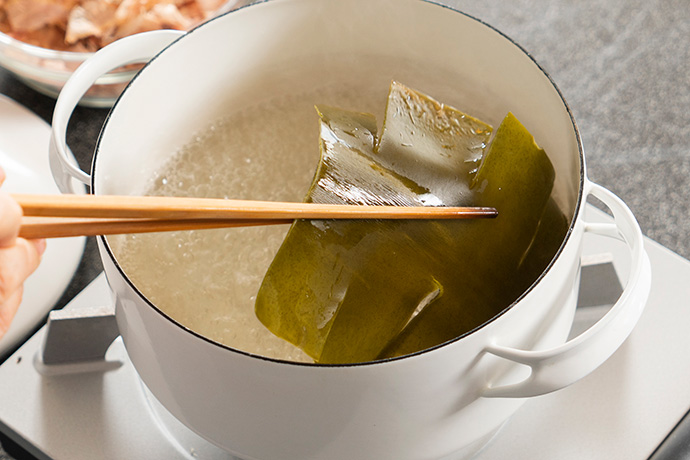
2. Extract the stock from the kelp
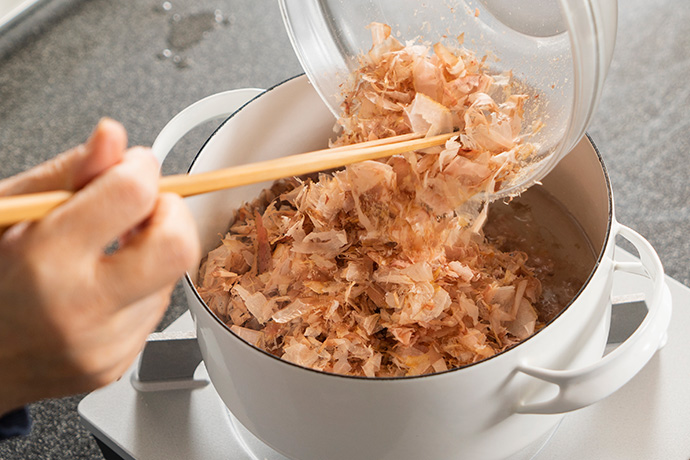
3. Extract the stock from the bonito
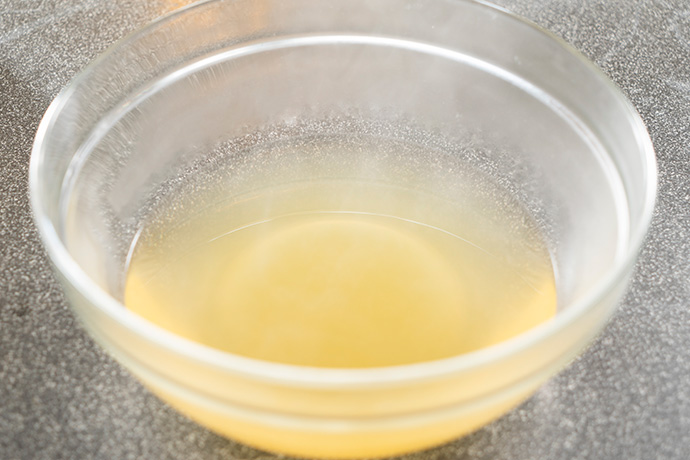
4. Strain the stock

If you can't get hold of bonito flakes or dried kelp, you can make stock using things like beef, chicken, shellfish or prawn shells, and crab.
Recipe by Ogino Kyoko