

Improve Your Rice with Gooey Egg — Oyakodon

The Japanese dish "oyakodon" gets the "don" part of its name from the word "donburi," which means a deep, thick bowl. In Japan, any dish consisting of a donburi bowl filled with rice and a topping is called a "donburi-mono." As for the "oyako" part, that literally means "parent and child" — but what does that have to do with this dish? The answer is in the combination of ingredients! It uses both chicken meat and eggs, which are laid by chickens.
Originally a Delivery-only Food!
Rice has always been a staple food in Japan, so going well with rice is an important consideration for any side dish. With donburi dishes, the rice and the side dish are combined into one bowl, instead of being served separately. They're quick to eat, filling and nutritious — everything you need from a single bowl of food! Sounds pretty good, doesn't it?

Oyakodon is made by simmering chicken, mixing it with egg and serving on top of rice. It was created by a chicken restaurant in Tokyo, which noticed its customers taking the last bits of meat and sauce from chicken sukiyaki—a dish made with soy sauce and sugar for a sweet and tangy taste—mixing it with egg, and pouring it over their rice. The restaurant took that idea and started offering it as a delivery-only food, which became a hit. This inspired many other restaurants to start making it, and soon enough it become known as "oyakodon." It's both simple to make and easy to deliver, so you can see why it caught on.
Tasty Chicken Doesn't Need Stock
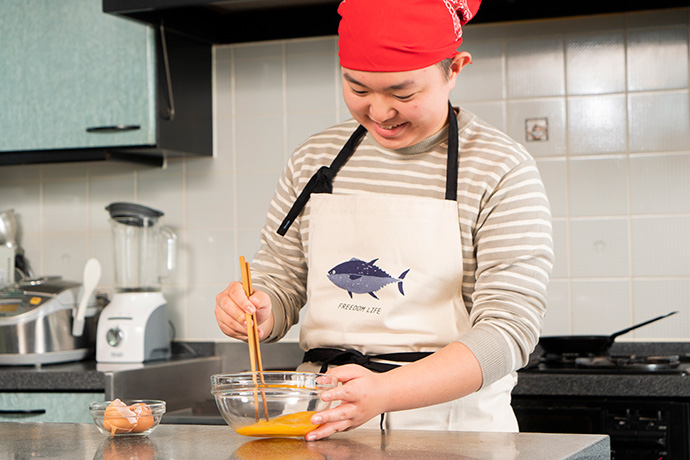
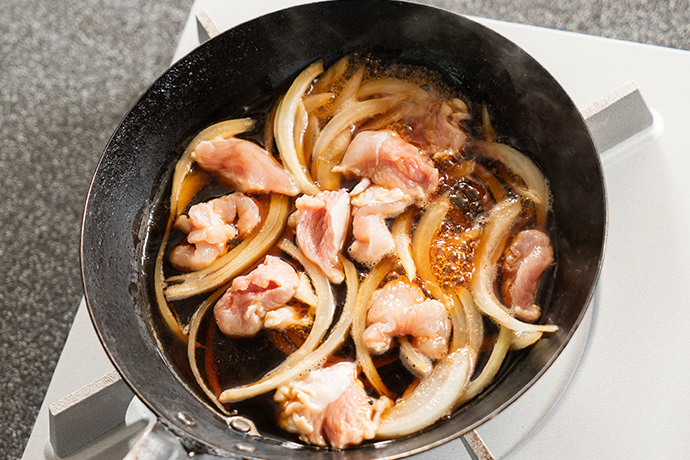
To make oyakodon, most people add both seasoning and dashi stock, but you actually don't need stock to get delicious flavors from the chicken. In Japan, serious oyakodon lovers use a special ladle-like pan called an "oyako-nabe" to make their oyakodon. But don't worry — a small frying pan is all you really need to get tasty results. One of the best things about oyakodon is that it's quick and easy to make.
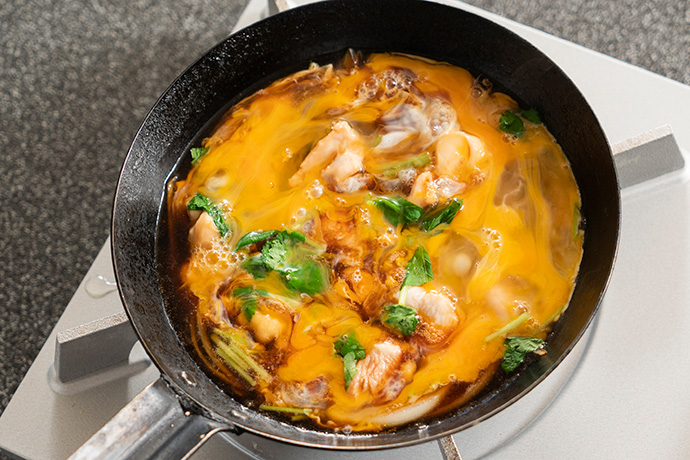
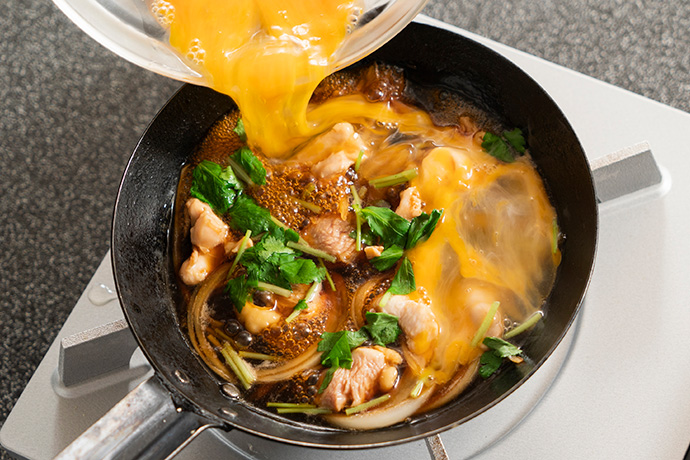
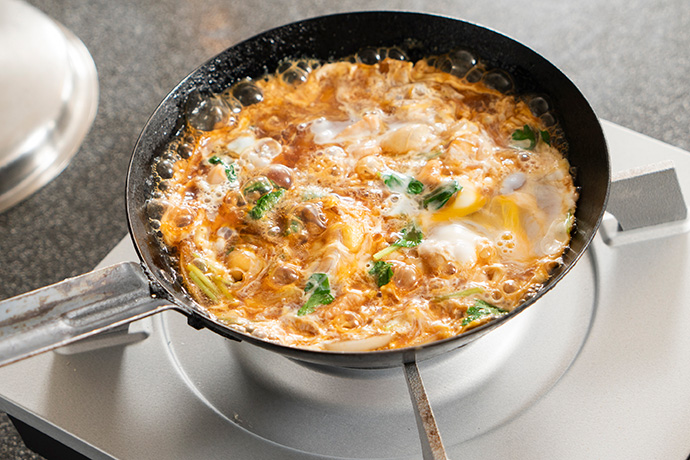
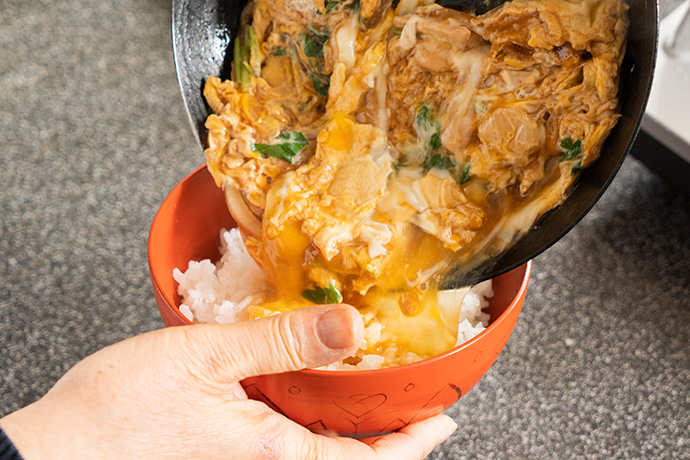
The most important part of the dish is the soft, smooth egg. It's easier to control the heat and harder to mess up if you make one portion at a time, instead of several at once. For the quantities in this recipe, put the lid on after adding the egg and cook for around 30 seconds on a medium heat. Garnish it with mitsuba leaf if you can find some, or use some Italian parsley, green onion or celery leaf instead. Any fragrant green garnish is okay! If you like it extra fragrant, you could even use cilantro. Or if you just want the color, you could use spinach or peas instead. Just pour the mixture onto freshly cooked rice and it's ready to eat.
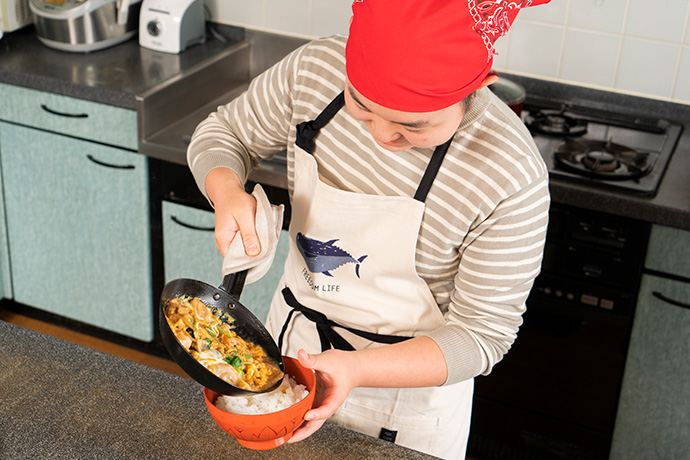
The egg works like a blanket, keeping the rice piping hot. The juices of the chicken mixed with the tasty egg and freshly cooked rice are bound to bring a smile to your face!
Even without eggs, you could simmer the chicken in the same way to make teriyaki-style chicken — add this to a bowl of rice and top it with seaweed for another delicious combination.
A Variety of Delicious Donburi Dishes!
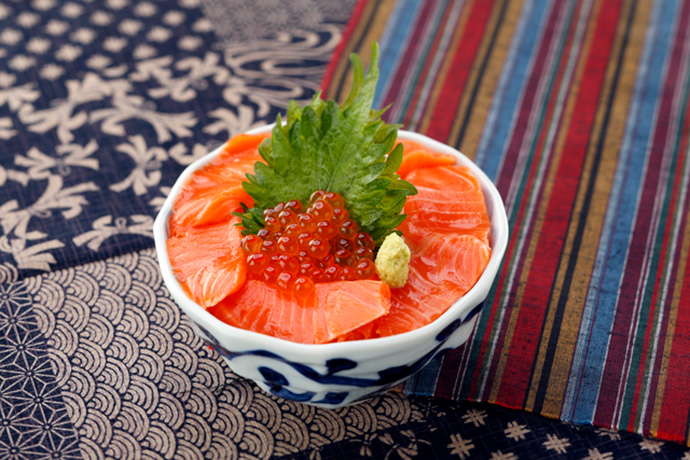
There are lots of other donburi dishes that are loved throughout Japan. "Gyudon," which is made by simmering beef with other ingredients like onion and soy sauce for a sweet and tangy flavor, has found popularity in other countries too, thanks to Japanese restaurants overseas. Other popular choices include tempura (deep-fried vegetables and fish), eel kabayaki (eel in a teriyaki-style sauce), and beef steak. You'd be surprised how many varieties there are! There's another type of oyakodon too — if you put salmon and salmon roe (eggs) together, you get a seafood version called "kaisen oyakodon." There's also "kaikadon," where a different meat is mixed with egg — this is also called "tanindon" from the word "tanin," which means strangers. Then there's "bakudandon," a bowl topped with tuna, natto (fermented soy beans), raw egg, okra and all sorts — it's a flavor explosion, hence the word "bakudan," meaning bomb. When it comes to donburi dishes, there are some pretty fun and unique names! In other words, it's a food that inspires creativity. Why not put your favorite ingredients on rice and make your own original donburi dish?

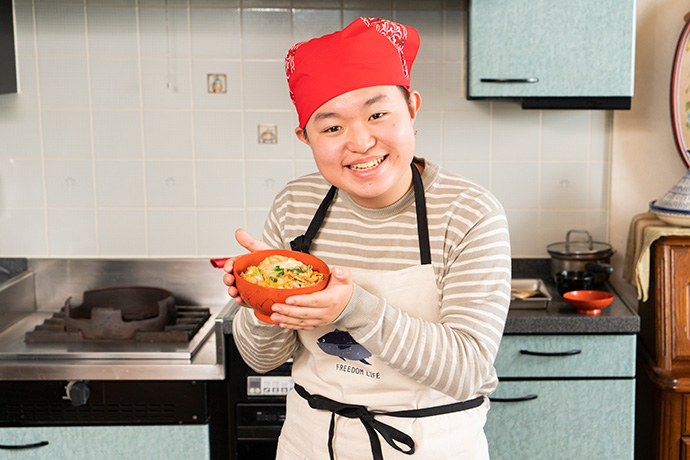
Oyakodon Recipe
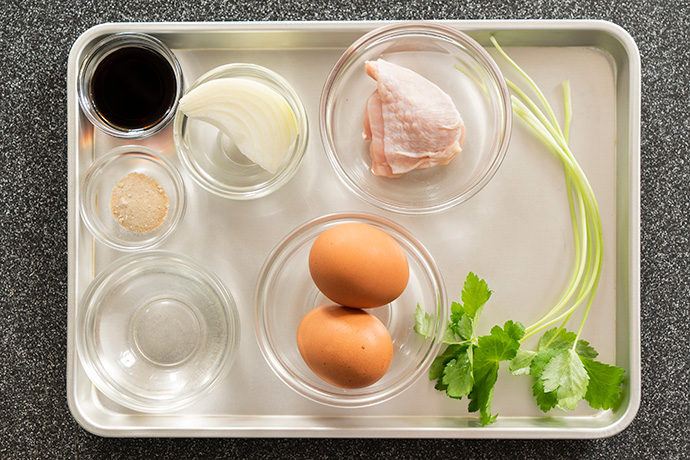
• Ingredients (1 portion)
- 40 g chicken legs
- 1/8 onion
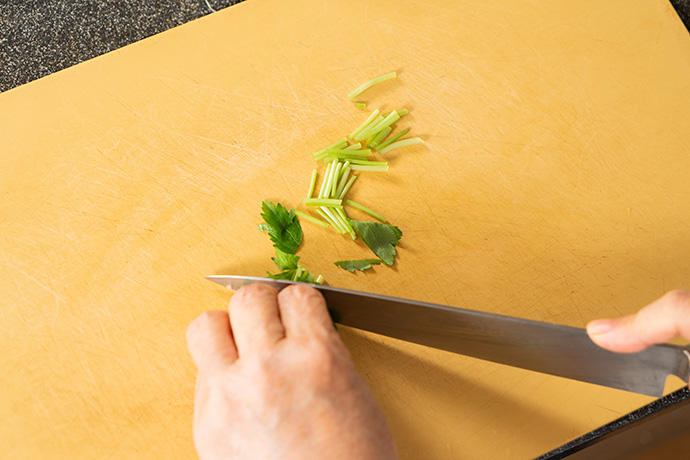
- Some mitsuba leaf
- 1 bowl of rice
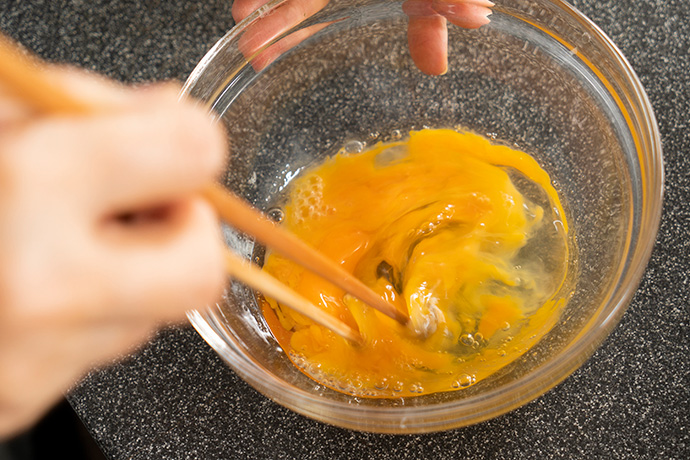
- 2 eggs
Mixture A (mix in advance):
- 60 ml water
- 1 tsp. sugar
- 1 tbsp. soy sauce
• Method
1. Slice the ingredients
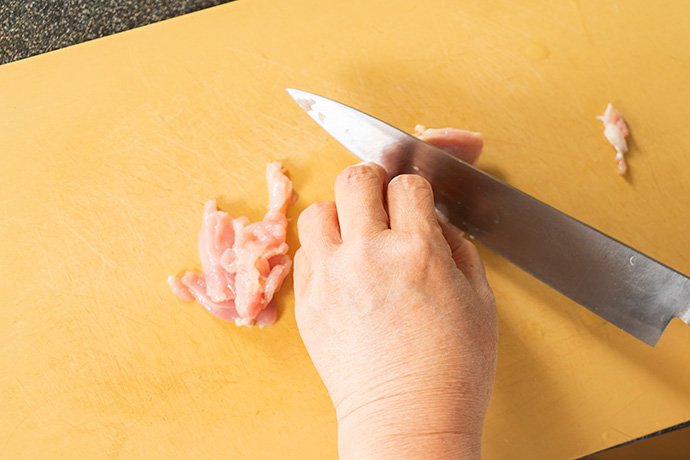
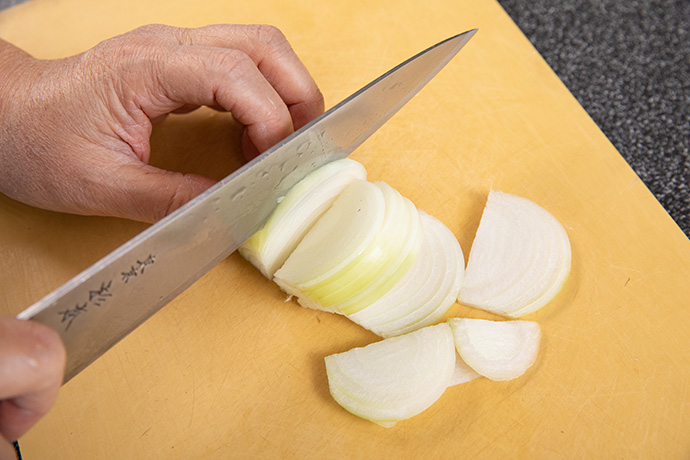
2. Stir the eggs
3. Simmer the onion and chicken
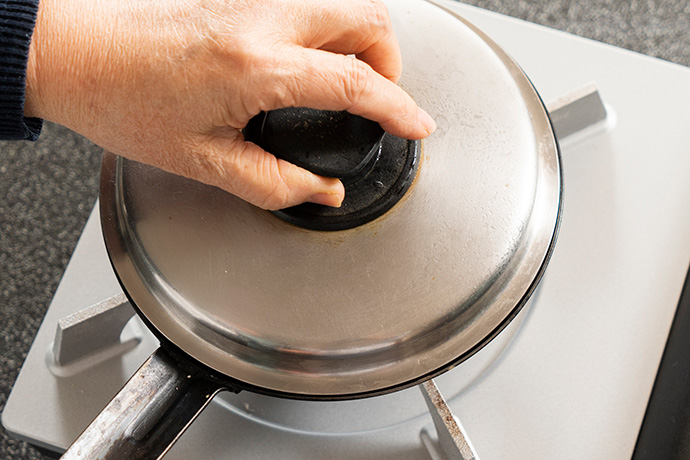
4. Add the egg
5. Dish up

Notes:
- You can replace the water in mixture A with 30 ml of water, 1 tbsp. of mirin and 1 tbsp. of sake.
- If you can't get hold of mitsuba leaf, you can replace it with parsley or celery leaf.
Recipe by Ogino Kyoko