

A Taste of Home — Tamagoyaki

What do people eat for breakfast in your country? Egg dishes, like scrambled eggs or omelets, are commonly eaten with bread and cereal at breakfast.
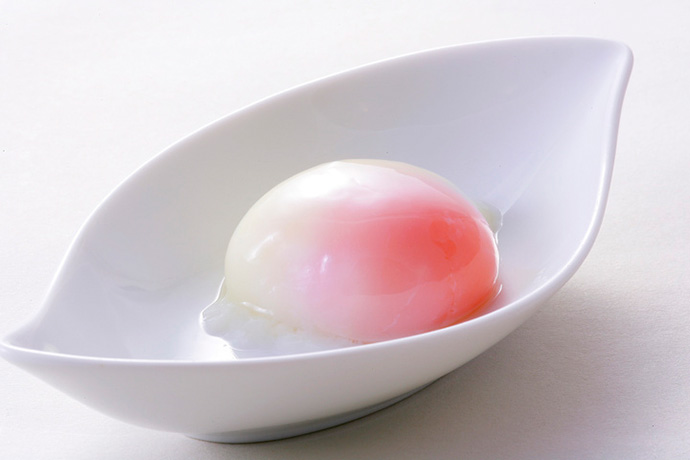
Japan is one of the world-leading countries that consumes eggs. And thanks to the detailed quality control that eggs go through, you can safely eat them raw — even regular eggs sold in supermarkets. Japan has lots of different egg dishes that can be eaten with other foods, like "tamagokaké gohan," which is made by stirring raw egg into freshly cooked rice with a little soy sauce. There's also "nitamago," where eggs are boiled in a sweet-and-salty broth made from fish stock, sugar and soy sauce, and "onsen tamago," where they're soft-boiled in water that's not quite boiling, so the yolk and white stay gooey inside. Dishes that use raw or soft-boiled eggs are quite common, as Japanese eggs are safe and high quality.
Is Tamagoyaki Japan's Most Popular Egg Dish?
Among all the different Japanese egg dishes, "tamagoyaki," made by frying and rolling up thin sheets of beaten egg in a special pan, is one of the ones Japanese people eat the most throughout their lives. It's so popular that there are even tamagoyaki specialty restaurants!
While you can make a simple tamagoyaki with just eggs and a little seasoning, it can also be customized into something totally different depending on what you put in it. You can use fish stock to make it fluffy, extra sugar to make it sweet, add soy sauce for flavoring or choose to leave it out — tamagoyaki can be customized just to way you like it! Tamagoyaki is so strongly associated with home cooking in Japan that it's even mentioned in a nursery rhyme that goes, "Mommy, you smell good, were you cooking? Is it tamagoyaki?" (Okaasan (Mommy) by Nakada Yoshinao; lyrics by Tanaka Nana).
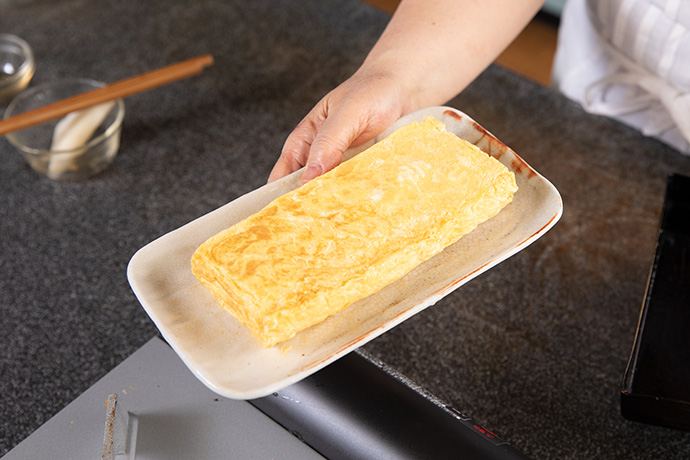
Tamagoyaki is common as a side dish for breakfast and dinner, but it's also a popular part of bento boxed lunches. There are endless varieties that you can make by adding vegetables for color, or wrapping ingredients like ham, cheese or seaweed into the egg when rolling it up.

"Dashimaki Tamago" and "Atsuyaki Tamago" are Both Types of Tamagoyaki!
In the 18th century, a cookbook containing 103 different egg recipes was published in Japan. Eggs became a very popular ingredient, as they could be used to make such a wide variety of dishes.
Tamagoyaki is made by rolling up sheets of beaten egg while it cooks on a special frying pan called a tamagoyaki-ki, which is small and square or rectangular in shape. Although tamagoyaki is made pretty much the same way wherever you are in Japan, the flavor varies in different regions.
In the Kinki region, which includes the cities of Kyoto and Osaka, people tend to prefer a fluffy type of tamagoyaki called "dashimaki tamago," which uses lots of high-quality stock made from kelp. Dashimaki tamago is seasoned very lightly so as not to overpower the flavors of the egg and stock, and is sometimes eaten with finely grated white radish on the side. Meanwhile, in the Kanto region, which includes Tokyo, many people enjoy a sweeter tamagoyaki called "atsuyaki tamago," made with lots of sugar. If you tried it without knowing otherwise, you might think it was a dessert!

Different Tastes Between East and West Japan
So where does this difference in taste come from?
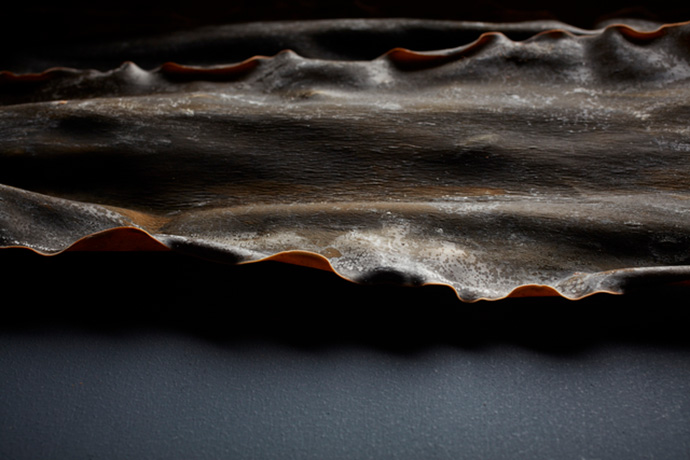
Aside from tamagoyaki, people in the Kansai region regularly use a particular type of stock made from kelp, in addition to the more common Japanese stock made from dried bonito flakes called "katsuobushi." Kelp is grown in the cold seas around Hokkaido, Japan's most northern island. In the 18th century, large boats called "kitamae-bune" crossed the Sea of Japan full of seafood and other sea products from Hokkaido, which they traded at various ports on their way down to Osaka. One of the main products they brought with them was kelp. The water in the Kansai region is soft, with low amounts of calcium and magnesium, so it is very good for extracting the flavor from kelp. In other words, the water in Osaka and Kyoto was perfect for making kelp stock.
Meanwhile, in Tokyo (which was called Edo at the time), many craftsmen gathered from all over the country to build castles and towns. These craftsmen tended to prefer intense flavors after a hard day of physical labor. And unlike the Kansai region, katsuobushi (dried bonito fish) stock was preferred. The flavor and aroma of katsuobushi stock is richer than kelp stock, so it goes well with soy sauce and sugar.

While thick wheat noodles called "udon" were preferred in the Kansai region, people in Kanto tended to eat thinner buckwheat noodles called "soba." Soba noodles are often dipped in a sweet and salty sauce made by adding sugar and soy sauce to katsuobushi stock. Restaurants used this delicious sauce to make tamagoyaki, creating a dish with a strong flavor.
Same Food, Different Flavors?
Soy sauce is popular around the world, but it's actually different in the Kansai and Kanto regions. Most soy sauce found overseas is the "koikuchi" (dark) type, which is mainly used in the Kanto region. It has a rich color and taste. Meanwhile, people in the Kansai region use "usukuchi" (light) soy sauce, which has a lighter color and gentler flavor.
Because of these different stocks and soy sauces, a tamagoyaki will taste totally different in East and West Japan, even if it's made in exactly the same way. If you ever visit Japan, try them both and see how different they are!

Tamagoyaki Recipe
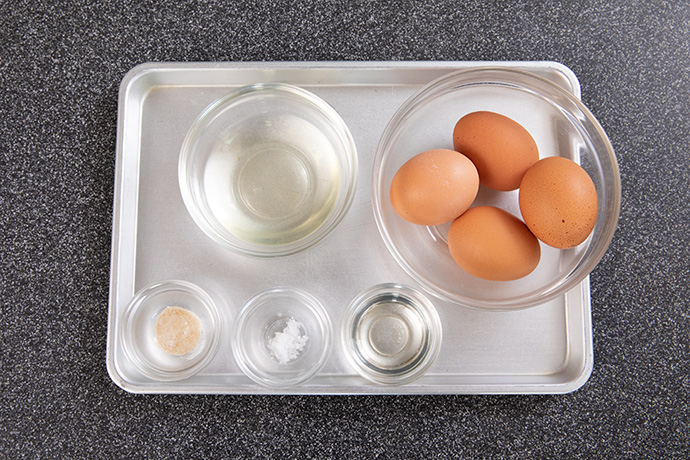
• Ingredients (2–3 portions)
- 4 eggs
- 4 tbsp. of Dashi stock
- A pinch of salt and sugar
- A small amount of oil
• Method (If you don't have a tamagoyaki pan, use a frying pan about 15–18 cm wide)
1. Beat the egg


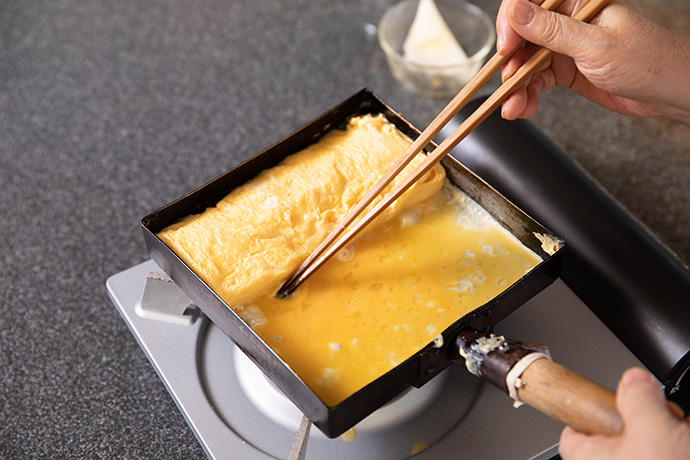
2. Cook the egg little by little
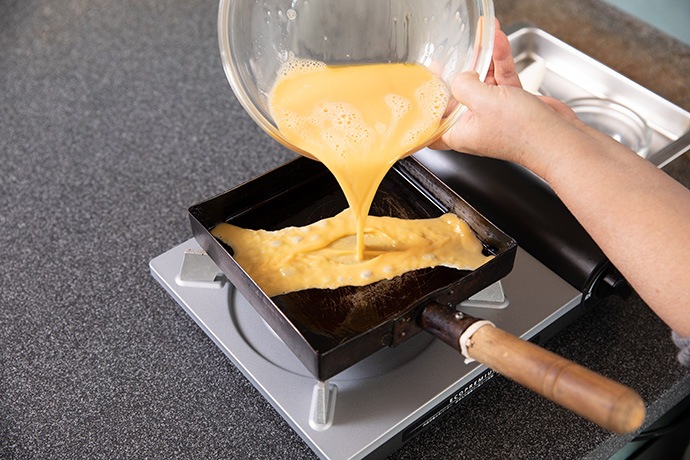
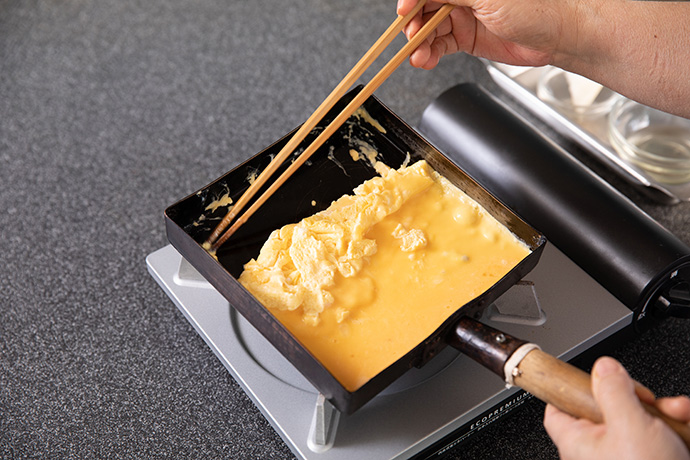
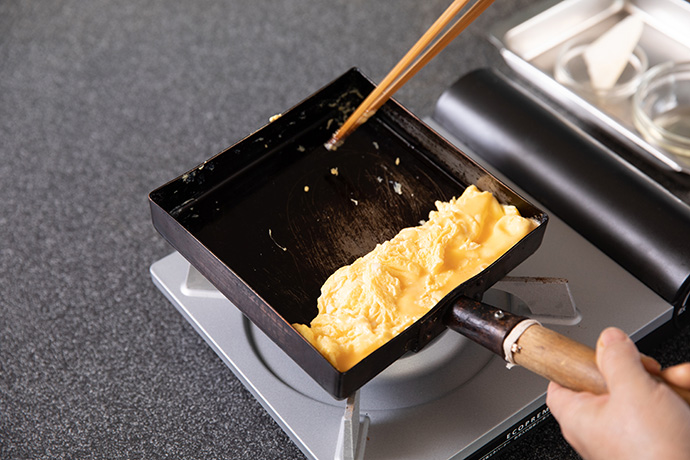
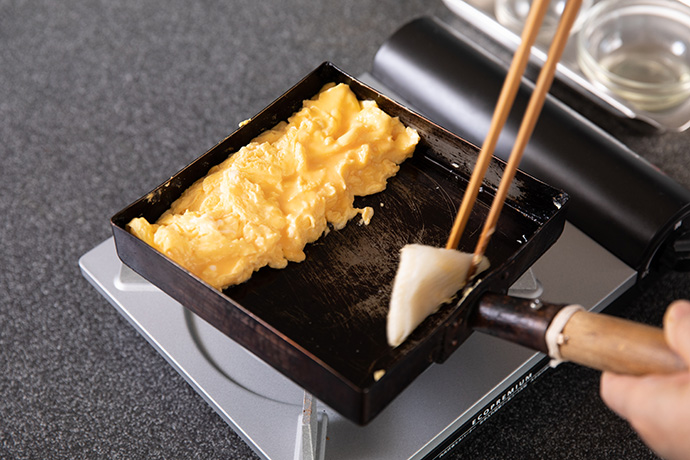
3. Continue cooking the egg
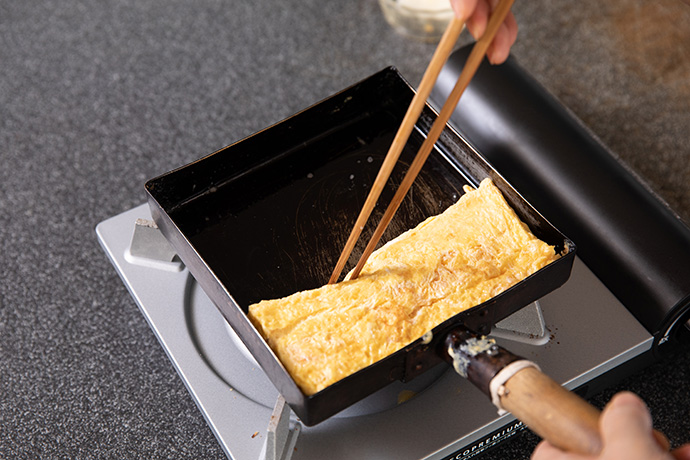
4. Shape the tamagoyaki
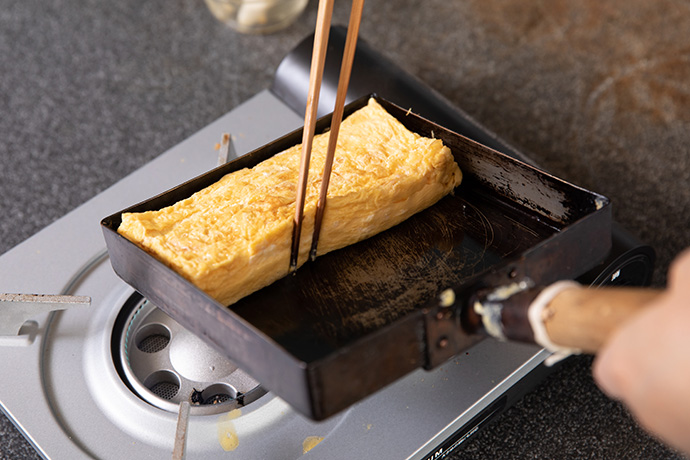
5. Dish up

Recipe by Ogino Kyoko