

Inari-Zushi: Japan's Beloved Sushi

When you hear the word "sushi," you probably think of "maki" rolls, or "nigiri," which is one of the most traditional types of sushi, consisting of fresh fish or vegetables draped over small blocks of seasoned sushi rice. But have you ever heard of "inari-zushi"?
Inari-zushi is made by taking thinly cut fried tofu known as "abura-agé," seasoning it to make it sweet and salty, and then filling it with sushi rice. It's such a familiar food that Japanese people affectionately call it "o-inari-san."
The "inari" part of the name comes from "Inari-jinja" — Japanese shrines dedicated to the god of food and farming. Japanese people would offer abura-agé at Inari shrines as they prayed for a good harvest. People began to fill the abura-agé with rice, and inari-zushi was born. That's why it's traditionally made for festivals celebrating the harvest.
Easy to Carry and Eat with Your Hands
Inari-zushi is often eaten at special events such as school field trips, sports days, and when viewing the cherry blossoms in spring. It's also commonly included in sushi sets together with "maki-zushi," a type of sushi where the cooked rice and filling are rolled up. Both maki-zushi and inari-zushi are easy to carry around, and inari-zushi can be eaten with your hands, making it the perfect food for outings and events. Of course, they are also used in everyday lunches, as well.

What's unique about inari-zushi is that the abura-agé is used as a sort of pocket for the filling.
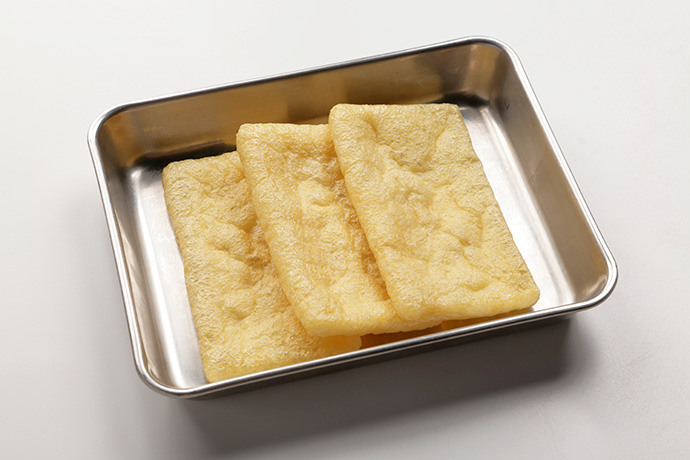
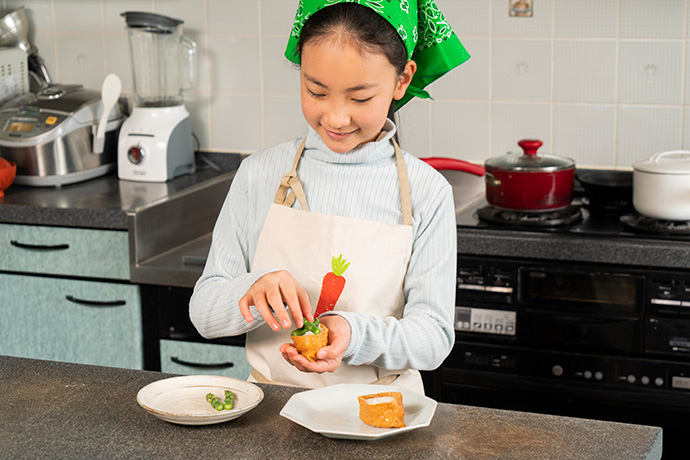
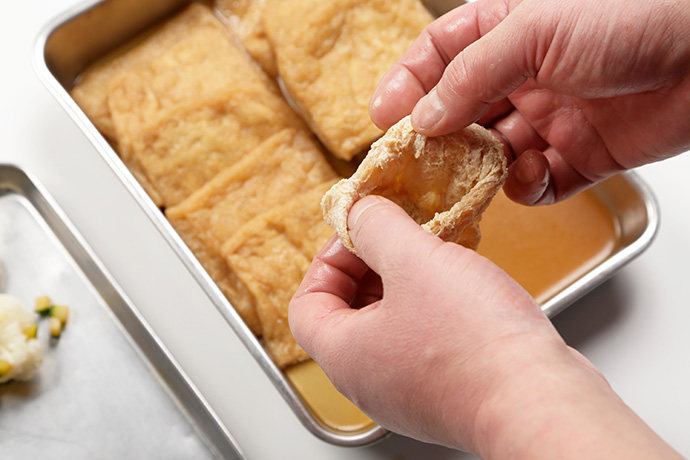
When the abura-agé, which is made from thinly cut pieces of tofu, is fried, it turns into something like a soft batter with air in the middle. This is then cut and opened up by hand to make a pocket. The pocket can then be filled with sushi rice and other fillings.
A Variety of Arrangements of Presentations
Basic inari-zushi is filled with white rice that has been seasoned with vinegar, but it's not unusual to come across inari-zushi where the rice has been mixed with other ingredients as well. These ingredients might include mixed vegetables or mushrooms, hijiki seaweed, chicken, mixed greens, pickled ginger or sesame seeds.
More recently, flavors such as salmon, shrimp, salmon eggs, beef and cheese have started to appear, as well as Western- and Chinese- inspired variations. When you look up inari-zushi on recipe websites, there are even some that are filled with pilau or fried rice, Thai rice with stir-fried basil or pork and red bell pepper, and gapao rice. Some people even fill the abura-agé with noodles instead of rice. There really is a limitless number of variations!
Japan's Many Rice-Based Foods and Dishes
For most sushi, like "nigiri-zushi," the proportion of rice to toppings like salmon and shrimp is about half-and-half, but for inari-zushi, rice is the star of the show, making up a much bigger proportion of the filling.
Rice is one of the most important foods in the Japanese diet. Not only is rice a staple food by itself, but it's also used to make seasonings and other foods that are often found on Japanese dining tables.
It's a well-known fact that rice is used to make Japanese saké, but it's also used to make sushi vinegar, as well as mirin (sweet rice wine), which is used to add luster and depth of flavor to simmered and grilled foods. There are a wide variety of uses for rice. Even the rice bran that comes off rice when it is milled is used to make "nukadoko," a key ingredient in Japanese pickle-making, and toasted rice is added to green tea to make fragrant "genmaicha." "Senbei" crackers, a type of snack that is popular in Japan, are also made from rice, and more recently, rice flour has been used as an ingredient in breads and desserts as well.
The reason that rice is used so widely is most likely due to its mild flavor.
There are plenty of ways to enjoy inari-zushi too. It all depends on your creativity. Seasonal ingredients can be used to capture the essence of the season. Substituting vinegar for lemon in the rice gives it the perfect summer taste, while carrots can be cut into leaf shapes and added for decoration in the fall. Part of inari-zushi's appeal is how easily it can be changed to suit the seasons. It can also be made vegan-friendly by using only plant-based ingredients.
It's even easier to make inari-zushi using inari-agé, which is a type of pre-seasoned abura-agé that you can buy in stores. You can also mix the sushi rice and other ingredients together in a bowl to make a colorful Japanese party food called "chirashi-zushi."
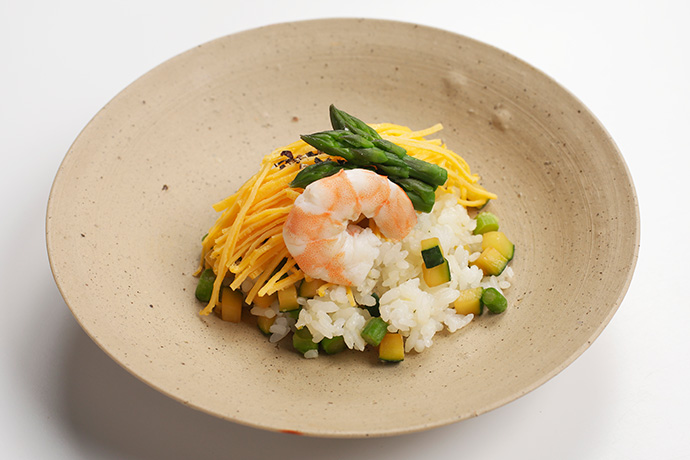
Asparagus, Zucchini and Butter Soy Sauce Inari-zushi Recipe
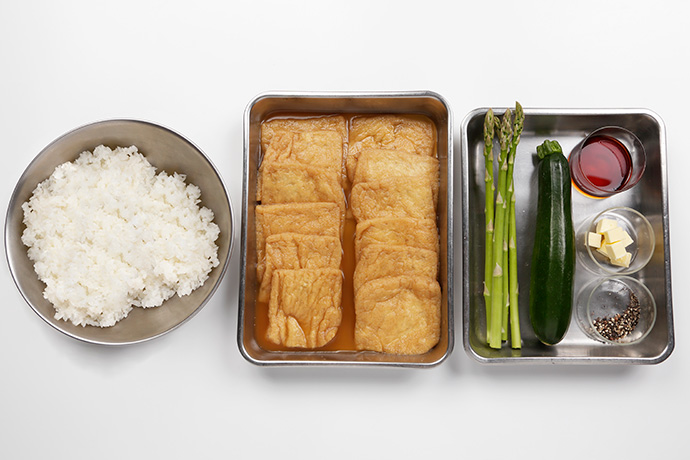
• Ingredients (makes 12 pieces)
"12 pieces (7.5 × 15 cm) inari-agé"
- 6 pieces abura-agé
- ┌800 ml water
│60 ml saké
A│26 ml soy sauce
└40 g sugar
"Sushi rice"
- 400 g rice (cooked)
- ┌60 ml rice vinegar
B│24 g sugar
└9 g salt
"Filling"
- 6 spears of asparagus
- 1/2 zucchini
- 1 tbsp. butter
- 2 tsp. soy sauce
- A pinch of black pepper
Preparation (Stir-Fry the Filling)
1. Cut the asparagus in half crosswise. The tips will be used for decoration and the bases will be used in the sushi rice.
2. Cut the asparagus tips into quarters and the bases into 5 mm-thick slices, and dice the zucchini into 5 mm pieces.
3. Sauté the ingredients from step 2 in a frying pan with some butter, and season with soy sauce and black pepper.
• Method
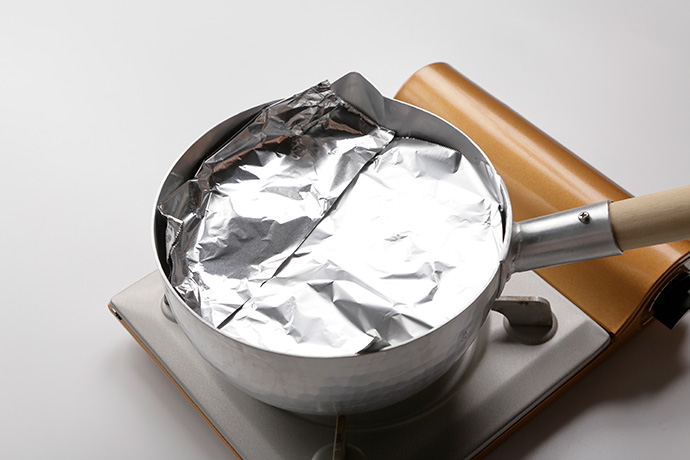
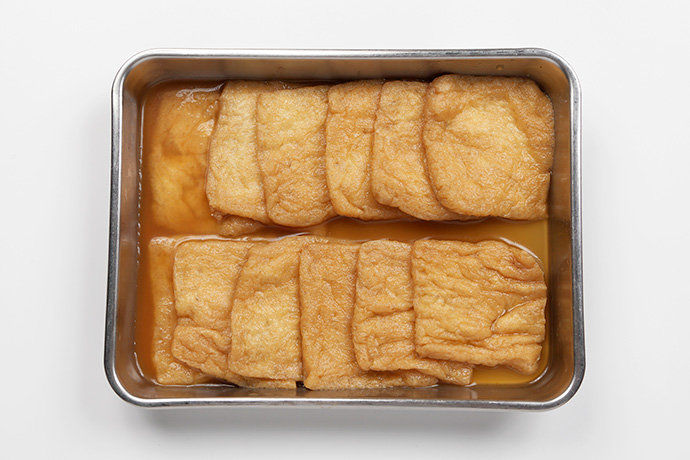
1. Make the Inari-Agé
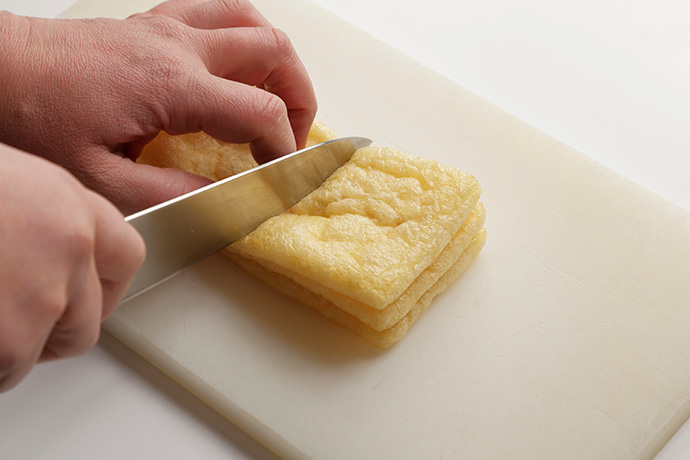
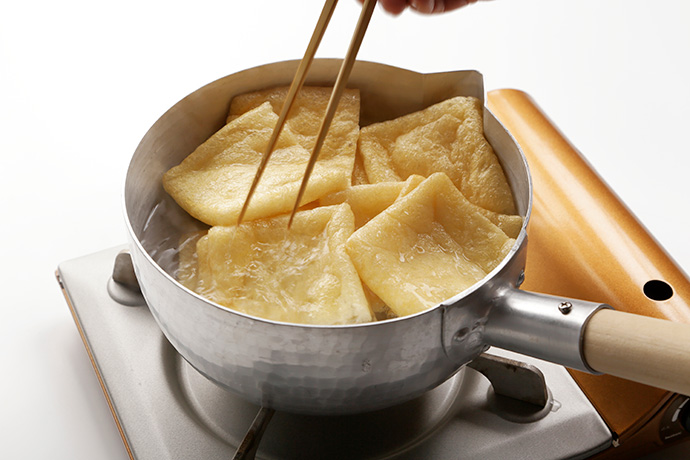
Note: Removing excess oil from the abura-agé will make it less oily and help it to absorb flavor more easily.
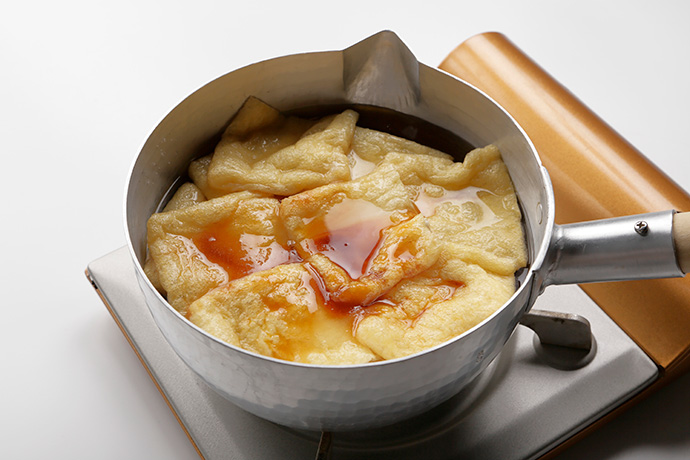
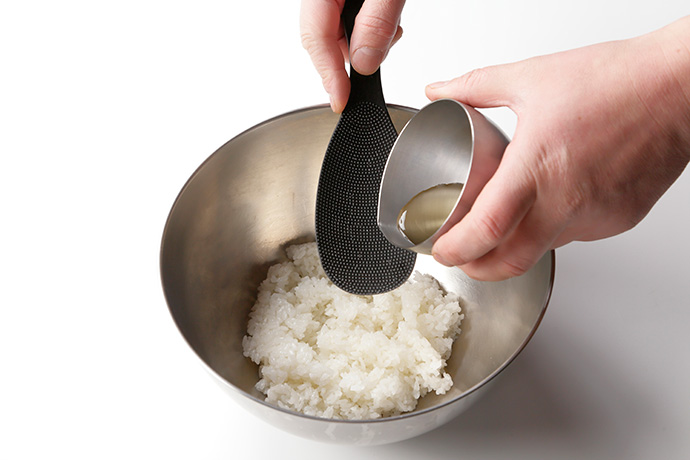
2. Make the Sushi Rice
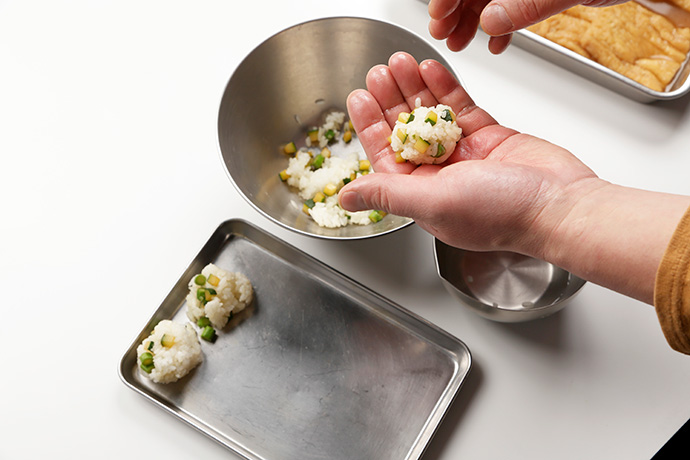
3. Fill the Inari-Agé with the Sushi Rice

4. Let's Try Some Others!
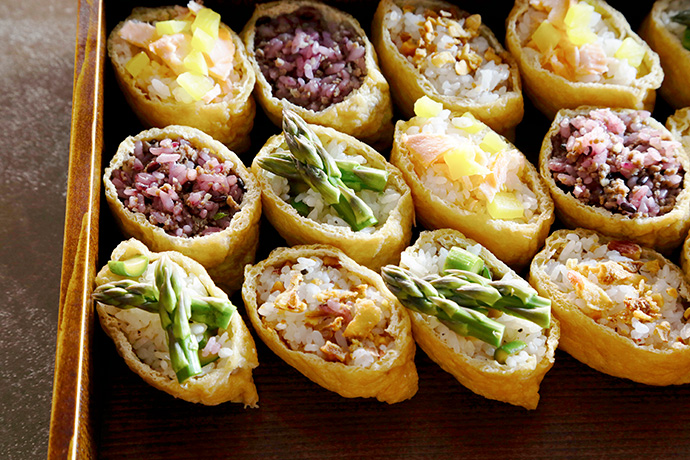
• Asparagus, zucchini, butter soy sauce (bottom, far left)
• Salmon, pickled daikon radish, white sesame seeds (top, far left)
Cook a 50 g fillet of salted salmon, and flake it (refer to the Shaké-Ben Salmon Bento page). Mix the flaked salmon with 25 g of finely chopped pickled radish, 3 g of white sesame seeds and 200 g sushi rice, and use it to fill the inari-agé pockets.
• Fried onion and almond (bottom, second from the left)
Mix 6–7 g of ready-fried onion, 12–13 g of crushed almonds and 200 g of sushi rice, and use it to fill the inari-agé pockets.
• Ground beef and black rice (middle, far left)
Fry 90 g of ground beef, 4.5 ml soy sauce and 17 ml saké until the excess liquid evaporates, and allow to cool. Mix into 200 g of black sushi rice (1 cup of rice mixed with 1 tbsp of black rice and 150 ml of water) and pack into the inari-agé.
Note: All quantities are for 6 servings
Recipe by Hayashi Ryohei from Tenoshima