

New Horizons for Japanese Idol Culture―Japan’s Evolving Kawaii Culture

Idol culture, where singers, actors, and other performers develop passionate fan bases, has evolved in a unique way in Japan. What sets Japanese idol culture apart is that, rather than idolizing an already perfect pop star, fans come together to cheer on and enjoy following their idol’s journey to success. Thanks to the internet and social media, Japan’s uniquely kawaii (‘cute’) culture expressed by idols is now beginning to spread across the globe.
The Origins of Japanese Idol Culture
“Teahouse Beauty and a Young Samurai,” created by woodblock artist Harunobu Suzuki in the 18th century. Osen, a young woman who worked at a teahouse, enjoyed idol-like popularity among residents of Edo (present-day Tokyo) at the time. (Collection of the Tokyo National Museum)
Source: ColBase (https://colbase.nich.go.jp)
The origins of “idol” culture in Japan can be traced to “teen idols,” a term used for actors and singers who were popular among young people in the United States during the 1940s and 1950s. The term spread to Japan a decade later in the 1960s. Meanwhile, going back even further in history to the late 18th century, Osen of Kasamori, a young waitress working at a mizuchaya (a type of teahouse similar to today’s cafes) became a sensation after appearing as a model in ukiyo-e woodblock prints. Many customers came to the teahouse just to see Osen, who became a figure we would now call an idol.
The more modern concept of idols is believed to have originated in 1971, when television was people’s main form of entertainment. That year, Saori Minami made her debut with the song “17-sai” (‘17 years old’), and the talent show “Star Tanjo!” (‘a star is born’) was launched. From “Star Tanjo!” emerged Masako Mori, Junko Sakurada, and Momoe Yamaguchi, who were promoted together as the “Flower Trio of Third-Year Middle School Students” because they were in the same grade at the time of their debut. Their success helped establish the close connection between “school and idols” that remains a defining feature of Japanese idol culture today. The show was also where idol duo Pink Lady got their big break. The pair became hugely popular after children copied their dance moves, which were considered unusual at the time. Many other idols who came to define the television era also made their debut during this period.
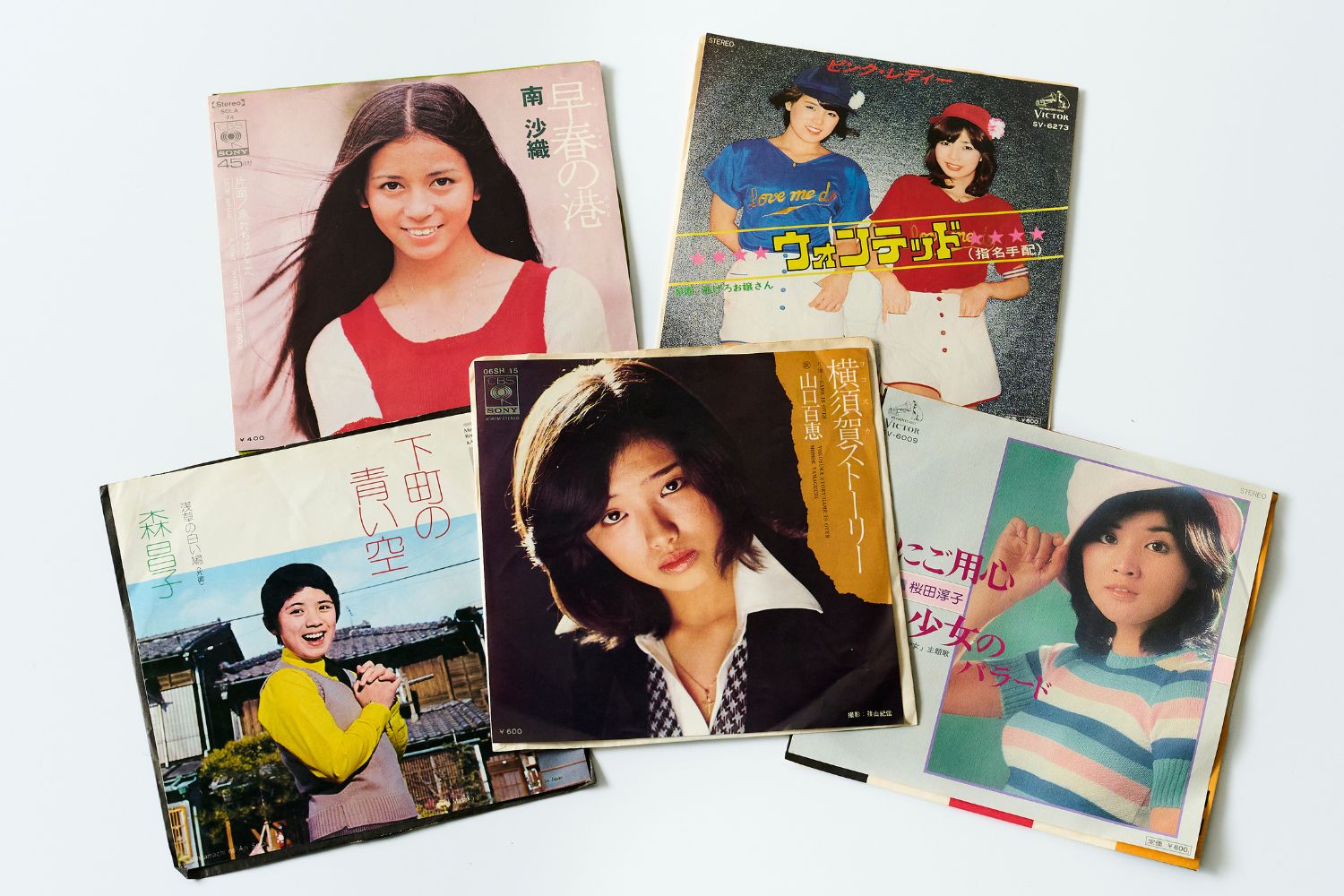
Records by artists who defined 1970s idol culture (clockwise from top left): Saori Minami, Pink Lady, Junko Sakurada, Momoe Yamaguchi, and Masako Mori.
Revival of ’80s Idols with the Popularity of City Pop

Songs produced by talented musicians and performed by 1980s idols still sound fresh today, over 40 years later. Records by Seiko Matsuda (top left), Akina Nakamori (bottom left), Kyoko Koizumi (bottom right), and Momoko Kikuchi (top right). (Photo courtesy of Disk Union Showa Kayo-Kan)
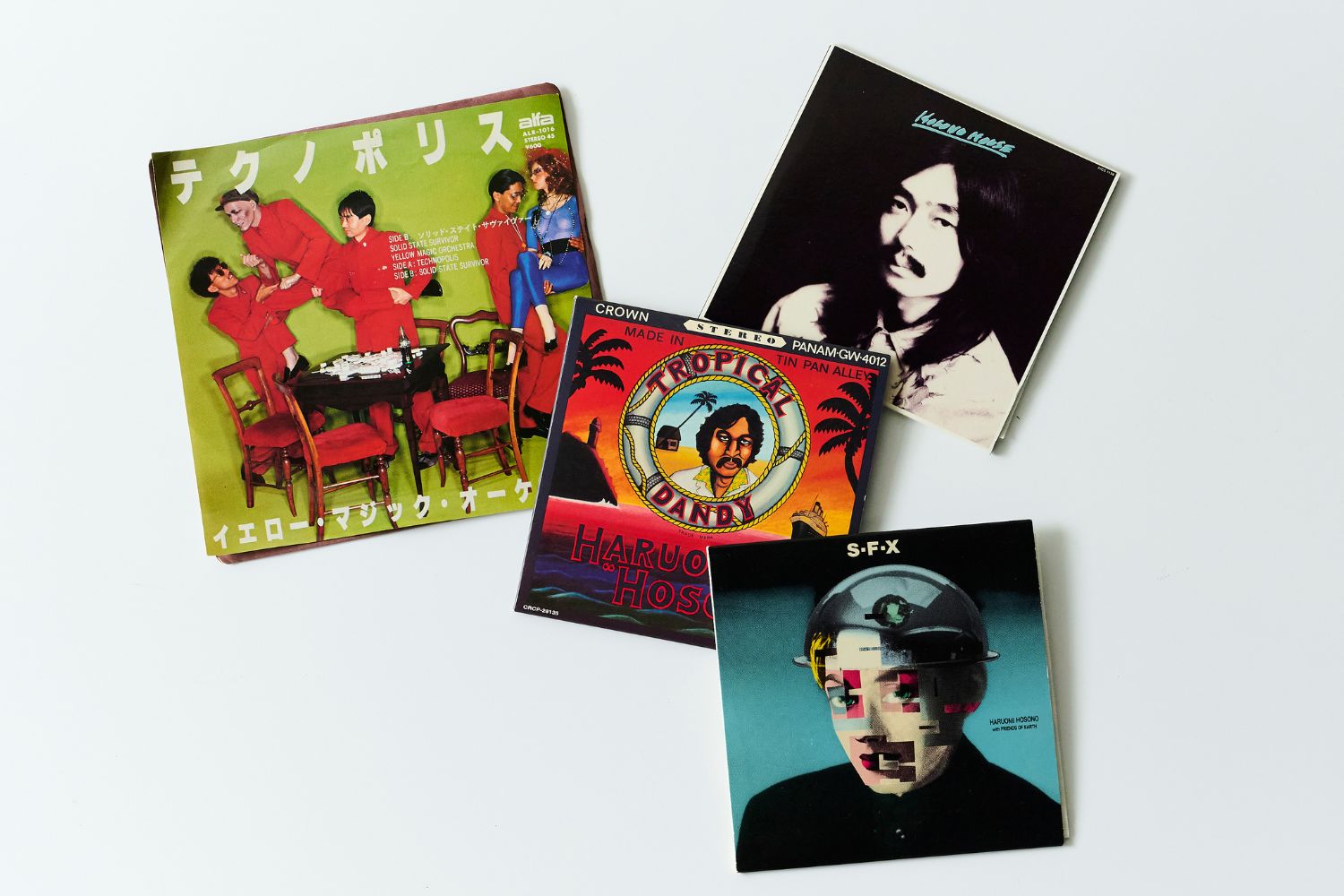
Haruomi Hosono, a member of internationally acclaimed techno-pop group YMO, produced numerous hit songs for ’80s idols such as Seiko Matsuda and Akina Nakamori. Pictured are a YMO record on the left and three solo albums by Hosono on the right.
Seiko Matsuda, described as “an idol self-aware of being an idol,” made a splash with her debut in 1980. The same decade saw many idols performing on music shows while presenting themselves in unique and personal ways, including the “Flower Class of 1982,” a name for several popular performers, such as Akina Nakamori and Kyoko Koizumi, who debuted in the same year. Thanks to the internet, songs by idols whose heyday was the 1980s are gaining popularity among international audiences, including younger generations who did not live through that era. This was sparked by a revival of Japanese city pop, whose songs began spreading globally via video-sharing sites in 2017. The urban sound, a uniquely Japanese interpretation of influences from overseas pop, rock, soul, and jazz/fusion, also strongly influenced the songs of ’80s idols. This revival is also likely due to the fact that many idol songs from the 1980s were musically complex and were produced by talented musicians such as Haruomi Hosono of Yellow Magic Orchestra (YMO), who also gained international fame.
Japanese Idol Culture Going Beyond Borders
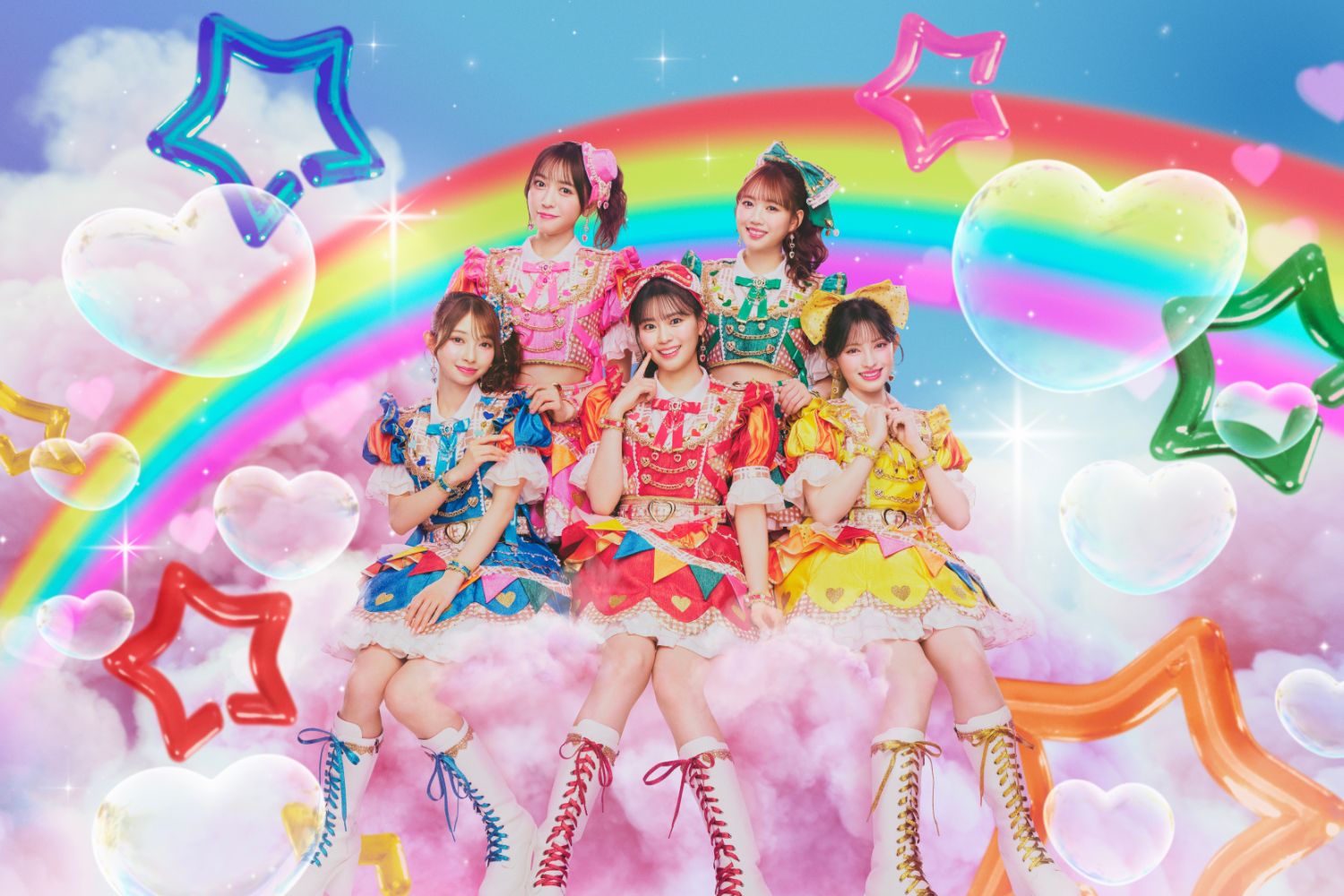
Five-member idol group Cho Tokimeki Sendenbu became hugely popular with the song “saijyoukyuunikawaiino!”, which puts a positive spin on heartbreak.
In recent years, the rise of social media has led to the emergence of many Japanese idol groups with global followings. Cho Tokimeki Sendenbu, a female idol group that debuted in 2015, became hugely popular in Indonesia and South Korea after videos featuring the group’s songs were viewed more than two billion times on short-form video-sharing apps.
Established in 2022, idol project KAWAII LAB. has successfully launched groups such as FRUITS ZIPPER, CANDY TUNE, CUTIE STREET, SWEET STEADY, and MORE STAR under the direction of producer Misa Kimura, who made a name for herself as a fashion model and idol group member. All five groups have gained a passionate following in South Korea and Taiwan.
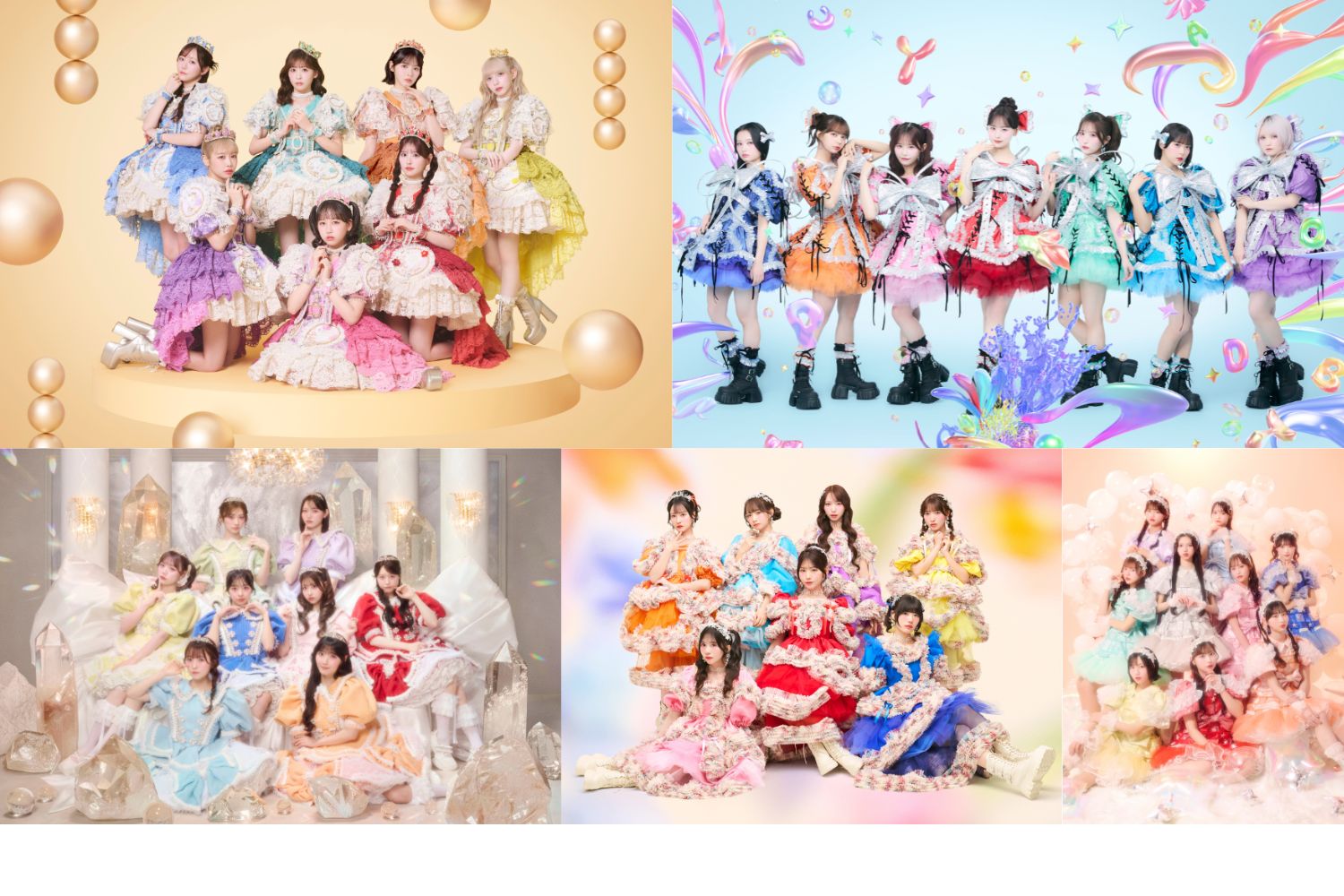
The KAWAII LAB. project, which promotes Japanese idol culture to international audiences, has launched various idol groups. Pictured are FRUITS ZIPPER (top left), CANDY TUNE (top right), CUTIE STREET (bottom left), SWEET STEADY (bottom center), and MORE STAR (bottom right).
What these idols have in common is not just their outfits and hairstyles, which express the uniquely Japanese form of cuteness known as kawaii, but also their lyrics full of uplifting messages that inspire women who are around their age. This is a balm for the negative emotions that many women experience on social media as they compare themselves to others. These efforts are beginning to make waves across the globe.
Huge Hits Through Collaborations Between Idol Songs and Anime Series
“Idol” by YOASOBI, the theme song for the anime “【OSHI NO KO】.” (©Sony Music Entertainment (Japan) Inc. / ©Aka Akasaka & Mengo Yokoyari/Shueisha, “OSHI NO KO” Partners)
The anime “【OSHI NO KO】,” which is about the highs and lows of the idol and entertainment industries, became a huge success worldwide after being released on video streaming platforms. The song “Idol” by music duo YOASOBI was released in 2023 and used as the series’ theme song. A record-breaking hit, “Idol” was the first-ever Japanese-language song to reach the No. 1 spot on the Billboard Global Excl. U.S. chart. This can be seen as a successful example of an anime series about Japan’s idol and entertainment industries creating a powerful synergy with a standout J-Pop song and making a major impact on international audiences.
Fan Practices of Following and Cheering on an Idol’s Journey Go Global
Talent shows such as “Star Tanjo!” have evolved into formats that get viewers emotionally involved by showing the participants’ struggles and growth, often via online streaming platforms. Such shows are growing in popularity all around the world. Fan practices of following and cheering on a Japanese idol’s journey to success are going beyond borders and spreading worldwide.
(Information provided by Shoichi Ota (sociologist))
© All About, Inc. All rights reserved.