

Beauty by a Thousand Cuts: The Art of Japanese Kirie
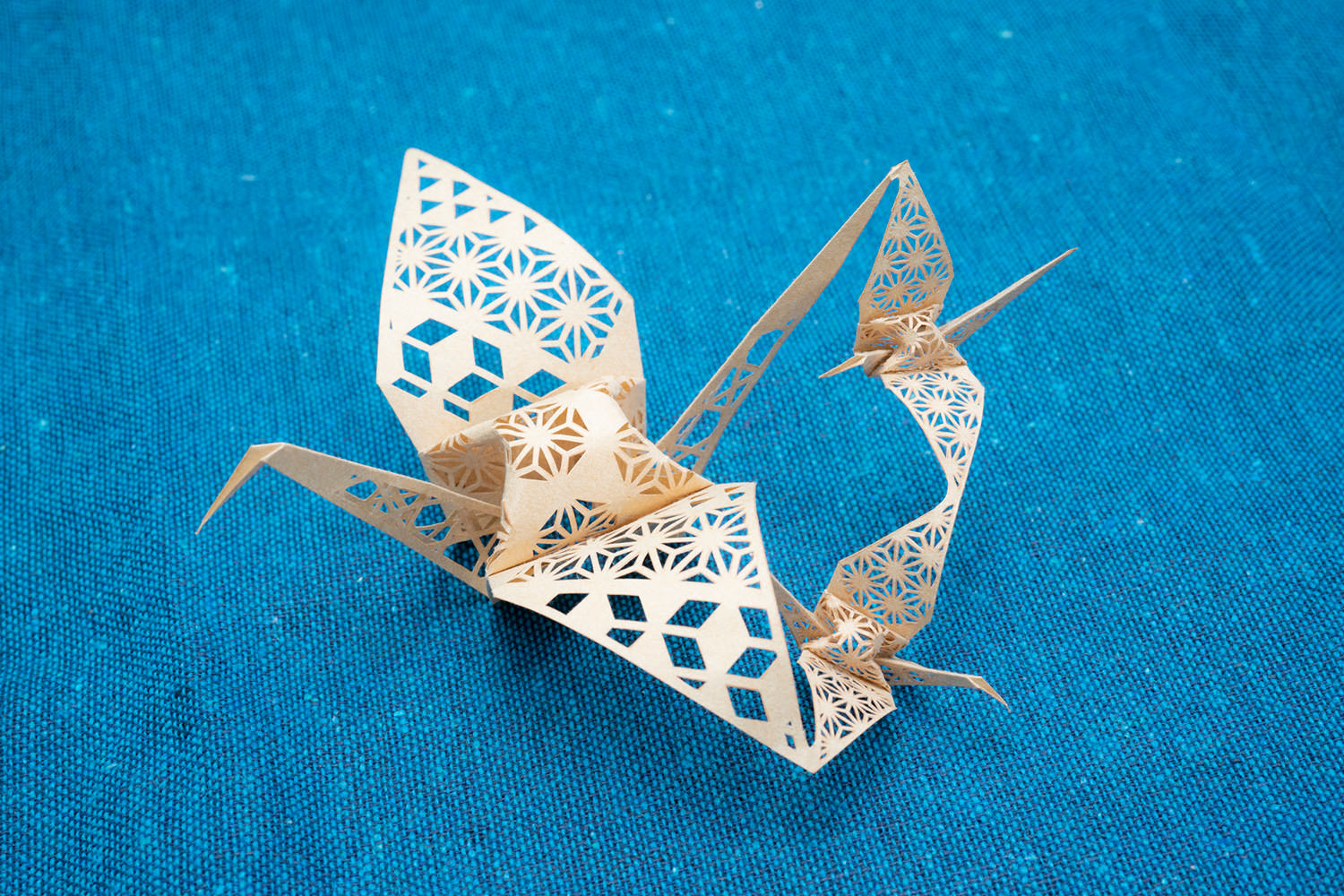
A simple sheet of paper is transformed into something extraordinary by a scissor-wielding artist. This is the essence of kirie, the Japanese art of paper cutting. Practiced in Japan for centuries, paper cutting appears in many forms in daily life, from marking sacred spaces to decorating the home. Over time, the craft developed a performative dimension, in which intricate designs are created before a crowd. Rooted in these long-standing practices, kirie continues to evolve and captivate modern audiences.
The delicate craft of cutting
Detailed kirie artworks use paper cutouts to create intricate depictions of animals, plants, insects, landscapes and more; the possibilities are endless.
Detailed kirie artworks use paper cutouts to create intricate depictions of animals, plants, insects, landscapes and more; the possibilities are endless.
Kirie traces its roots to the seventh and eighth centuries, shortly after paper became available in Japan even though it was a precious resource. While the term kirie came later, paper cutting developed as a craft, used for ceremonial purposes and domestic decorations. Early examples include the zigzag-shaped paper streamers attached to sacred ropes hung at entrances of Shinto shrines and those attached to the ends of wooden wands used in purification rites. These remain a familiar sight at sacred places across Japan today.
Paper streamers are used at shrines around Japan to mark sacred sites.
Paper streamers are used at shrines around Japan to mark sacred sites.
In recent years, shrines and temples have leaned into the popularity of kirie, creating kirie goshuin, a paper art version of the collectible shrine and temple stamps. These intricate, lace-like designs often feature seasonal motifs and become sought-after souvenirs.
Kirie goshuin such as this by Teppei Hayakawa for Chojuji Temple in Shiga Prefecture make for great souvenirs.
Kirie goshuin such as this by Teppei Hayakawa for Chojuji Temple in Shiga Prefecture make for great souvenirs.
As the craft evolved, kirie expanded into increasingly detailed works. Artists use blades or scissors to remove sections of paper and create intricate images. Many traditional kirie designs focus on the natural world, such as changing seasons, birds in flight, blooming flowers, and flowing water. These traditional Japanese subjects emphasize the flow of time and the ever-changing world—an idea that kirie expresses visually through its fragile material and irreversible cuts.
Anyone can try their hand at kirie, no matter their age. It’s a simple craft that requires nothing more than paper and a pair of scissors. (Photo courtesy of KUBO Shu Kirié Museum)
Anyone can try their hand at kirie, no matter their age. It’s a simple craft that requires nothing more than paper and a pair of scissors. (Photo courtesy of KUBO Shu Kirié Museum)
Today, kirie remains widely practiced not just in professional studios, but also at schools and in workshops. Kirie’s simple tools make it an approachable art in educational and casual settings across Japan.
Performance and presence
While kirie has traditionally been a solitary practice, one of its most compelling forms is yose kirie—paper cutting performances. Yose is a traditional Japanese variety theater that dates back to the Edo period (1603–1868). Yose stages are known for interactive performing arts such as rakugo (comic storytelling), where communication between performer and audience plays a central role.
Within this setting, kirie became a distinctive performance art. Kirie artists create intricate cut-paper images live on stage in response to requests from audience members. Viewers call out subjects—such as animals, famous landmarks, or auspicious motifs—and the performer engages in dialogue while cutting the design freehand. This exchange, shaped by humor, improvisation, and quick craftsmanship, is a defining characteristic of yose-style kirie.
A kirie portrait of sumo wrestler ICHINOJO Takashi by MATSUMOTO Chanky, a seasoned yose kirie practitioner. (Photo courtesy of Aozoratei, ChankyMatsumoto)
Left: Close-up of a kirie (paper-cut) portrait depicting the face of a sumo wrestler, rendered in bold black lines on white paper.
Right: Artist wearing round glasses and a colorful yukata, carefully cutting paper with scissors to create a kirie artwork.
A kirie portrait of sumo wrestler ICHINOJO Takashi by MATSUMOTO Chanky, a seasoned yose kirie practitioner. (Photo courtesy of Aozoratei, ChankyMatsumoto)
Left: Close-up of a kirie (paper-cut) portrait depicting the face of a sumo wrestler, rendered in bold black lines on white paper.
Right: Artist wearing round glasses and a colorful yukata, carefully cutting paper with scissors to create a kirie artwork.
Within this traditional yose context, contemporary kirie performers have developed new forms of live paper cutting. One such artist is MATSUMOTO Chanky, who creates portrait cutouts in roughly 5 minutes, chatting with people as he works—he favors interaction and spontaneity over fixed narration—and often incorporates music into his performances. By combining technical skill with humor and crowd engagement, he brings live paper cutting to new generations of Japanese audiences.
Beyond the paper
Contemporary
Kirie artist FUKUDA Masayo specializes in intricate works that are breathtaking in their detail. (Photo courtesy of ©︎2018 Kiriken Masayo / KAZAANA Co.,Ltd.)
Kirie artist FUKUDA Masayo specializes in intricate works that are breathtaking in their detail. (Photo courtesy of ©︎2018 Kiriken Masayo / KAZAANA Co.,Ltd.)
One contemporary Japanese artist redefining kirie through restraint is FUKUDA Masayo, whose work is created entirely from a single, unbroken sheet of white paper. Limiting herself to one color and one sheet, Fukuda produces highly detailed images of animals and plants that appear almost three-dimensional. Through careful gradation and density of cuts, her compositions achieve a sense of depth that challenges expectations.
Sometimes it’s easy to forget that the art is made from cut paper, such as with the works of KUBO Shu. (Photo courtesy of KUBO Shu Kirié Museum)
Sometimes it’s easy to forget that the art is made from cut paper, such as with the works of KUBO Shu. (Photo courtesy of KUBO Shu Kirié Museum)
A preeminent figure in the world of kirie, artist KUBO Shu has been creating paper art for 55 years. His work predominantly features traditional Japanese scenery and landscapes from around Japan, both urban and rural. KUBO is also an ambassador for kirie, sharing his craft with audiences through workshops and exhibitions worldwide since 2009.
A living tradition
Today, kirie continues as a living craft through active practice rather than preservation alone. Its accessibility—requiring only paper and scissors—allows it to be passed on in workshops, classrooms, live performances, and the works of contemporary artists.
Anyone can try kirie; all you need is a piece of paper and something to cut it with.
Anyone can try kirie; all you need is a piece of paper and something to cut it with.
Kirie remains rooted in direct, irreversible handwork. This balance of tradition, experimentation, and physical process allows the craft to remain relevant, connecting long-established techniques with contemporary creative expression.