

Contemporary Ukiyo-e: Ancient Woodblock Prints for Today
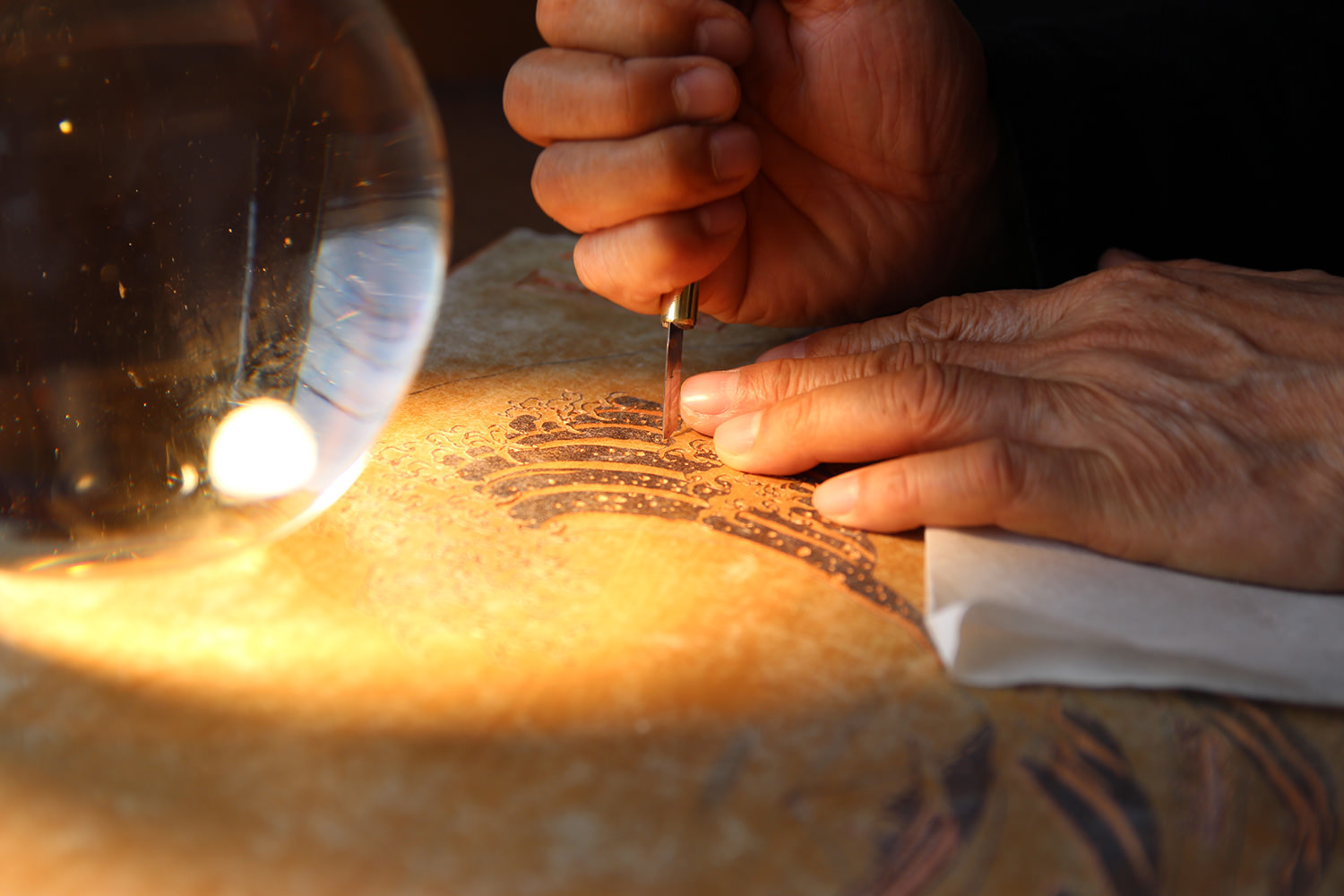
Ukiyo-e, Japan’s woodblock print craft, is most commonly associated with HOKUSAI Katsushika (1760–1849), whose The Great Wave off Kanagawa (ca. 1830–1832) is considered one of the most recognizable artworks in the world. While these works remain central to its legacy, ukiyo-e has always been rooted in the present moment. Today, contemporary artists apply ukiyo-e’s bold compositions and woodblock techniques to modern subjects.
The continuing legacy of ukiyo-e
HOKUSAI Katsushika’s The Great Wave off Kanagawa (ca. 1830–1832) is part of the artist’s “Thirty-six Views of Mount Fuji” series.
HOKUSAI Katsushika’s The Great Wave off Kanagawa (ca. 1830–1832) is part of the artist’s “Thirty-six Views of Mount Fuji” series.
Ukiyo-e, which translates roughly to “pictures of the floating world,” emerged during the Edo period (1603–1868) as an art form that depicted contemporary trends and entertainment. The term “ukiyo” captures a semantic shift that occurred in this time. It originally referred to the “melancholy world,” a Buddhist concept emphasizing the impermanence of life. But this was reinterpreted to mean the “floating world,” signaling a new era that celebrated living in the moment.
These prints were produced through a joint effort between specialists: artists designed the images, carvers cut the wooden blocks, and printers applied color to create the final product. This collaborative method allowed images to be reproduced efficiently, enabling prints to circulate widely among the Japanese public. Common subjects included women, supernatural beings, and well-known sites—imagery that reflected the interests and aspirations of the time.
Left: UTAGAWA Hiroshige’s Sudden Shower Over Shin-Ohashi Bridge and Atake (ca. 1857); Right: VAN GOGH Vincent’s Bridge in the Rain (after Hiroshige) (ca. 1887).
Left: UTAGAWA Hiroshige’s Sudden Shower Over Shin-Ohashi Bridge and Atake (ca. 1857); Right: VAN GOGH Vincent’s Bridge in the Rain (after Hiroshige) (ca. 1887).
Ukiyo-e’s strong outlines, flat color, and balanced compositions later influenced Western artists such as VAN GOGH Vincent. Those same qualities continue to make ukiyo-e a compelling format for contemporary expression.
Preserving ancient techniques for modern applications
At the heart of modern ukiyo-e lies the preservation of traditional woodblock printing. A key institution in this effort is the Adachi Institute of Woodcut Prints. Founded in 1928, the institute was established to preserve the craft of ukiyo-e at a time when new printing technologies began to replace woodblock methods.
A central focus of the Adachi Institute is the reproduction of ukiyo-e using the same processes employed during the Edo period. To date, over 1,200 art pieces have been reproduced using carved cherry tree woodblocks, natural pigments, and handmade washi paper. These materials and techniques give the prints their distinctive color and texture.
The Adachi Institute supports various crafts in the creation of contemporary ukiyo-e art.
The Adachi Institute supports various crafts in the creation of contemporary ukiyo-e art.
Alongside reproduction work, the Adachi Institute also supports the creation of contemporary ukiyo-e by collaborating with Japanese and international artists who contribute modern visuals, and work with experienced carvers and printers to bring their designs to life through traditional woodblock printing.
Artist SHIOTA Chiharu’s famous red thread art pieces, “Connected to the Universe -Red Waves, Red Lines, Red Circles-” have been translated into woodblock prints with the support of the Adachi Institute. (Photo courtesy of Chiharu Shiota "Connected to the Universe Red Waves, Red Lines, Red Circles" © JASPAR, Tokyo, 2025 and Chiharu Shiota)
Artist SHIOTA Chiharu’s famous red thread art pieces, “Connected to the Universe -Red Waves, Red Lines, Red Circles-” have been translated into woodblock prints with the support of the Adachi Institute. (Photo courtesy of Chiharu Shiota "Connected to the Universe Red Waves, Red Lines, Red Circles" © JASPAR, Tokyo, 2025 and Chiharu Shiota)
The Adachi Institute has been instrumental in helping contemporary artists expand their portfolios to include woodblock prints. One notable example is SHIOTA Chiharu, whose exhibition The Soul Trembles has been touring globally since its 2019 Tokyo debut. In 2023, she collaborated with the Institute to produce three unique woodblock prints featuring her signature red thread imagery.
Mixing media and culture
A-UN Carp, an art piece by KYOMORI Kohei featuring two colorful carp. (Photo courtesy of Kohei Kyomori, A-UN Carp, 2025© Kohei Kyomori / Courtesy of WHITESTONE GALLERY)
A-UN Carp, an art piece by KYOMORI Kohei featuring two colorful carp. (Photo courtesy of Kohei Kyomori, A-UN Carp, 2025© Kohei Kyomori / Courtesy of WHITESTONE GALLERY)
Outside of the Adachi Institute, contemporary ukiyo-e continues to evolve through Japanese artists who combine woodblock techniques with different media and cultures. One such figure is KYOMORI Kohei, an artist who reimagines decorative motifs from across cultures and eras through a modern lens. Working with UNSODO, a long-established Kyoto woodblock publisher, KYOMORI combines digital design with analog craftsmanship. His works are carved using both hand and laser engraving tools and printed through 191 color applications, building remarkable depth and vibrancy.
An ukiyo-e art piece by ISHIKAWA Masumi, exhibited at the artist’s 2017 exhibition, “Shinsekai-kikou.” (Photo courtesy of ©KONJAKU Labo.)
An ukiyo-e art piece by ISHIKAWA Masumi, exhibited at the artist’s 2017 exhibition, “Shinsekai-kikou.” (Photo courtesy of ©KONJAKU Labo.)
Another artist engaging with woodblock printing is ISHIKAWA Masumi, a Tokyo-born artist who applies ukiyo-e composition and portraiture to contemporary popular culture. She creates striking images featuring globally recognized figures and franchises from Japan and abroad in the ukiyo-e style.
A mirror of present-day society and culture
In the Edo period, ukiyo-e depicted the entertainment world and other popular culture of its time. Contemporary ukiyo-e operates on the same principle, using traditional woodblock methods to explore Japan’s current cultural and social themes, and reflecting modern trends.
What remains constant is the collaborative craft itself—the interplay between artists, carvers, and printers. These elements anchor ukiyo-e in its historical techniques even as artists push the medium toward new subject matter and hybrid processes. The result is a quintessentially Japanese art form that honors its past while remaining firmly engaged with current trends.