

Japanese Libraries: Spaces that Encourage a Lifelong Love of Reading
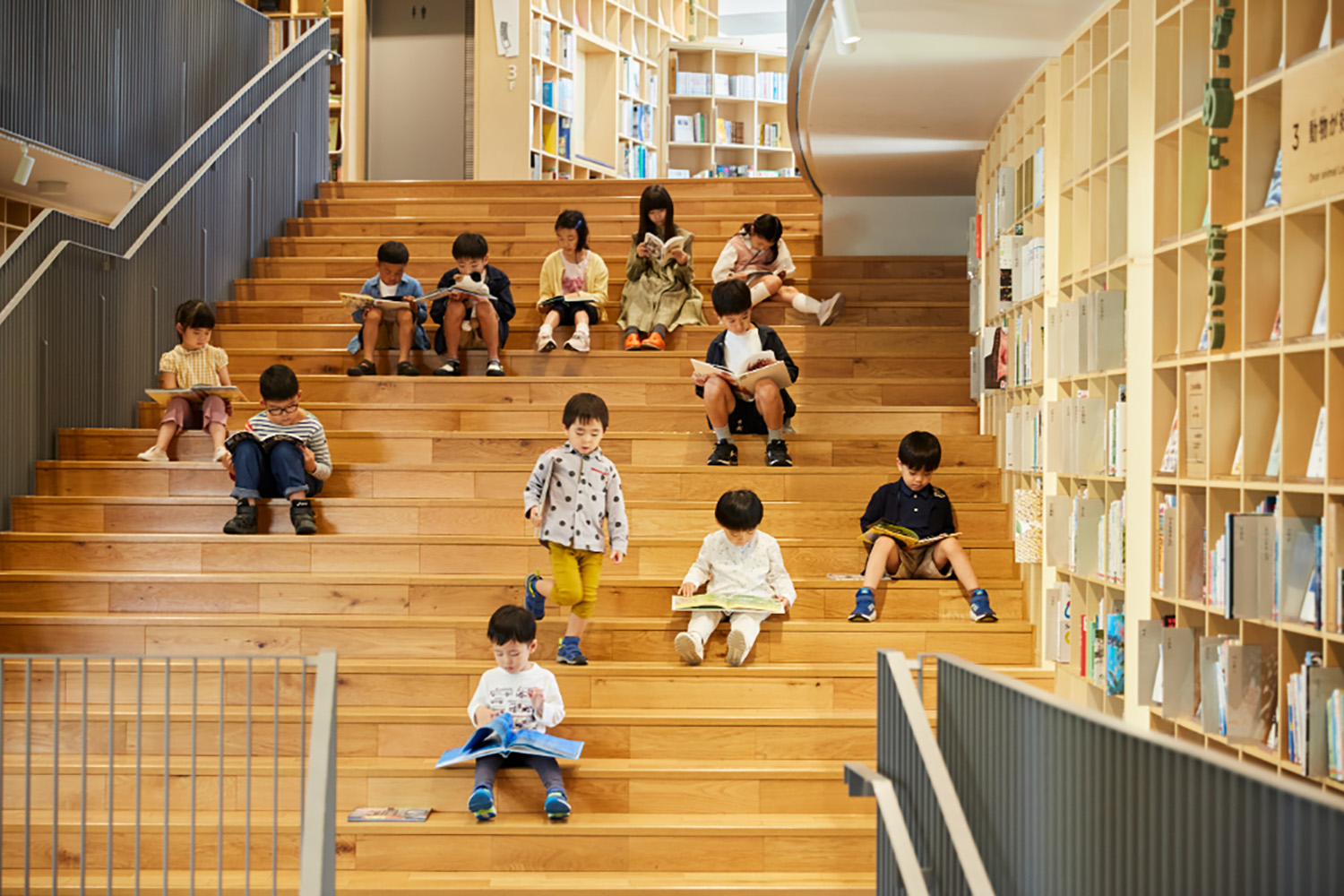
Reading remains a deeply valued part of life in Japan, with a network of public libraries that promotes the value of reading as a shared cultural experience.
As our world continues to evolve and change, libraries in Japan are adapting too, striving to maintain Japan’s legacy of literacy and literature while exploring the possibilities of what the library of the future might be. In recent years, libraries have drawn attention not only as places to read but also as travel destinations in their own right. Architecturally striking “next-generation” libraries are opening across the country, reimagining the Japanese library, all to encourage a lifelong love of reading. These facilities have become vibrant community hubs that host cultural programs, social activities, and lifelong learning opportunities.
How Japanese libraries create lifelong readers
Nakanoshima Children’s Book Forest is a beautifully designed library, especially for children.
Nakanoshima Children’s Book Forest is a beautifully designed library, especially for children.
As in most countries, parents in Japan want their kids to grow up as readers. But with so many other distractions these days, getting a child to pick up a book can be a challenge. The Nakanoshima Children’s Book Forest is an innovative reading facility in Osaka that aims to address this issue. Designed by renowned architect ANDO Tadao, the building is well-lit and spacious with plenty of comfortable reading nooks, providing children with the time and space to slow down and discover a new book. The collection includes picture books, novels, classic literature, science books, and more.
The displays and exhibits at the Japan Kanji Museum & Library in Kyoto communicate the fun of kanji. (Photo courtesy of Japan Kanji Museum & Library)
The displays and exhibits at the Japan Kanji Museum & Library in Kyoto communicate the fun of kanji. (Photo courtesy of Japan Kanji Museum & Library)
To become a reader in Japan, one must master all three Japanese alphabets: hiragana, katakana, and kanji. Learning thousands of kanji characters is sometimes viewed as a long, monotonous process. The Japan Kanji Museum & Library in Kyoto challenges this presumption, welcoming visitors of all ages to engage with interactive exhibits that celebrate the intricacies and charms of Japan’s unique writing system.
Libraries can be spaces for more than just reading and serve as important community spaces. (Photo courtesy of People・Town・Information・Creation Hall Musashino Place)
Libraries can be spaces for more than just reading and serve as important community spaces. (Photo courtesy of People・Town・Information・Creation Hall Musashino Place)
Libraries in Japan play an important role for older generations as well. Many facilities are places for lifelong learning, where senior citizens can pursue hobbies, attend classes, or simply enjoy a quiet reading space. Musashino Place in Tokyo is a great example. Its third floor has rooms that can be rented out for any activity from flower arrangement to calligraphy classes. It even has a recording studio in its basement. The spaces are open to everyone, and by welcoming a wide range of age groups, the library can foster intergenerational connections and support learning at every stage of life.
What does the library of the future look like?
The warm lighting and wood interior make Media Cosmos a very cozy space for reading or studying. (Photo courtesy of Minna no Mori Gifu Media Cosmos)
The warm lighting and wood interior make Media Cosmos a very cozy space for reading or studying. (Photo courtesy of Minna no Mori Gifu Media Cosmos)
Minna no Mori Gifu Media Cosmos in Gifu, also known as Minna no Mori (Everyone’s Forest), aims to bring different communities together under its gorgeous, latticed roof. The library’s open-plan design focuses on curved lines and loosely defined centers offset by large overhead globes subtly reminiscent of traditional Gifu lanterns. The emphasis is on spontaneity and breaking down boundaries.
The 8-meter-tall shelves of the Bookshelf Theater at Kadokawa Culture Museum make you feel about the size of a book. (Photo courtesy of ©Kadokawa Culture Museum)
The 8-meter-tall shelves of the Bookshelf Theater at Kadokawa Culture Museum make you feel about the size of a book. (Photo courtesy of ©Kadokawa Culture Museum)
Kadokawa Culture Museum in Saitama goes a step further, refusing to impose definitions on the facility itself. “Is it a library, an art gallery, or a museum?” asks director IKEGAMI Akira. “No, it does not fit into any of these categories.” Such flexibility allows for innovative multimedia productions like Ukiyo-e RE:BORN, a digital art theater exhibition that brings traditional ukiyo-e paintings to life using modern digital technology.
Ancient Japanese art projected onto the surfaces of the library’s exhibition space transported visitors into a feudal painting. (Photo courtesy of ©Kadokawa Culture Museum, Design and creative direction: GIANFRANCO IANNUZZI, Multimedia content production: KARMACHINA)
Ancient Japanese art projected onto the surfaces of the library’s exhibition space transported visitors into a feudal painting. (Photo courtesy of ©Kadokawa Culture Museum, Design and creative direction: GIANFRANCO IANNUZZI, Multimedia content production: KARMACHINA)
Japan’s approach to libraries reflects a wider national commitment to education, culture, and innovation. By supporting the creation of attractive and eye-catching institutions that nurture literacy and lifelong learning, Japan is investing in a brighter future for its population and setting an example for the world to follow. Libraries in Japan continue to evolve in both design and social function, drawing widespread interest and use among people across the country. The developments of new and exciting reading spaces ensure that libraries remain vibrant, relevant spaces in Japanese society.