

Eternal Frames: Preserving the Legacy of Anime and Manga for Tomorrow
(Image courtesy of Yokote Masuda Manga Museum)
From the panels of manga magazines to movie screens, Japan’s creative industries have left an indelible impression on the global stage. Anime and manga are cultural cornerstones and powerful ambassadors of Japanese identity. As their influence grows, so too does the recognition of their fragility and importance, raising a critical question: how do we preserve these treasures for the future?
New pillars of Japan’s identity
Franchises like Naruto, Pokémon, and One Piece demonstrate the global reach of Japan’s creative sector. These works have transcended borders, shaping how people envision Japan. Together, anime and manga generate billions of dollars annually, drive international tourism, and inspire a new generation of creators.
Shueisha Manga-Art Heritage (SMAH) treats manga as fine art.
Shueisha Manga-Art Heritage (SMAH) treats manga as fine art.
Recognizing this role, major publishers are treating these works as part of Japan's creative legacy, not just entertainment. Shueisha Manga-Art Heritage (SMAH), a project launched by the publisher of the weekly manga magazine Shonen Jump, digitizes original manga pages with a dual purpose: creating a stable, digital preservation copy and reproducing the works as limited-edition fine art prints for sale. They apply standards typically reserved for traditional fine art, such as printing on archival, 100% cotton paper and securing the digital assets using an art blockchain network.
Manga frames on display at the SMAH gallery.
Manga frames on display at the SMAH gallery.
Beyond these technical and commercial efforts, SMAH works to change public perception through high-profile physical displays. In 2023, Shueisha opened a permanent manga art gallery in Tokyo. By elevating manga drawings to the standards of fine art through this dedicated space, the project underscores that preserving pop culture is as vital as conserving traditional crafts.
Cultural preservation projects around Japan
Manga and anime artifacts are delicate and deteriorate over time—paper yellows, ink fades, and cels can warp. To save these fragile assets, there are organizations across Japan dedicated to their physical and digital preservation.
The Manga Genga Archive Center in Kyoto offers services to help preserve manga, including temporary storage.
The Manga Genga Archive Center in Kyoto offers services to help preserve manga, including temporary storage.
In Kyoto, the Manga Genga Archive Center is a consultation hub for original manga art. It advises on preservation, helps families manage the legacies of late creators, and offers temporary storage. Working with curators and researchers nationwide, the center establishes a professional framework to save manuscripts from neglect and loss.
Meanwhile, the Anime Tokusatsu Archive Center (ATAC) in Tokyo preserves the “intermediate products” of anime and special effects, such as drawings, design sheets, miniatures, and props. These materials are crucial because they reveal the creative process behind beloved works. ATAC systematically digitizes and repairs items, sharing them through exhibitions and screenings to build a “living archive” that keeps the legacy of anime and special effects alive and accessible.
Exhibitions of archives
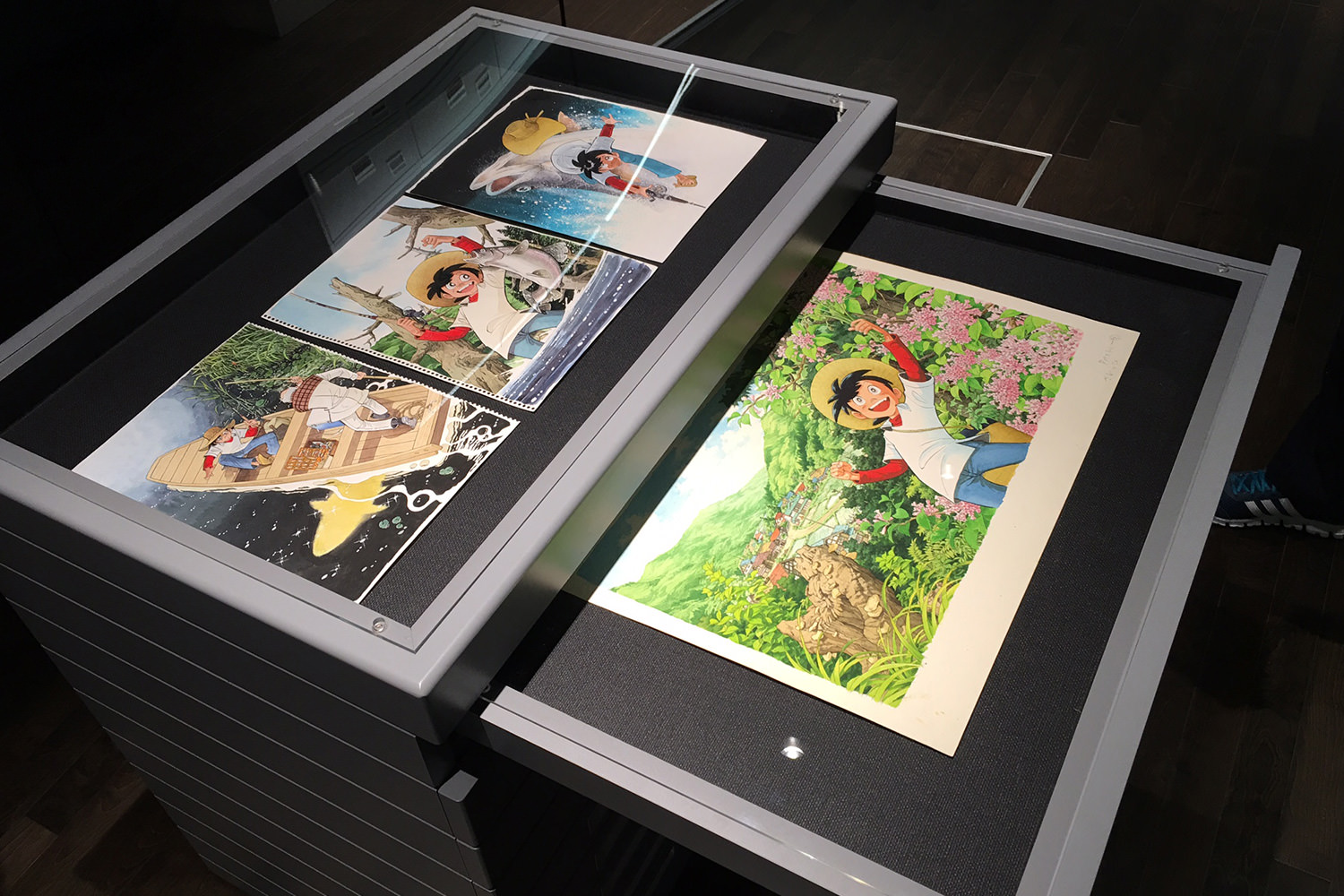
Preservation requires not just storage, but sharing. In Akita Prefecture, the Yokote Masuda Manga Museum—Japan’s first dedicated manga museum, established in 1995—serves as both an archive and a gallery. Its collection of more than 400,000 original manga drawings is preserved with special care; each drawing is individually scanned and cataloged for study and public appreciation.
The Yokote Masuda Manga Museum showcases manga artworks in permanent and special exhibitions. (Image courtesy of Yokote Masuda Manga Museum)
The Yokote Masuda Manga Museum showcases manga artworks in permanent and special exhibitions. (Image courtesy of Yokote Masuda Manga Museum)
This collection is made accessible through their permanent display of works by more than 100 artists and special exhibitions of contemporary collaborations and rare unpublished works. Workshops let visitors turn their drawings into keychains or try inking and toning, while classes led by professional manga artists nurture new talent.
Visitors can take manga workshops at the museum. (Image courtesy of Yokote Masuda Manga Museum)
Visitors can take manga workshops at the museum. (Image courtesy of Yokote Masuda Manga Museum)
More than just nostalgia
Preserving anime and manga is about continuity, not just memory. From publishers elevating manga to fine art to archives protecting fragile manuscripts, these collective efforts demonstrate that Japan’s pop culture is being treated with the same respect once reserved for traditional arts.
What is preserved today will shape the stories of tomorrow. By safeguarding the drawings and cels of the past, Japan is protecting its creative legacy and laying the groundwork for new voices to emerge. Far from mere nostalgia, these works are part of an ever-evolving current of culture—one that carries Japan into the future.