

Made-in-Japan Eyewear: High-Quality and Stylish
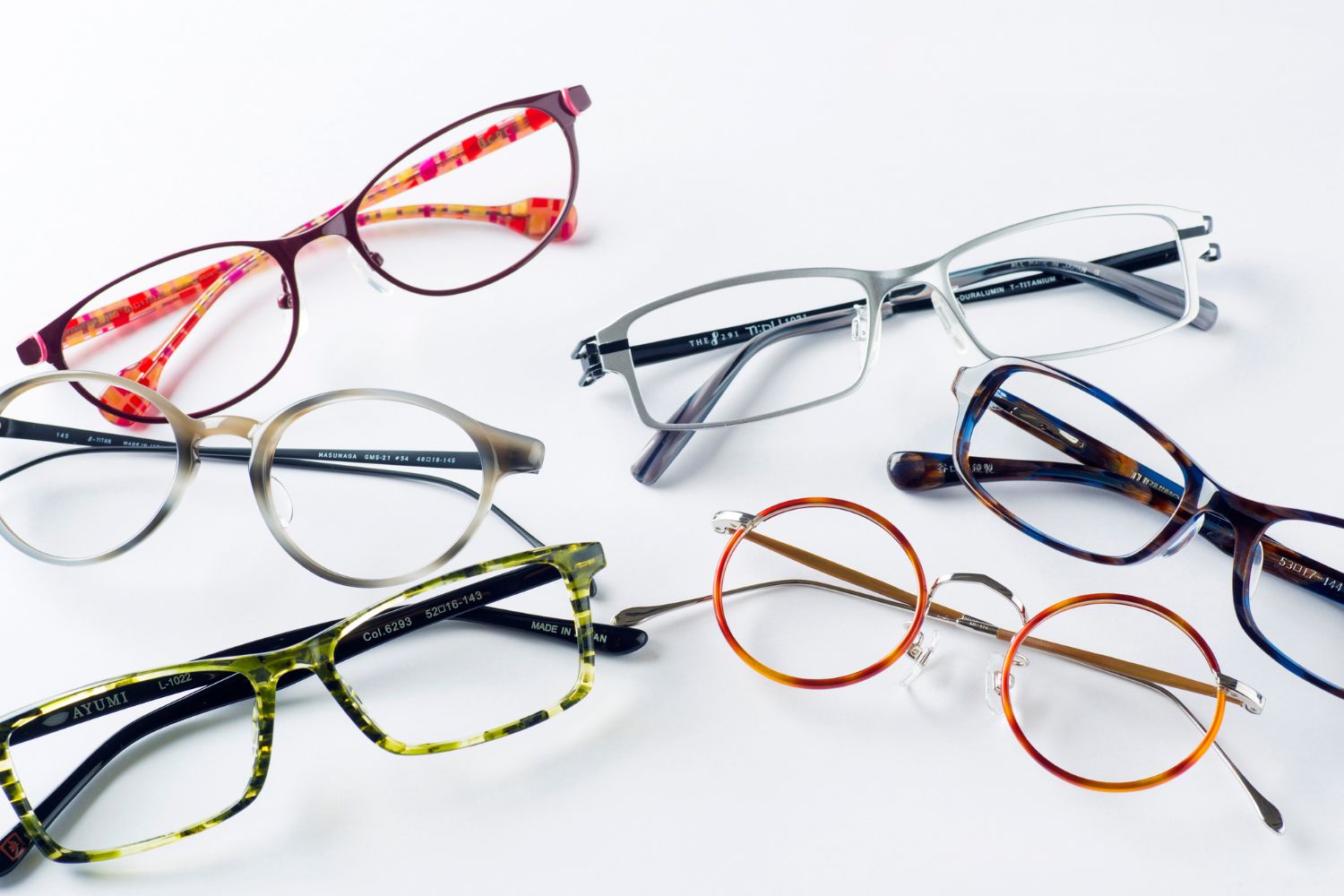
Eyewear from Japan is internationally renowned for its quality. Moreover, the creativity of Japanese eyewear designers, who combine innovation with traditional artistry, captivates people from around the world regardless of nationality.
Fukui Brands Built on a “Pioneering Spirit”
Eyewear frames produced in Fukui Prefecture, located in the center of Japan’s main island of Honshu, make up an overwhelming share of Japan’s domestic production—about 95%. “Made in Fukui,” along with “Sabae,” the prefecture’s major city for eyewear production, have now grown into highly respected brands not only within Japan, but also in global markets.
A specialty eyewear store within the Megane Museum in Sabae City, Fukui Prefecture (megane means ‘eyeglasses’ in Japanese). (Photo courtesy of Fukui Optical Association)
Exterior view of the Megane Museum. The red eyeglasses frames on the roof are iconic. (Photo courtesy of Fukui Optical Association)
Eyewear production in the Fukui area dates back to 1905, when businessman Gozaemon Masunaga entered the eyeglasses business as a way of providing side jobs to farmers during their off-season. Moreover, since print media was rapidly gaining popularity among the general public at the time, Masunaga was certain that demand for eyeglasses would increase.
This “pioneering spirit” flowing through the Fukui area involves thinking outside the box and being the first to take on new challenges, and it can still be seen to this day in the region. In the early 1980s, Fukui was the first in the world to successfully mass-produce titanium eyeglasses frames. Although titanium is lightweight, durable, and less likely to cause metal allergies, it is extremely difficult to process. This cemented Fukui’s global reputation for eyewear manufacturing.
An eyewear factory in Fukui Prefecture, photographed between 1940 and 1942. (Photo courtesy of Fukui Optical Association)
Japanese Eyewear Retail Chains Become a Hit Among International Visitors
Meanwhile, more recently, major eyewear retail chains with stores nationwide have been causing significant buzz among tourists visiting Japan from around the world. A key advantage of these retailers is that they offer a single price for both frames and lenses to consumers, making it easier to make a selection when shopping. Another major selling point for international tourists is the quick turnaround: whereas customers used to have to wait several days to get their glasses, whether in Japan or overseas, it is now possible to have an eye exam, order glasses, and take them home on the same day.
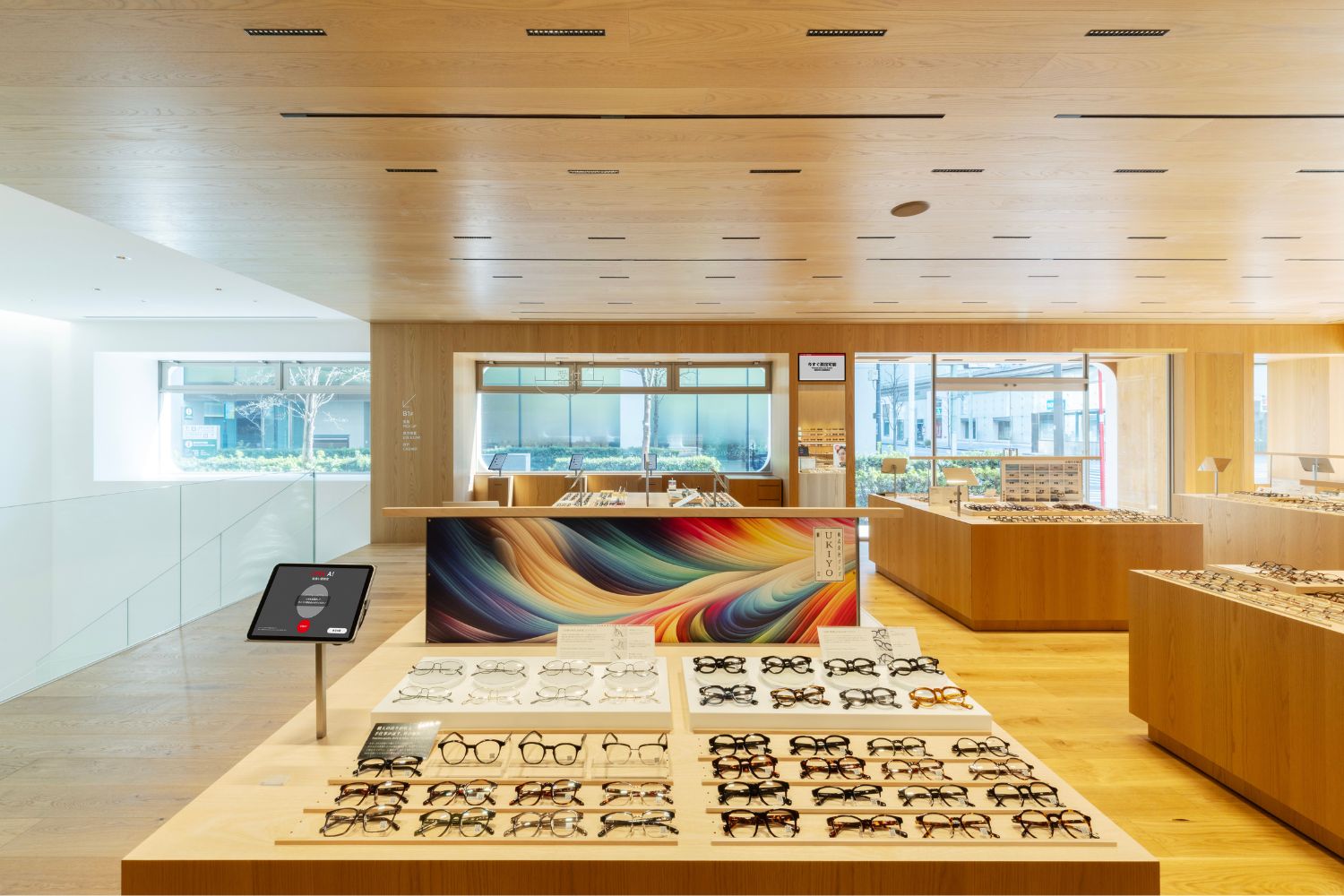
The global flagship store of a major eyewear retailer in Ginza, Tokyo. (Photo courtesy of JINS)
In addition, one company has adopted the SPA (specialty store retailer of private label apparel) business model, which involves handling all related processes in-house, from planning and manufacturing to sales. Removing “middlemen” companies makes it possible to quickly provide high-quality products at low cost.
The global flagship store of a major eyewear retailer opened in Ginza, Tokyo in March 2026, and about nine out of 10 customers are international tourists visiting Japan. Reasons for this popularity include a service that uses generative AI to recommend the frames best suited to each customer, in addition to the introduction of eye exam equipment that supports multiple languages. The store’s innovative business model and ability to serve customers regardless of nationality appear to be the secret to its appeal among people from around the world.
An eye exam at an eyewear store. (Photo courtesy of JINS)
A frame from a major eyewear brand. The front is made of resin, while the temples (the arms that rest over the ears) are made of titanium. (Photo courtesy of JINS)
Japan’s Unique Eyewear: A Blend of Tradition and Innovation
Although glasses are primarily medical devices designed to correct vision, a significant aspect is their appeal as fashion items, as shown by the word “eyewear.”
A leading figure in the world of Japanese eyewear design is Yuichi Toyama. In 2009, Toyama launched the brand that would become YUICHI TOYAMA. He has a deep connection to Fukui Prefecture, having previously worked at a Fukui-based eyewear manufacturer with a design studio in Tokyo, and even today, as an independent designer, he continues to create eyewear from his base in Tokyo in dialogue with artisans from Sabae City.
The concept behind his eyewear creations is the desire to achieve a “New Made in Japan” ideal that blends traditional Japanese artistry with innovative design. One example is the brand’s signature series, Double Dutch. Inspired by watching young people in a park playing Double Dutch (a jump rope game using two ropes), Toyama incorporated the beauty of the lines of the ropes as they made an arch through the air in the structure of the eyeglass’s frames. This sophisticated Japanese-style minimalism has even earned high praise at SILMO, one of the world’s largest optical trade shows held each year in Paris.
Designer Yuichi Toyama. (Photo courtesy of YUICHI TOYAMA.)
A pair of glasses from the Double Dutch collection, the signature series of YUICHI TOYAMA. Taking inspiration from the game of jump rope, the design features an innovative structure in which the rim joins from above and below—like ropes—to encase the lenses. (Photo courtesy of YUICHI TOYAMA.)
Double Dutch, a team game of jump rope using two ropes. (Photo courtesy of Michael H)
Fukui City-based Yoshinori Aoyama is a designer with a global following. After joining Aoyama Optical, a long-established eyewear factory in the city founded by his grandfather, he later launched FACTORY900, an in-house brand that handles everything from planning and design to production. Models from this brand have twice won the SILMO d’Or, a prize nicknamed the “Oscars of the eyewear industry.” One of Aoyama’s award-winning models, The Six Eyes, has a unique design featuring three lenses on each side.
The Six Eyes, designed by Yoshinori Aoyama. Captivating artists around the world, the design was worn by Beyoncé during her 2023 world tour. (Photo courtesy of FACTORY900)
In 2023, Aoyama launched his own brand, YOSHINORI AOYAMA. The brand’s iconic model, YA-004, evokes modern architecture. While simple in structure—a combination of circles and straight lines—it achieves a complex, sculptural beauty. Aoyama states plainly that his eyewear is “art.” He says that his goal is to “create ‘beauty’ in the hearts of both the wearer and the viewer by crafting beautiful eyewear.” These days, Japanese eyewear craftsmanship has risen to the realm of art.
YA-004 from YOSHINORI AOYAMA, which gives off a complex, sculptural beauty despite being composed of simple elements: circles and straight lines. (Photo courtesy of YOSHINORI AOYAMA)
Designer Yoshinori Aoyama. (Photo courtesy of YOSHINORI AOYAMA)
Diverse Japanese Eyewear, Backed by a High Level of Quality
Japan’s eyewear industry has grown and developed thanks to both a commitment to artistry rooted in tradition and a “pioneering spirit” that looks to the future. Together, these forces have helped propel Fukui into a world-renowned eyewear hub, enabled retailers to offer same-day service through new business models, and fostered designs that merit being called art.
© All About, Inc. All rights reserved.