

Beyond the Factory Floor: Exploring Japanese Corporate Museums
(Photo courtesy of © Nintendo)
Many of Japan’s best-known companies operate museums that offer a unique look into how products are made, how technologies evolve, and how industries support and change everyday life. These corporate museums are spaces where history, innovation, and community engagement intersect. They contribute not only to corporate branding by sharing a company’s legacy, but also to society as a whole, including education and local revitalization.
Corporate museums in Japan have surged in popularity recently, becoming highly sought-after destinations as places that combine leisure and learning.
What are corporate museums?
The Bridgestone Innovation Gallery in Tokyo introduced major milestones and innovations through detailed displays. Bridgestone was a dominant Formula 1 tire supplier from 1997 to 2010.
Left: Curved museum display showing historical Bridgestone wheels and tire designs mounted on a white wall, with wooden flooring in the foreground.
Right: Two red-and-white Formula 1 race cars displayed on raised platforms inside a modern exhibition space.
The Bridgestone Innovation Gallery in Tokyo introduced major milestones and innovations through detailed displays. Bridgestone was a dominant Formula 1 tire supplier from 1997 to 2010.
Left: Curved museum display showing historical Bridgestone wheels and tire designs mounted on a white wall, with wooden flooring in the foreground.
Right: Two red-and-white Formula 1 race cars displayed on raised platforms inside a modern exhibition space.
In Japan, many companies aim to contribute to society by leveraging their unique technological expertise. Corporate museums have grown in number as part of this effort, creating spaces that foster public understanding of corporate philosophy, craftsmanship, and long-term vision. Many even provide a glimpse into their future directions.
These Japanese museums explore how companies have responded—and continue to respond—to evolving lifestyles and societal needs. For example, Bridgestone, which is one of the largest tire manufacturers in the world and operates in over 150 countries, showcases its history of innovation alongside its vision for the future of mobility at the Bridgestone Innovation Gallery.
Narratives of innovation accessible to everyone
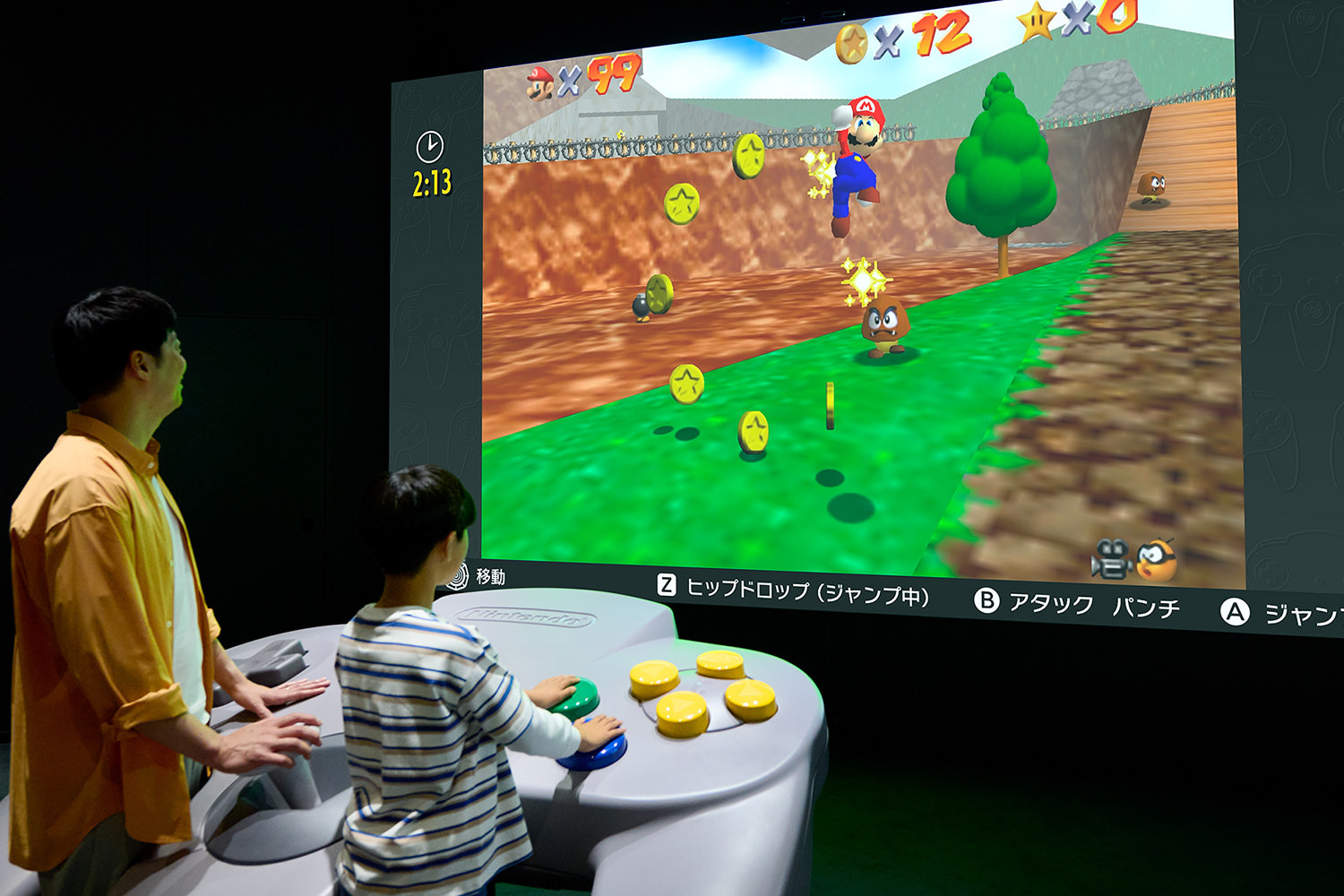
Opened in the fall of 2024, the Nintendo Museum combines educational exhibits and hands-on experiences inspired by the company’s history and achievements. (Photo courtesy of © Nintendo)
Opened in the fall of 2024, the Nintendo Museum combines educational exhibits and hands-on experiences inspired by the company’s history and achievements. (Photo courtesy of © Nintendo)
Japan’s corporate museums weave company histories into cohesive narratives through restored factory spaces, historical machinery, design sketches, and early prototypes. Through these exhibits, visitors can better understand the trials, tribulations, and persistence inherent to the innovation process.
These narratives take different forms depending on the industry and the stories each company seeks to tell. At the Nintendo Museum in Kyoto, visitors are guided from the company’s roots in traditional hanafuda playing cards through decades of toy-making and video game development. At the Nintendo Classics exhibit, visitors can play more than 80 titles from different eras in Nintendo’s history.
Child-friendly exhibits are also common, using hands-on learning to help younger visitors explore complex ideas. At the Nintendo Museum, interactive exhibits allow visitors to engage directly with Nintendo’s creative legacy. Using a token system, children (and children-at-heart) can play one- and two-player video games. There is also a dedicated area to create and play with traditional hanafuda cards, in a nod to the company’s origins.
Before video games, Nintendo was a playing card company. At its corporate museum in Kyoto, visitors can learn and play the traditional hanafuda card game that started it all. (Photo courtesy of © Nintendo)
Left: Two visitors seated at a large interactive table, playing a digital version of a traditional card game.
Right: Close-up of a hand holding a colorful hanafuda card above a small stack of black cards on a tabletop.
Before video games, Nintendo was a playing card company. At its corporate museum in Kyoto, visitors can learn and play the traditional hanafuda card game that started it all. (Photo courtesy of © Nintendo)
Left: Two visitors seated at a large interactive table, playing a digital version of a traditional card game.
Right: Close-up of a hand holding a colorful hanafuda card above a small stack of black cards on a tabletop.
Engineering for society
Isuzu is perhaps best known for its trucks, which they distribute not only in Japan but around the world.
Isuzu is perhaps best known for its trucks, which they distribute not only in Japan but around the world.
Isuzu Plaza displays a range of vehicles produced by Isuzu throughout the company’s history. Beyond the gallery, the facility provides an in-depth look at how vehicles are designed, manufactured, and tested. Through vehicle displays, immersive videos, and interactive exhibits, visitors can easily explore Isuzu’s legacy of supporting logistics, its craftsmanship philosophy, and its commitment to safety and the environment. It is a place where visitors of all ages can gain a personal connection to the history and future of Japanese commercial vehicle manufacturing.
Preserving the infrastructure of knowledge
Housed in a restored historic building, the Ichigaya Letterpress Factory serves as a rare space where visitors can explore the technical, cultural, and educational significance of letterpress printing.
Housed in a restored historic building, the Ichigaya Letterpress Factory serves as a rare space where visitors can explore the technical, cultural, and educational significance of letterpress printing.
Located in the western part of central Tokyo, Shinjuku has long been associated with Japan’s printing industry, making it a natural setting for corporate museums that focus on the technologies behind communication and publishing. The Ichigaya Letterpress Factory, opened in 2021 on the site of Dai Nippon Printing’s headquarters, preserves letterpress techniques through exhibitions on type design, casting, and bookmaking. It explores the history and cultural impact of printing in Japan and worldwide, highlighting the role of printed media in shaping knowledge and society.
Various workshops are held where you can experience letterpress printing, including printing the covers of contemporary Japanese novels.
Left: Close-up of hands adjusting metal type in a wooden letterpress composing stick.
Right: Person holding several spiral-bound notebooks with printed covers, stacked in their arms.
Various workshops are held where you can experience letterpress printing, including printing the covers of contemporary Japanese novels.
Left: Close-up of hands adjusting metal type in a wooden letterpress composing stick.
Right: Person holding several spiral-bound notebooks with printed covers, stacked in their arms.
By opening their doors to the broader public, companies can foster an understanding of how products are developed and manufactured. They can also help the public gain insight into how corporate decisions shape society, the environment, and daily life.
Corporate museums as community anchors
Beyond education, corporate museums can serve as a cultural anchor for their local communities. Many of Japan’s corporate museums are located in areas where a company’s industry has been central to regional development. In manufacturing towns or factory districts, a company’s identity is often intertwined with that of the community. By preserving the company’s heritage, these museums in turn preserve the history and identity of the communities that grew alongside them.