
|
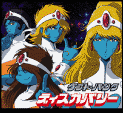 The Leiji Matsumoto-designed slipcase for Daft Punk's album Discovery. (©2001 Daft Punk/Leiji Matsumoto) |
DAFT ANIME?
French Techno Meets Japanimation
September 5, 2001
In 1997 Daft Punk burst onto the world dance scene with its first album, Homework, packed with an addictive mixture of disco, funk, techno, and other genres. This year the French techno duo has been enthralling fans--particularly those in Japan--with their collaboration with manga (comic) and anime (animation) legend Leiji Matsumoto (site in Japanese Only) in the production of their music video clips.
The Dream Team
Daft Punk, formed by Thomas Bangalter and Guy-Manuel de Homem-Christo, made its debut in 1994 with the single "New Wave." Ever since its 1997 first album became a megahit, selling over 2 million copies worldwide, the duo has enjoyed immense popularity in London and Tokyo clubs as perhaps the hottest French dance act around. Its second album, Discovery, released in March 2001, has also recorded a success in Japan.
For the video of "One More Time," its first single in Japan and the first title in its second album, Discovery, Daft Punk teamed up with anime artist Leiji Matsumoto. Matsumoto is the creator of Uchu Senkan Yamato (known alternatively as Star Blazers, Space Battleship Yamato, or Space Cruiser Yamato) and Ginga Tetsudo 999 (Galaxy Express 999), both celebrated cartoons that were originally aired in Japan in the 1970s and the beginning of the 1980s. The duo wrote the script, and Matsumoto took on the direction and design. The three hit it off together so well that they went on to collaborate in the production of two more animation clips for the singles "Aerodynamic" and "Digital Love," also from the second album. Put together, the three video clips comprise a single story depicting the abduction of a popular band from a peaceful planet by mysterious commandos.
Anime Makes It Big Abroad
As is widely known, the Japanese culture of manga and anime--also known as Japanimation--has found a zealous following overseas. Among European countries, France boasts the largest audience. Japanese cartoons were being aired on French television from relatively early on, and a fair number of young French artists and musicians claim they have been influenced by manga and anime.
|
|
Both music and anime, the two believe, have the magical power to directly touch the hearts of people regardless of age or language. And so they came up with the idea of collaborating with a Japanese animator in the video clip for "One More Time." During their visit to Japan in July 2000, the two met Matsumoto in person and requested his participation in their project.
While Matsumoto's animations have been popular overseas since more than a decade ago, the Daft Punk video clips were his first collaborative effort with overseas artists. There have in fact been very few, if any, such joint projects in the past between Japanese animators and foreign artists. Could the Daft Punk-Matsumoto project be the harbinger of a new era for Japanese animation?
|
Copyright (c) 2001 Japan Information Network. Edited by Japan Echo Inc. based on domestic Japanese news sources. Articles presented here are offered for reference purposes and do not necessarily represent the policy or views of the Japanese Government. |


